






Best Sowing Season: February - March & September - October


- Choosing a selection results in a full page refresh.

Available 24/7 at
0300 110 7787
10 seeds per pack.
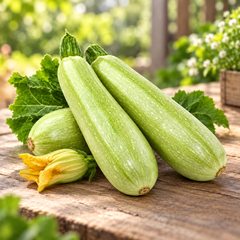
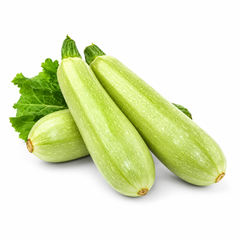
Grow Zucchini Squash F1 Hybrid (Maro Kadu / مارو کدو), a fast-growing and productive summer squash producing tender, light-green fruits with a mild, pleasant flavour.
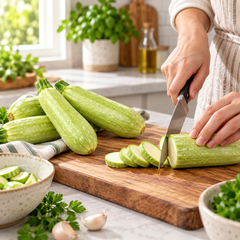
Excellent for curries, stir-fries, soups, grilling, roasting and everyday cooking.
Suitable for kitchen gardens, raised beds, open soil and grow bags.
Germination Time: 5–10 days
Suitable Temperature: 20°C–30°C
Best Sowing Season: February - March & September - October
Couldn't load pickup availability
Free standard shipping on orders over RS 5000
Zucchini, locally referred to here as Maro Kadu (مارو کدو), is a summer squash botanically belonging to Cucurbita pepo.
This F1 Hybrid selection produces attractive:
Light-green fruits
Tender flesh
Mild flavour
Smooth young squash
Productive plants under suitable conditions
Zucchini plants generally develop a compact to spreading bush-type growth habit rather than long climbing vines.
The fruits grow rapidly once pollination occurs and are best harvested while young and tender.
F1 hybrids are produced by crossing selected parent lines to provide desirable characteristics such as crop uniformity, vigour and consistent fruit development.
Exact fruit size, colour, plant spread, maturity and yield may vary according to the particular hybrid, climate and crop management.
10 seeds per pack
Zucchini Squash
Maro Kadu / مارو کدو
F1 Hybrid
Botanical name: Cucurbita pepo
Light-green fruits
Tender flesh
Mild flavour
Fast-growing vegetable
Productive under suitable conditions
Bush-type growth habit
Suitable for regular harvesting
Suitable for spring cultivation
Suitable for autumn cultivation
Suitable for kitchen gardens
Suitable for raised beds
Suitable for open soil
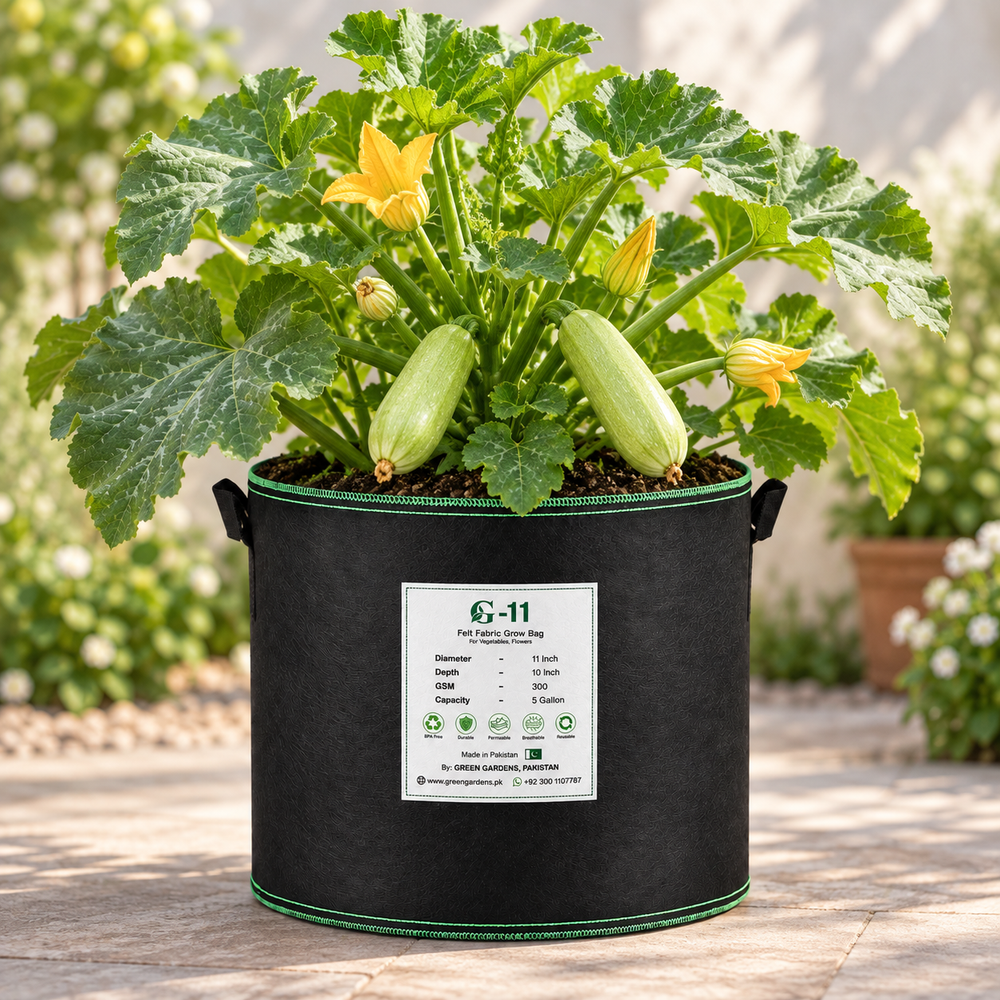
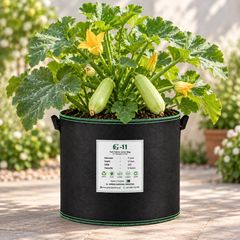
Performs well in G-11 and G-12 grow bags
Suitable for rooftop gardening
Excellent everyday cooking vegetable
Zucchini Squash is especially suitable for:
Pakistani curries
Mixed vegetable dishes
Stir-fries
Soups
Stews
Grilling
Roasting
Sautéing
Steaming
Pasta dishes
Stuffed zucchini
Zucchini fritters
Barbecue dishes
Salads when harvested young
Baking
The young fruits have a:
Tender texture and mild flavour
that readily absorbs spices, herbs and sauces.
For the best culinary quality, harvest fruits while they are:
Young, firm, light green and tender
G-11 Grow Bag – 11 × 10 inch 🔗
Suitable for growing one Zucchini Squash plant with regular watering, balanced feeding and sufficient open space around the plant for its broad foliage.
G-12 Grow Bag – 12 × 12 inch 🔗
Recommended for growing one healthy Zucchini Squash plant, providing additional soil volume and root space for vigorous growth and fruit production.
Zucchini develops broad leaves, so keep sufficient open space around each grow bag for:
Good sunlight
Air circulation
Pollinator access
Easy harvesting
Use fertile, loose and well-drained loamy soil rich in organic matter.
A practical GREEN GARDENS mix can be:
50% Bhalu Mitti (Sandy Soil) + 50% Vermicompost 🔗
Zucchini prefers:
Fertile soil
Consistent moisture
Good drainage
Loose root-zone conditions
High organic matter
An approximate soil pH of:
6.0–7.0
is suitable.
Avoid compacted or continuously waterlogged soil.
Zucchini can be direct-sown into its final growing position or started carefully in individual seedling pots.
Sow approximately:
2–2.5 cm deep
or around:
1 inch deep
Cover with fine soil and water gently.
Because squash roots dislike excessive disturbance, direct sowing is often the simplest method.
Keep the growing medium evenly moist but not waterlogged.
Seeds generally germinate within:
5–10 days
under suitable warm conditions.
Maintain approximately:
20°C–30°C
for healthy germination and establishment.
After germination, provide:
Bright sunlight
Good airflow
Moderate watering
Warm conditions
If more than one seed germinates in the same planting position, retain the strongest seedling.
Provide:
6–8 hours of direct sunlight daily
Full sunlight supports:
Vigorous leaf growth
Healthy flowering
Better pollination
Fruit setting
Rapid fruit development
Maintain approximately:
60–90 cm between plants
Zucchini plants become broad and leafy, so adequate space is essential.
Proper spacing improves:
Air circulation
Sunlight penetration
Pollinator access
Fruit development
Disease management
Zucchini generally develops a bushy, spreading plant rather than a long climbing vine.
The plant does not normally require a trellis.
Allow sufficient open space around each plant for its large leaves.
Some gardeners may stake the central stem of certain zucchini plants for space management, but conventional trellising is usually unnecessary.
Maintain consistent soil moisture, particularly during:
Flowering
Fruit setting
Fruit enlargement
Warm weather
Water deeply near the base of the plant.
Avoid prolonged waterlogging.
Try to avoid keeping the foliage continuously wet, particularly during humid weather.
Before sowing, enrich the soil with GREEN GARDENS Vermicompost 🔗.
Zucchini is a vigorous and relatively heavy-feeding vegetable.
Maintain balanced nutrition during active growth.
If additional fertilizer is used, avoid excessive nitrogen because it may produce very large leaves with comparatively less fruiting.
During flowering and fruiting, adequate potassium supports healthy fruit development.
Zucchini produces separate:
Male flowers and female flowers
on the same plant.
Male flowers often appear first.
Female flowers can be identified by the small immature zucchini directly behind the flower.
This is normal and does not indicate a problem with the plant.
Zucchini relies strongly on bees and other insects for effective pollination.
Poor pollination may cause young fruits to:
Stop growing
Turn yellow
Become misshapen
Drop from the plant
Where pollinator activity is low, flowers can be hand-pollinated by transferring pollen from a male flower to a female flower.
Apply a light organic mulch around established plants.
Mulching helps:
Maintain consistent soil moisture
Reduce weeds
Moderate soil temperature
Reduce rapid drying
Keep developing fruits cleaner
Keep mulch slightly away from the main stem.
Once production begins, check plants frequently.
Zucchini fruits grow very rapidly and may become oversized within only a few days.
Regular harvesting encourages:
Tender fruits
Continued flowering
Further fruit production
Better eating quality
Inspect plants regularly for:
Aphids
Whiteflies
Spider mites
Squash bugs
Fruit flies
Cucumber beetles
Powdery mildew
Downy mildew
Leaf spots
Root rot
Maintain good airflow and avoid prolonged waterlogging.
Remove badly affected leaves where appropriate.
Under suitable growing conditions, harvesting may begin approximately:
45–60 days after sowing
Harvest fruits when they are:
Tender, firm and light green
Do not allow all fruits to become oversized.
Young zucchini generally provides the best:
Texture
Flavour
Tenderness
Cooking quality
Cut fruits using a clean knife or pruning tool rather than pulling them from the plant.
G-11 Grow Bag – 11 × 10 inch 🔗
Thanks for subscribing!
This email has been registered!


We are here to assist you