



- Choosing a selection results in a full page refresh.

Available 24/7 at
0300 110 7787


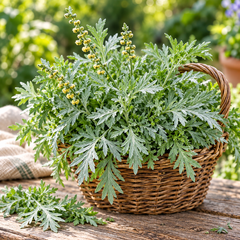


Approx. 2000 seeds per pack.
Quantity: 0.2 Gram.
Grow Wormwood – Artemisia absinthium, a distinctive aromatic perennial herb known for its finely divided silver-grey to grey-green foliage and strong characteristic fragrance.
This attractive, bushy herb develops an upright branching habit and is suitable for herb gardens, ornamental borders, cottage gardens, gravel gardens, pots and grow bags.
Once established, Wormwood is relatively hardy and may produce small yellow flower clusters above its attractive silver foliage.
Germination Time: Approximately 14–30 days
Suitable Temperature: 15°C–22°
Growing Guide Video Link 🔗
Best Sowing Season: October - November & February - March
Couldn't load pickup availability
Free standard shipping on orders over RS 5000
Wormwood belongs to the family Asteraceae and is botanically known as:
Artemisia absinthium
It is an aromatic perennial herb recognised for its distinctive:
Mature plants generally develop into substantial bushy herbs and may reach approximately:
60–100 cm in height
under suitable growing conditions.
The silver-grey foliage is the main ornamental feature and creates attractive contrast when planted alongside green-leaved herbs and colourful flowering plants.
Exact plant height, spread, foliage colour, flowering time and growth habit may vary according to climate, soil conditions, sunlight, pruning and plant management.
Wormwood is especially suitable for:
Its silver-grey foliage provides attractive visual contrast with:
Wormwood can also provide useful texture and structure in mixed herb and ornamental plantings.
G-11 Grow Bag – 11 × 10 inch 🔗
Suitable for one young Wormwood plant where regular pruning is used to maintain compact growth.
G-12 Grow Bag – 12 × 12 inch 🔗
Recommended for one Wormwood plant with additional root space and improved moisture stability.
For normal home container cultivation:
G-12 is the preferred choice for one mature Wormwood plant.
Regular pruning can help keep container-grown plants compact and manageable.
Use loose and very well-drained soil.
A practical GREEN GARDENS mix can be:
50% Bhalu Mitti (Sandy Soil) + 50% Vermicompost 🔗
Wormwood prefers:
For heavy soil, additional coarse material can be incorporated to improve drainage.
Wormwood is relatively tolerant of less fertile soils once established.
Avoid permanently waterlogged growing conditions.
Wormwood can be started in:
Starting seeds separately makes it easier to manage the very small seedlings before final transplanting.
Use a fine, loose and well-drained seed-starting medium.
Wormwood seeds are very small and should be:
Surface sown or covered only very lightly.
Spread seeds carefully over the moist growing medium.
Press gently to ensure contact between the seeds and growing medium.
Do not bury them deeply.
Apply only a very thin covering of fine growing medium if necessary.
Water gently using a fine spray to avoid washing the seeds away.
Seeds generally germinate within approximately:
14–30 days
under suitable conditions.
Maintain approximately:
15°C–22°C
during germination.
Keep the seed-starting medium:
Avoid completely drying the surface while germination is taking place.
Do not keep the growing medium continuously saturated.
Because Wormwood seeds are very small and are sown close to the surface, provide good natural light after sowing.
Once seedlings emerge, move them into bright conditions.
Insufficient light may produce:
Gradually introduce young seedlings to stronger sunlight.
After germination, provide:
Avoid constantly wet nursery soil.
Allow the surface to begin drying slightly between waterings while ensuring young seedlings do not completely dry out.
If several seedlings emerge very close together, thin them carefully.
Retain the:
Avoid damaging the roots of plants being retained.
Transplant seedlings when they are:
Transplant into:
Water gently immediately after transplanting.
Maintain approximately:
40–60 cm between mature plants
where sufficient garden space is available.
Wormwood develops a broad branching habit as it matures.
Proper spacing provides:
For grow bags:
One plant per G-11 or G-12 Grow Bag is recommended.
Provide:
Full sun
for strong, compact growth and attractive foliage.
Aim for approximately:
6–8 hours of direct sunlight daily
where possible.
Good sunlight encourages:
Plants grown in excessive shade may become weak or elongated.
Water regularly during:
Once plants become established, Wormwood generally prefers relatively moderate watering.
Allow the upper soil to begin drying between waterings.
Avoid:
Good drainage is particularly important for mature Wormwood plants.
Before transplanting, incorporate:
Wormwood generally does not require excessive feeding.
Moderate fertility supports healthy foliage without producing excessively soft growth.
Avoid excessive nitrogen application because it may encourage:
Light pruning helps maintain attractive plant structure.
Prune when necessary to encourage:
Remove:
Older plants can also be cut back to encourage fresh new growth.
Mature Wormwood plants may produce:
Small yellow to yellowish flower heads
on upright flowering stems.
The flowers are relatively understated.
The silver-grey aromatic foliage generally remains the plant's main ornamental feature.
Where foliage production is preferred, flower stems may be removed as required.
In Lahore and other hot areas of Pakistan, young plants should be protected from severe summer stress.
During periods of extreme heat:
Established plants generally tolerate difficult conditions better than young seedlings.
Keep the area around young plants free from aggressive weeds.
Weeds compete for:
Once Wormwood develops into a mature bushy plant, it generally competes more effectively.
Inspect plants regularly for:
Check young shoots and lower leaf surfaces regularly.
Maintain:
Early detection makes pest control easier.
The most important preventive measures are:
Avoid continuously wet soil because poor drainage can lead to root and crown problems.
Remove damaged or diseased growth when necessary.
Once established, Wormwood is comparatively low maintenance.
For healthy mature plants:
With suitable conditions, plants can remain established as perennials for several growing seasons.
Wormwood should primarily be grown and marketed as an:
Aromatic ornamental perennial herb.
Wormwood contains naturally occurring biologically active compounds, and concentrated preparations should not be used casually.
This product listing does not provide medicinal dosage or self-treatment recommendations.
For healthy Wormwood plants:
Wormwood is an interesting perennial addition to home gardens because it:
G-11 Grow Bag – 11 × 10 inch 🔗
Thanks for subscribing!
This email has been registered!


We are here to assist you