



Best Sowing Season: September - November


- Choosing a selection results in a full page refresh.

Available 24/7 at
0300 110 7787
Approx. 300 seeds per pack.
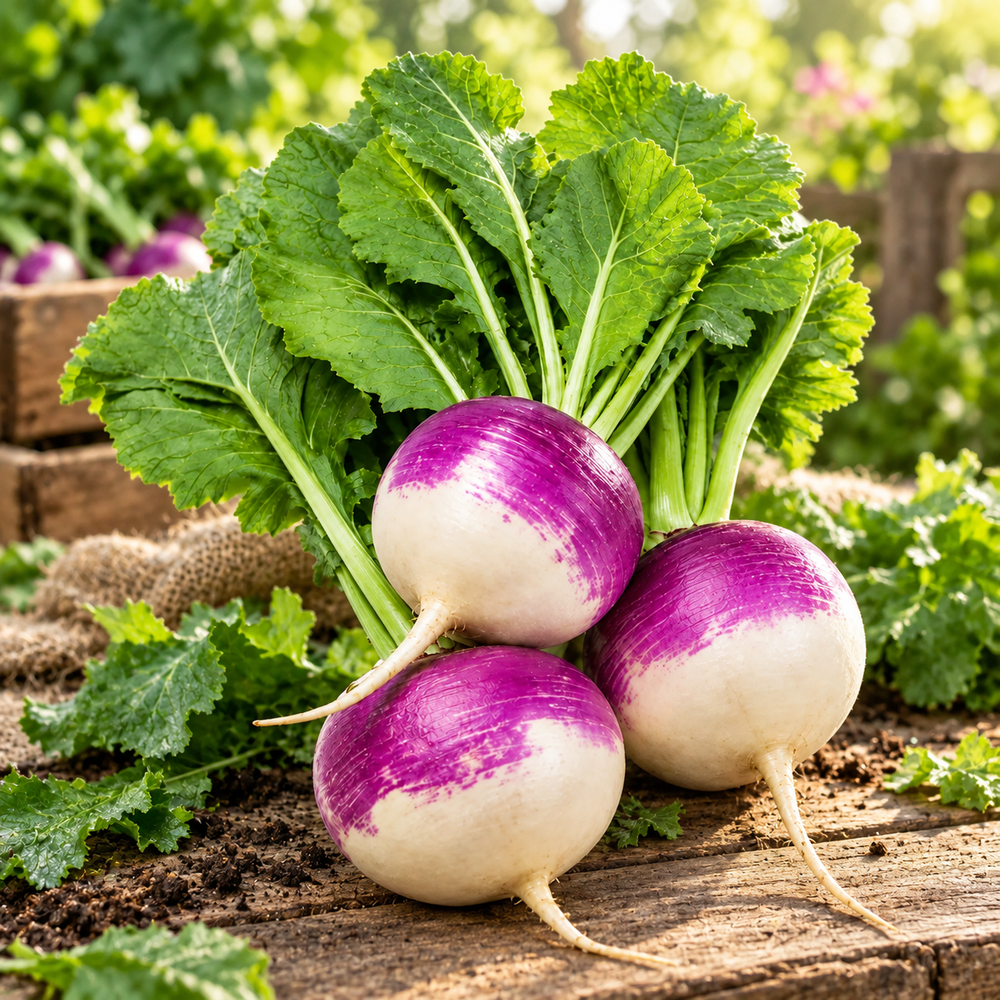
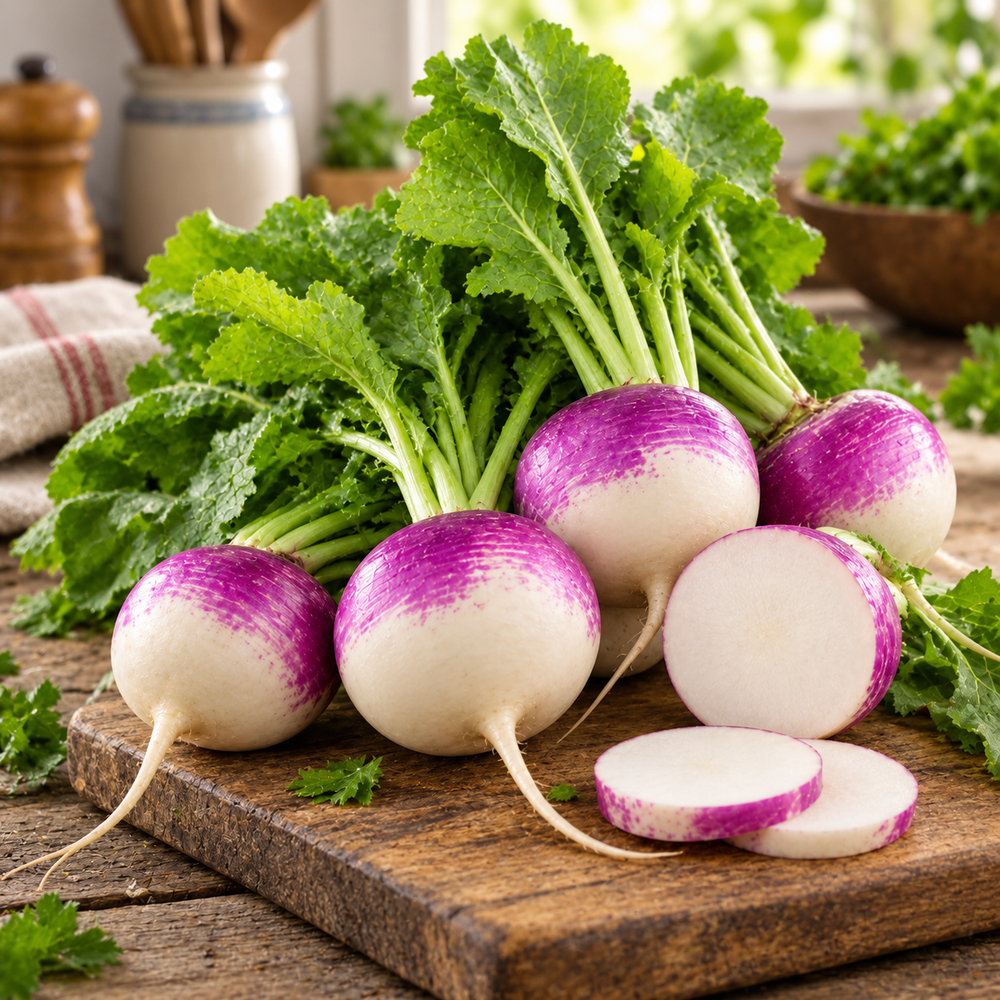
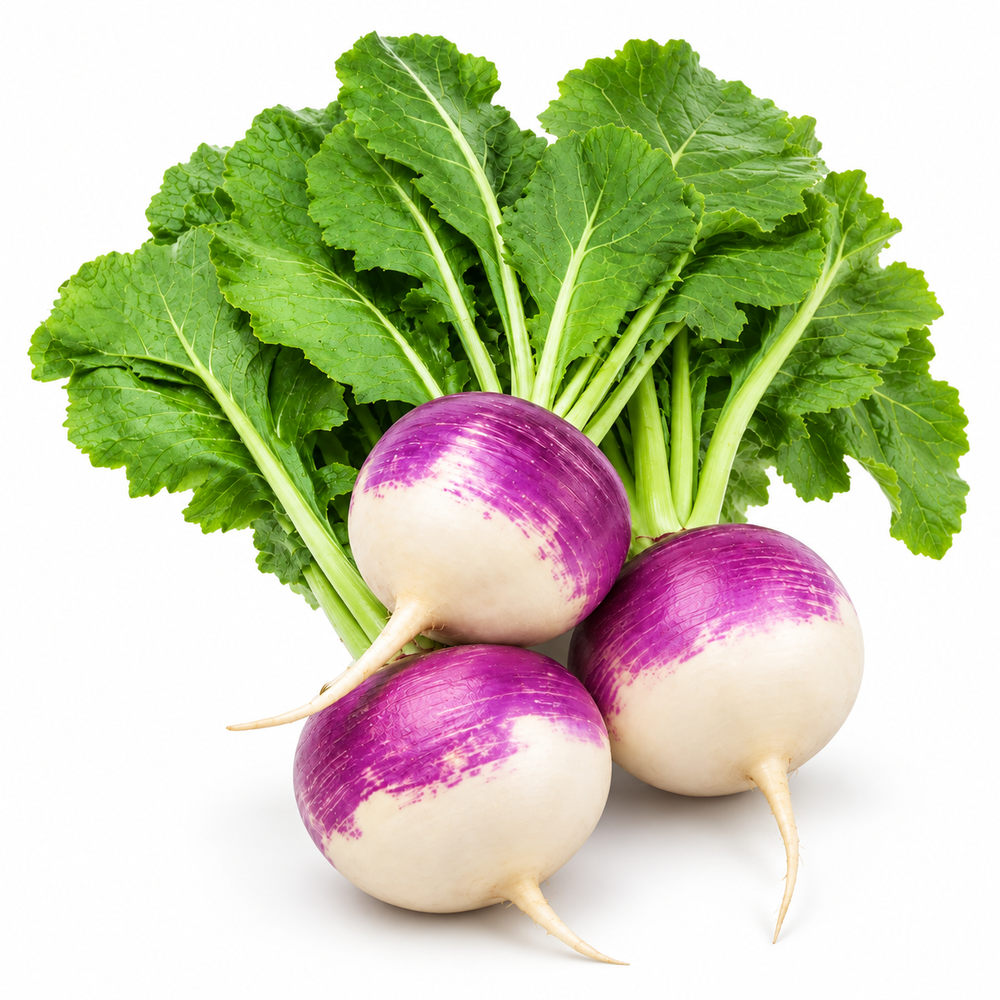
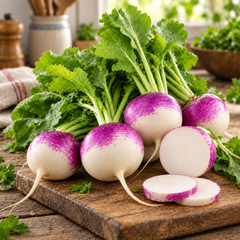
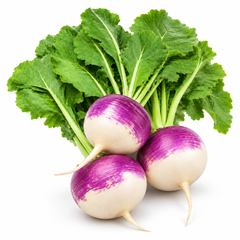
Grow Purple Top Turnip, a classic cool-season root vegetable producing smooth, round roots with distinctive purple shoulders, creamy-white lower skin and crisp white flesh.
This fast-growing winter vegetable is valued for its mild flavour and versatile kitchen use. Both the roots and young leaves are edible.
Excellent for curries, soups, stews, roasting, pickling, salads and mixed vegetable dishes.
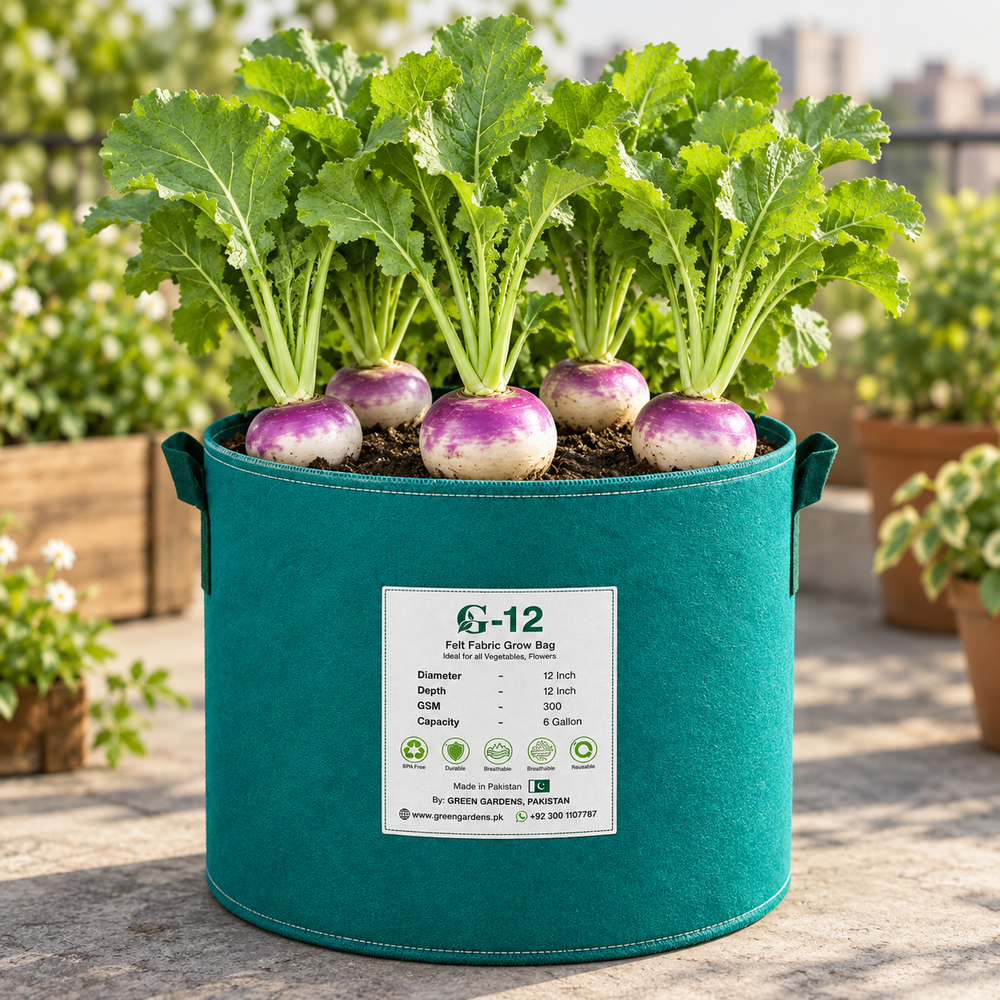
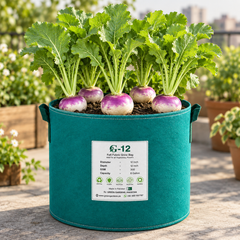
Suitable for kitchen gardens, raised beds, open soil and grow bags.
Germination Time: 7–10 days
Suitable Temperature: 10°C–22°C
Best Sowing Season: September - November
Couldn't load pickup availability
Free standard shipping on orders over RS 5000
Purple Top Turnip belongs to the species Brassica rapa.
It is recognised by its characteristic:
The purple colouring develops primarily on the portion of the root exposed to light above the soil surface.
Both the root and young foliage are edible, making Purple Top Turnip a useful dual-purpose winter vegetable.
Exact root shape, colour intensity, size, maturity and yield may vary according to seed strain, soil conditions, temperature, spacing and crop management.
Purple Top Turnip is suitable for:
Young roots generally provide the best:
Young leaves can also be cooked and used as leafy greens.
G-11 Grow Bag – 11 × 10 inch 🔗
Suitable for growing a small number of Purple Top Turnip plants with adequate spacing.
G-12 Grow Bag – 12 × 12 inch 🔗
Provides additional soil depth and moisture stability for healthy root development.
G-24 Grow Bag – 24 × 12 inch 🔗
Highly suitable for growing multiple Turnip plants together because the wide growing surface allows better spacing between developing roots.
For turnips, adequate spacing is important because overcrowding can restrict root enlargement.
Use loose, fertile and well-drained soil rich in organic matter.
A practical GREEN GARDENS mix can be:
50% Bhalu Mitti (Sandy Soil) + 50% Vermicompost 🔗
Purple Top Turnip prefers:
An approximate soil pH of:
6.0–7.5
is suitable.
Avoid compacted or continuously waterlogged soil because this may result in poorly shaped roots.
Prepare the growing area thoroughly before sowing.
Remove:
Loosen the soil so developing roots can expand freely.
Mix GREEN GARDENS Vermicompost thoroughly into the soil.
Finish with a fine, level growing surface.
Purple Top Turnip is best grown by:
Direct sowing
Sow seeds approximately:
1–1.5 cm deep
Cover lightly with fine soil.
Avoid sowing too deeply.
Water gently after sowing.
Seeds generally germinate within:
7–10 days
under suitable conditions.
Maintain approximately:
10°C–22°C
for healthy cool-season establishment.
Keep soil consistently moist during germination but avoid waterlogging.
After germination, provide:
Avoid allowing seedlings to become excessively crowded.
Thin seedlings after establishment to allow healthy root enlargement.
Maintain approximately:
5–8 cm between plants
for normal root production.
For larger roots, slightly wider spacing can be provided.
Proper thinning improves:
When growing in open soil or raised beds, maintain approximately:
30–38 cm between rows
where practical.
Adequate row spacing makes watering, weeding and harvesting easier.
Provide approximately:
6–8 hours of direct sunlight daily.
Good sunlight encourages:
Avoid deep shade.
Maintain even soil moisture throughout root development.
Water regularly during:
Avoid:
Irregular moisture can reduce root quality.
Before sowing, enrich the soil with:
Turnips generally perform well in moderately fertile soil.
Avoid excessive nitrogen because it may encourage excessive foliage at the expense of good root development.
Balanced fertility is preferred.
As plants mature, the storage root enlarges close to the soil surface.
The upper portion may naturally become exposed and develop its characteristic purple colour.
Keep surrounding soil:
Avoid deep cultivation close to developing roots.
Remove weeds regularly, especially during early growth.
Weeds compete for:
Hand weeding is preferable near developing roots.
Inspect plants regularly for common Brassica pests including:
Check leaves regularly and manage pest problems early.
Maintain:
Avoid repeatedly growing Brassica crops in soil where serious disease problems have occurred.
Purple Top Turnip is generally ready for harvesting approximately:
50–70 days after sowing
depending on growing conditions. The current GREEN GARDENS product listing also specifies this harvesting range.
Harvest when roots are:
Avoid leaving mature roots in the soil for excessively long periods, as older roots can become tougher.
Loosen the soil gently around each root.
Hold the foliage near the crown and lift carefully.
If soil is compacted, loosen it first with a suitable garden tool.
After harvesting:
For an extended harvesting period, sow:
Small batches at intervals
rather than sowing the entire crop at one time.
This can provide a more continuous supply of young, tender Turnips during the cool season.
For smooth and healthy Purple Top Turnips:
Purple Top Turnip is a useful addition to a winter kitchen garden because it:
G-11 Grow Bag – 11 × 10 inch 🔗
G-12 Grow Bag – 12 × 12 inch 🔗
Thanks for subscribing!
This email has been registered!


We are here to assist you