



Best Sowing Season: September - November


- Choosing a selection results in a full page refresh.

Available 24/7 at
0300 110 7787
Approx. 40-50 seeds per pack.
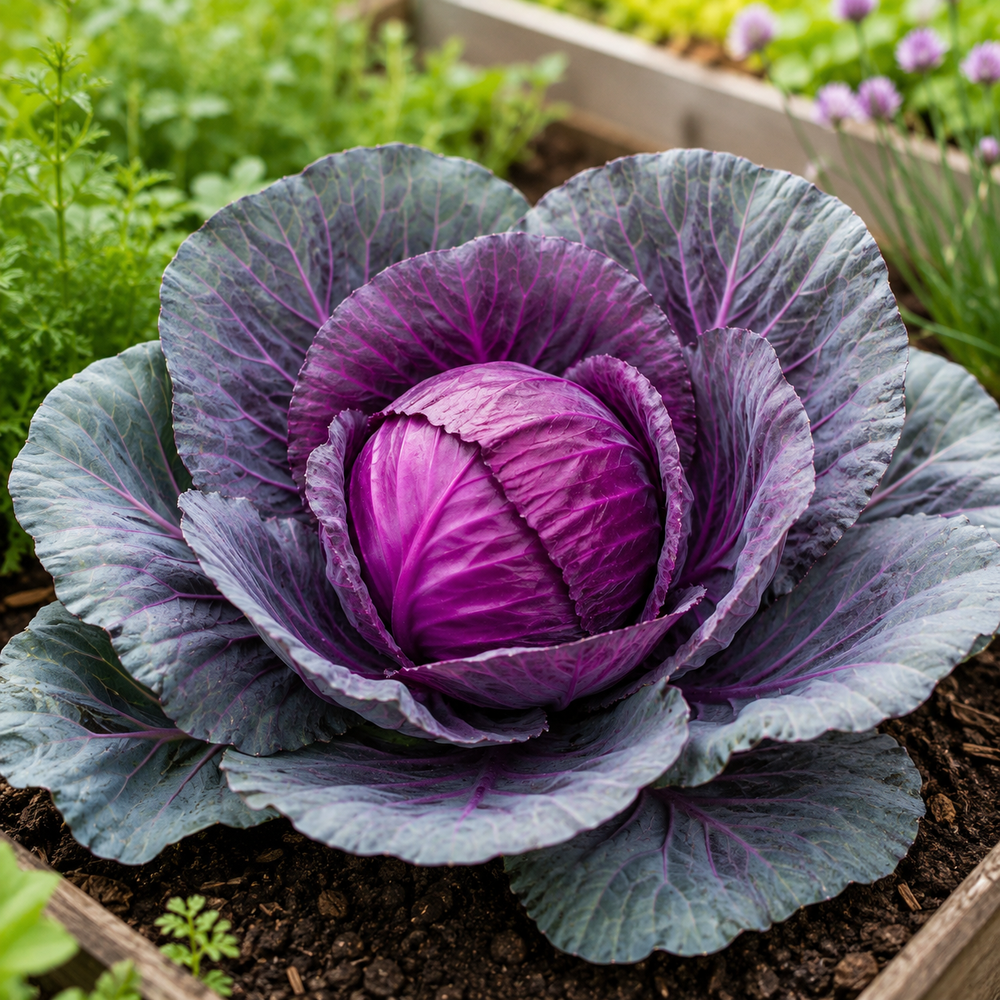
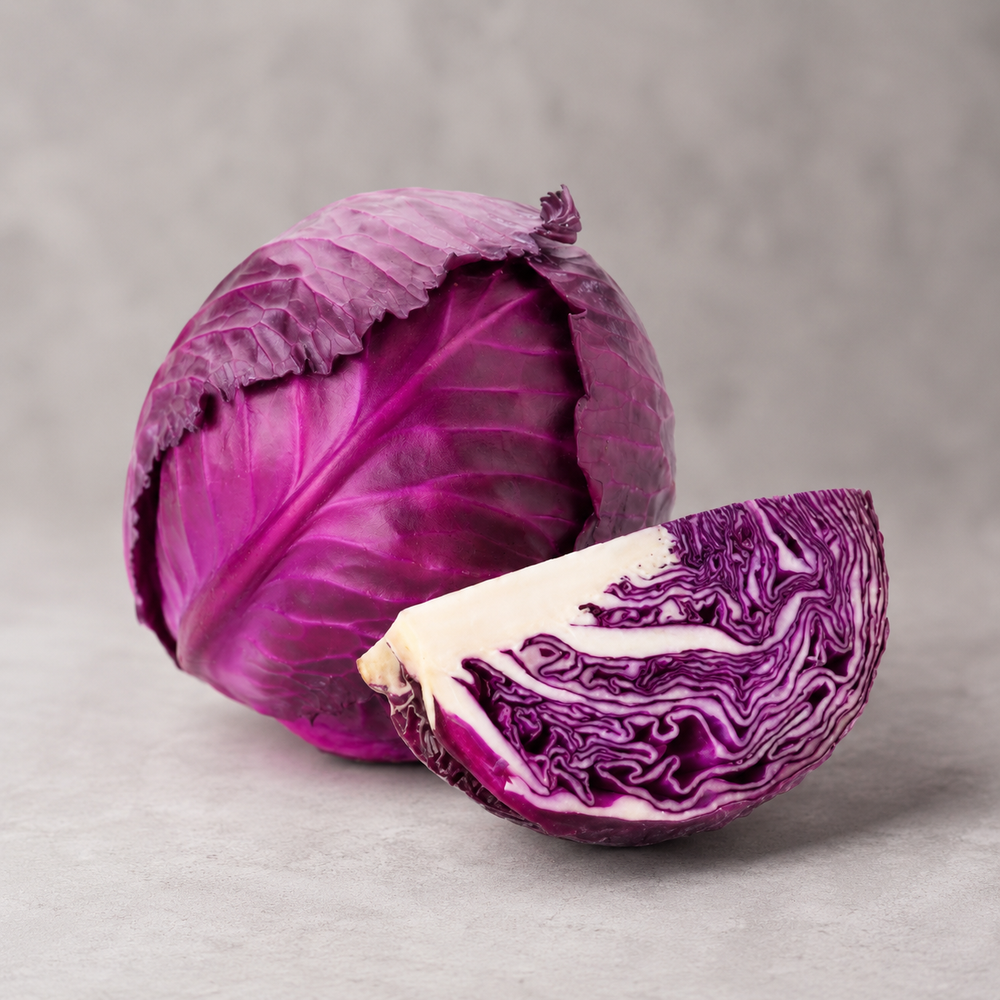
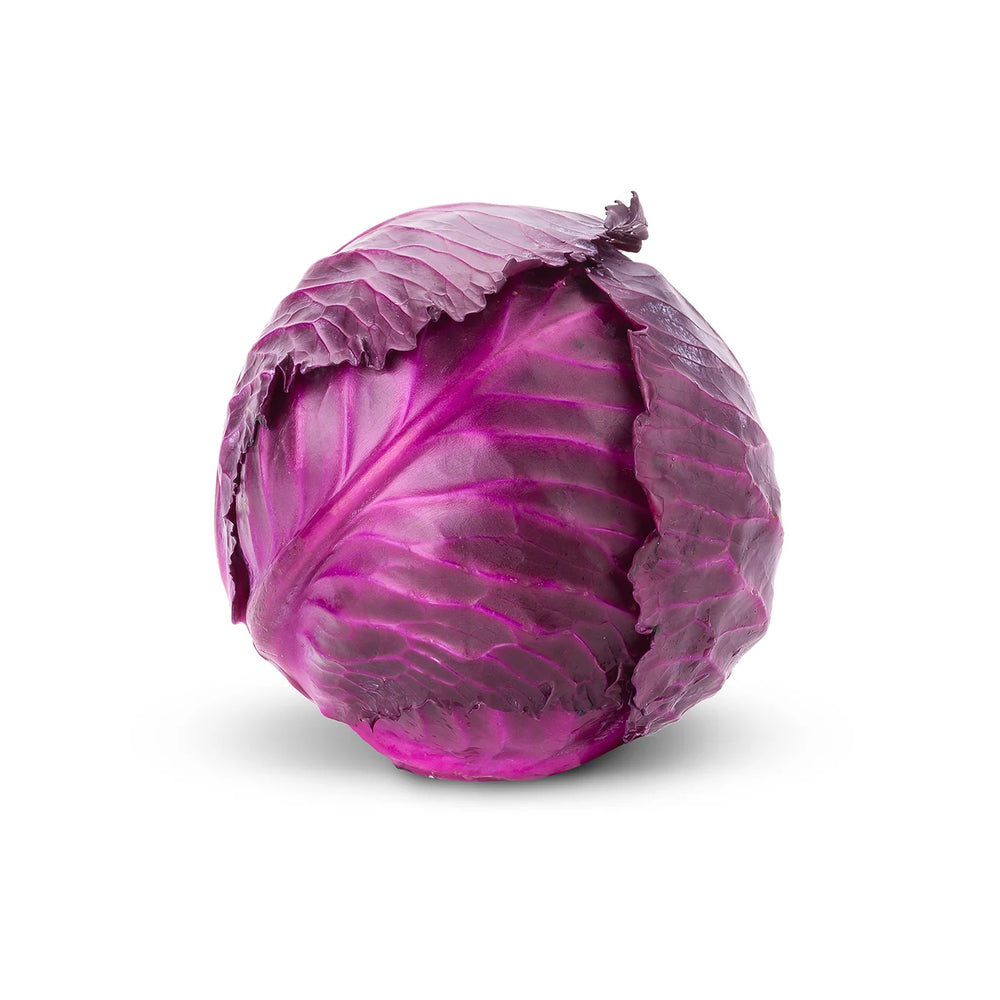
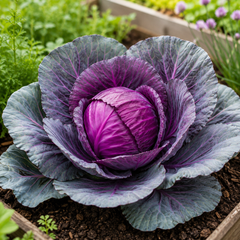
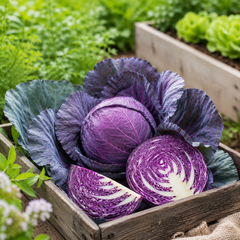
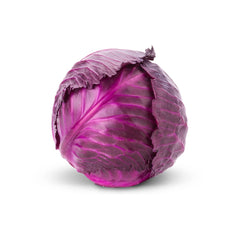
Grow Red Jewel F1 Purple Cabbage, an attractive hybrid cabbage producing compact purple to deep reddish-purple heads with crisp leaves and excellent fresh eating quality.
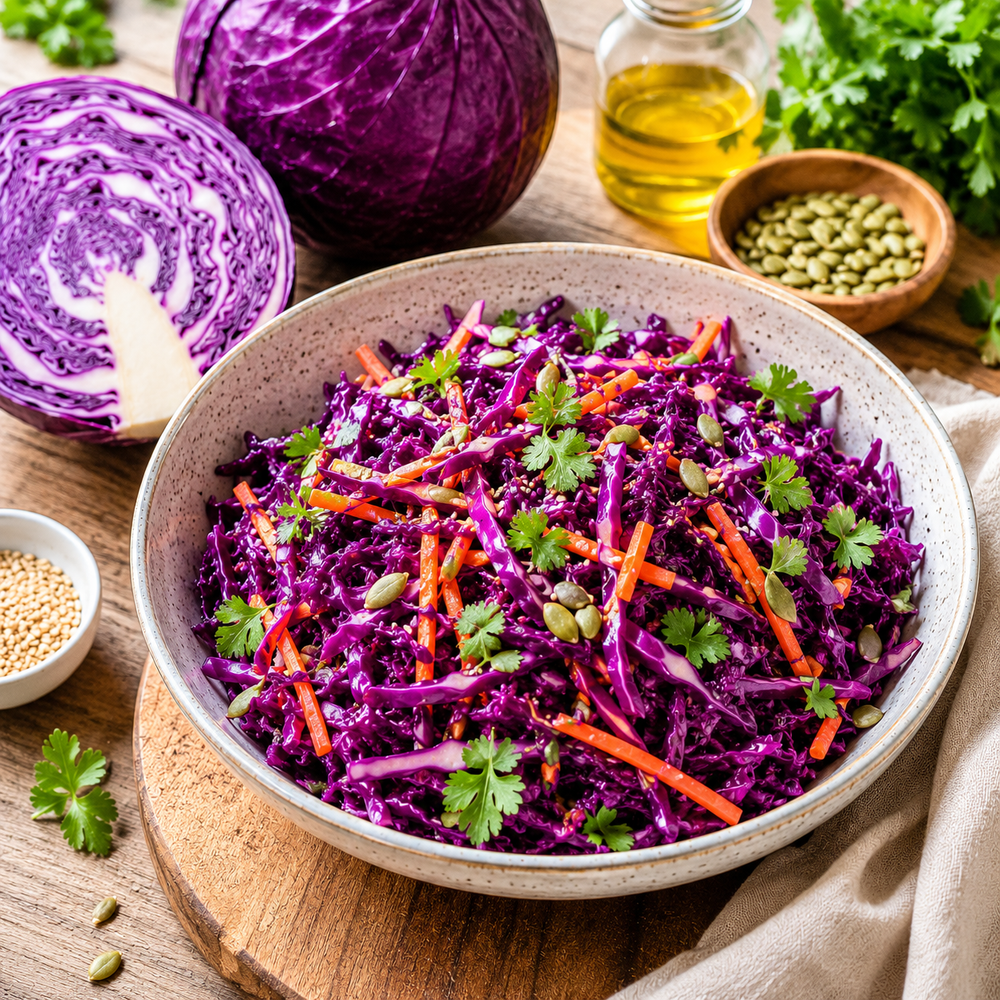
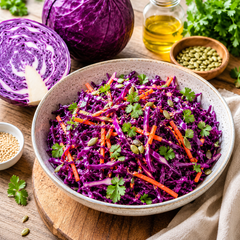
Excellent for salads, coleslaw, stir-fries, pickling, sandwiches, wraps and colourful cooked vegetable dishes.
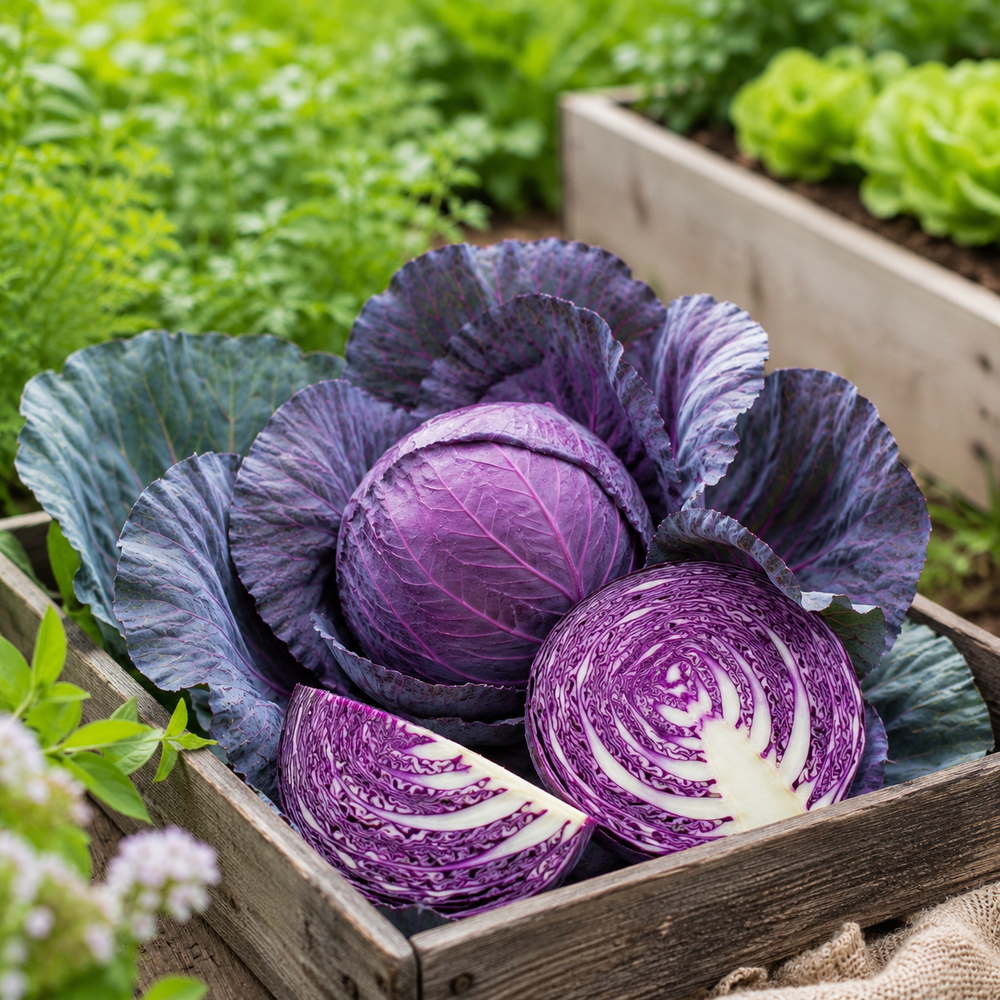
Suitable for kitchen gardens, raised beds, open soil and larger grow bags.
Germination Time: 5–10 days
Suitable Temperature: 15°C–25°C
Best Sowing Season: September - November
Couldn't load pickup availability
Free standard shipping on orders over RS 5000
Red Jewel F1 belongs to the species Brassica oleracea var. capitata.
It is an F1 hybrid red cabbage grown for its attractive compact heads.
Plants develop:
Although commonly called:
Red Cabbage
the foliage frequently appears:
Purple, violet or deep reddish-purple
depending on growing conditions and soil chemistry.
Red cabbage colour is produced by natural anthocyanin pigments.
The final colour intensity may vary according to:
Red Jewel F1 is suitable for home gardeners looking for a visually attractive cabbage for both fresh and cooked dishes.
Exact head size, maturity and weight may vary according to seed source, climate, spacing and crop management.
Red Jewel Purple Cabbage is especially suitable for:
The attractive purple leaves provide excellent colour contrast in fresh salads.
For maximum crispness, use freshly harvested leaves.
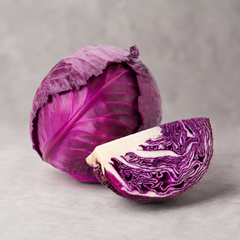
Purple cabbage can be eaten:
Raw or cooked
depending on the recipe.
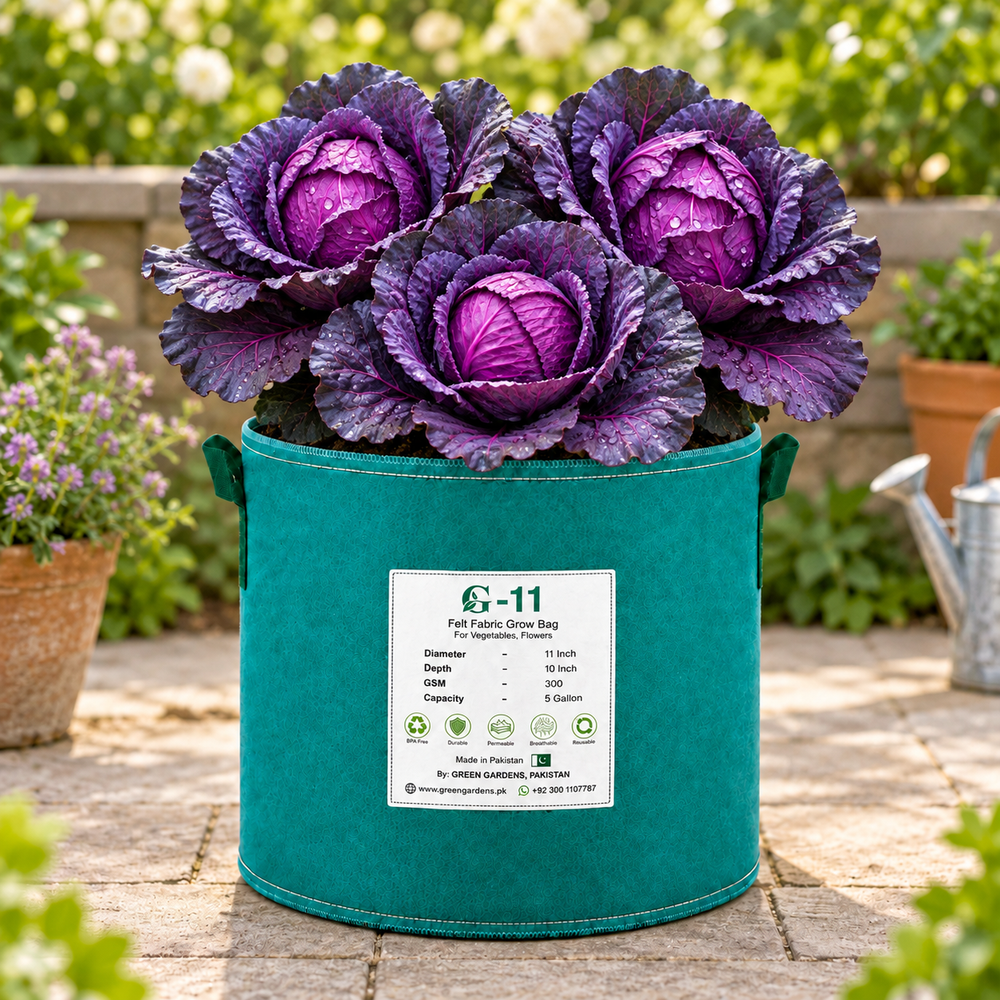
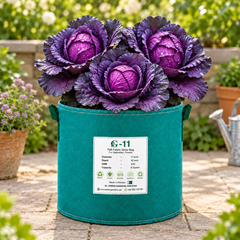
G-11 Grow Bag – 11 × 10 inch 🔗
Suitable for one compact cabbage plant with careful watering and feeding.
G-12 Grow Bag – 12 × 12 inch 🔗
Recommended for one Red Jewel F1 plant with more comfortable root space.
G-24 Grow Bag – 24 × 12 inch 🔗
Suitable for approximately:
2–3 cabbage plants
depending on final spacing and desired head size.
Adequate soil volume is important because cabbage is a relatively heavy-feeding crop and requires stable moisture during head development.
Use fertile, loose and well-drained soil rich in organic matter.
A practical GREEN GARDENS mix can be:
50% Bhalu Mitti (Sandy Soil) + 50% Vermicompost 🔗
Purple Cabbage prefers:
An approximate soil pH of:
6.0–7.5
is suitable.
For brassica crops, maintaining soil near neutral can also help reduce the risk of certain soil-borne problems such as clubroot.
Avoid waterlogged soil.
Red Jewel F1 is best started in:
Sow seeds approximately:
0.5–1 cm deep
Cover lightly with fine soil.
Water gently after sowing.
Keep the growing medium consistently moist.
Seeds generally germinate within:
5–10 days
under suitable conditions.
Maintain approximately:
15°C–25°C
for good germination and early seedling development.
Avoid allowing the nursery medium to dry completely.
After germination, provide:
Protect young seedlings from:
Thin overcrowded seedlings where necessary.
Transplant seedlings when they have developed approximately:
4–5 true leaves
and are strong enough to handle.
This is often around:
4–6 weeks after sowing
depending on temperature and growth rate.
Plant seedlings firmly in their final position.
Water immediately after transplanting.
Provide:
6–8 hours of direct sunlight daily
Full sunlight helps support:
In unusually warm autumn conditions, young transplants may benefit from temporary protection during the hottest part of the day.
Maintain approximately:
35–45 cm between plants
for good head development.
Allow similar or slightly greater spacing between rows where possible.
Closer spacing generally results in smaller heads.
Adequate spacing improves:
Maintain consistent soil moisture throughout growth.
Cabbage is especially sensitive to irregular watering during:
Avoid:
Irregular moisture can reduce head quality.
Before transplanting, incorporate GREEN GARDENS Vermicompost 🔗.
Cabbage is a:
Relatively heavy-feeding vegetable
and benefits from fertile soil.
Balanced feeding can be provided during active growth where required.
Adequate nitrogen supports early leaf development, but excessive fertilizer should be avoided.
Apply a light organic mulch around established plants.
Mulching helps:
Keep mulch slightly away from the main stem.
Keep the growing area relatively weed-free.
Young cabbage plants compete poorly with aggressive weeds.
Remove weeds carefully without damaging shallow feeder roots.
Avoid deep cultivation close to established plants.
After producing a substantial outer leaf canopy, plants begin forming a central head.
During this stage:
Do not remove healthy outer leaves unnecessarily because they contribute to head development.
Inspect plants regularly for:
Check:
Both sides of the leaves
because caterpillar eggs and young larvae often remain hidden underneath foliage.
Good spacing, sanitation and crop rotation help reduce disease pressure.
A mature cabbage head should become:
Firm, dense and compact
when gently pressed.
Do not leave fully mature heads excessively long in the garden, especially if weather conditions become unsuitable.
Harvest when heads reach the desired size and feel:
Firm and solid
Cut the main stem beneath the head using a clean sharp knife.
Leave several protective outer leaves around the harvested head if desired.
Avoid damaging the head during harvesting.
After harvesting:
Do not wash cabbage before longer storage unless it will be used soon.
Freshly harvested Purple Cabbage may be stored under cool conditions for later use.
G-11 Grow Bag – 11 × 10 inch 🔗
G-12 Grow Bag – 12 × 12 inch 🔗
Thanks for subscribing!
This email has been registered!


We are here to assist you