





Best Sowing Season: November - Mid December


- Choosing a selection results in a full page refresh.

Available 24/7 at
0300 110 7787
Approx. 50 seeds per pack.
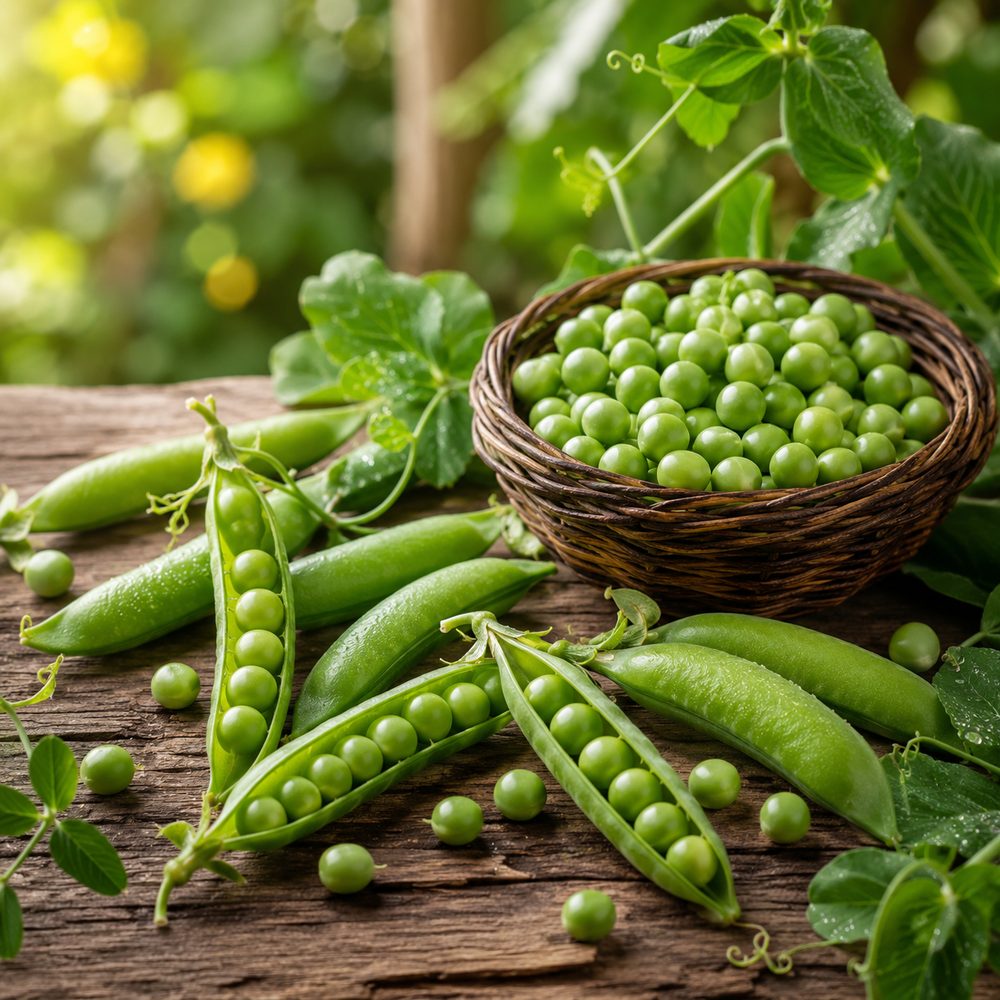
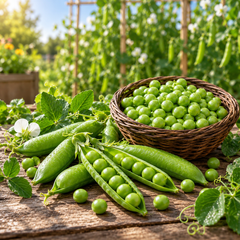
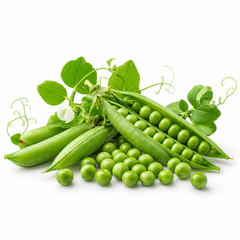
Grow Green Peas, a classic cool-season climbing vegetable producing sweet, tender green peas inside fresh pods.
Excellent for curries, pulao, rice dishes, soups, mixed vegetables, salads and everyday Pakistani cooking.
Suitable for kitchen gardens, raised beds, open soil and larger grow bags with suitable support.
Germination Time: 7–14 days
Suitable Temperature: 10°C–20°C
Best Sowing Season: November - Mid December
Couldn't load pickup availability
Free standard shipping on orders over RS 5000
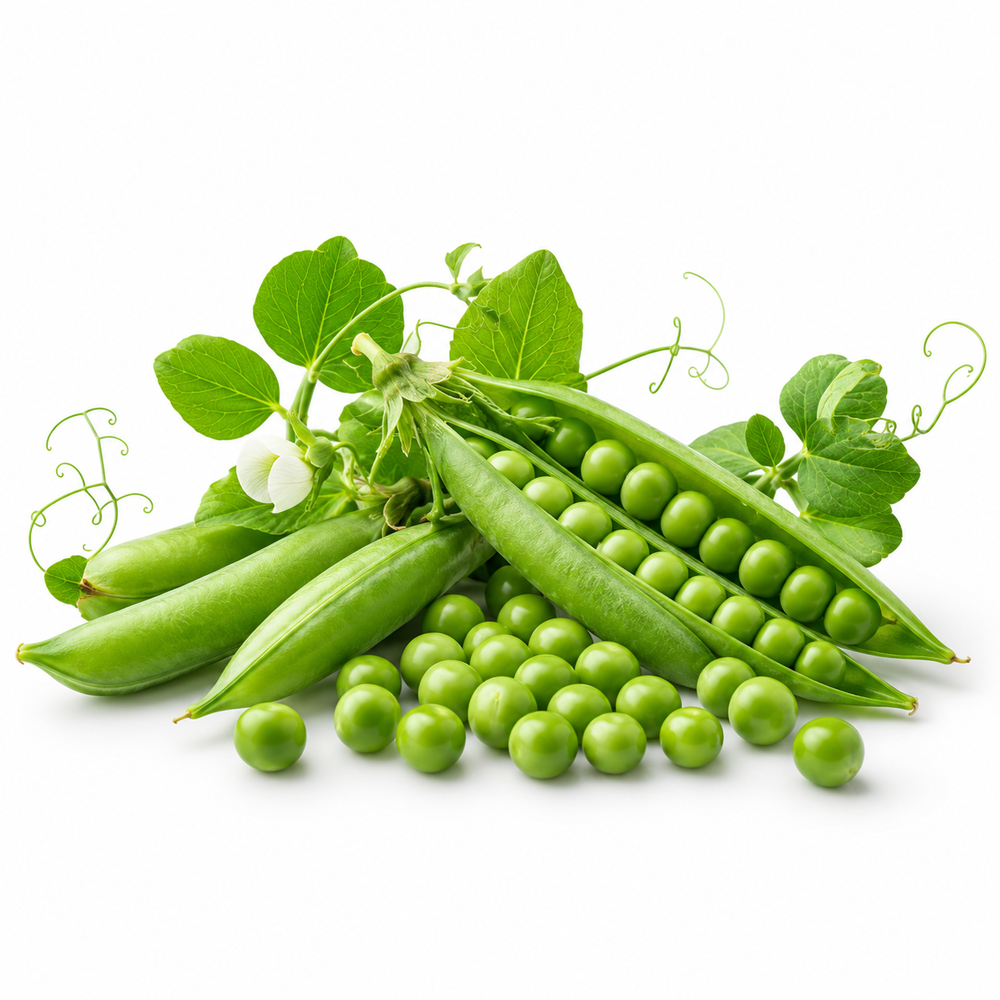
Green Peas belong to the species Pisum sativum.
Depending on variety, pea plants may be:
Most garden pea varieties benefit from some form of support.
Plants produce:
The crop can be harvested primarily for:
Fresh green peas – when pods are plump but still tender.
Some pea varieties can also be grown for:
Tender young pea shoots
although varieties selected specifically for pea production are usually grown mainly for their pods.
Exact plant height, pod length, seed size, maturity and yield vary according to variety and growing conditions.
Fresh Green Peas are especially suitable for:
Freshly harvested peas have a naturally sweet flavour and tender texture.
For best quality, harvest pods while they are:
Full, green and still tender
before peas become hard and starchy.
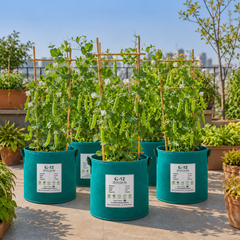
G-11 Grow Bag – 11 × 10 inch 🔗
Suitable for a small number of pea plants with vertical support.
G-12 Grow Bag – 12 × 12 inch 🔗
Provides additional root volume and stability for climbing plants.
G-24 Grow Bag – 24 × 12 inch 🔗
Recommended for growing several pea plants together along a trellis or net.
For container-grown peas, install the support at sowing or immediately after germination to avoid disturbing established roots later.
Use fertile, loose and well-drained loamy soil rich in organic matter.
A practical GREEN GARDENS mix can be:
50% Bhalu Mitti (Sandy Soil) + 50% Vermicompost 🔗
Peas prefer:
An approximate soil pH of:
6.0–7.5
is suitable.
Avoid continuously waterlogged soil because pea seeds and roots may rot in excessively wet conditions.
Peas are best direct-sown into their final growing position.
Sow seeds approximately:
4–5 cm deep
RHS recommends around 5 cm depth for garden peas.
Cover with fine soil and water gently.
Install support at or soon after sowing.
Keep the soil moist but not waterlogged.
Seeds generally germinate within:
7–14 days
under suitable cool conditions.
Pea seeds need soil temperatures of approximately:
10°C or above
for reliable germination.
Avoid sowing into cold, saturated soil.
After germination, provide:
Protect young seedlings from:
Guide young tendrils toward the support when necessary.
Provide:
6–8 hours of direct sunlight daily
Full sun supports:
In Lahore, the winter sun is generally suitable for pea production.
Maintain approximately:
5–8 cm between plants
along a trellis or row.
RHS guidance commonly recommends around 7.5 cm spacing between pea plants.
Allow wider spacing between separate rows or trellis lines for better airflow.
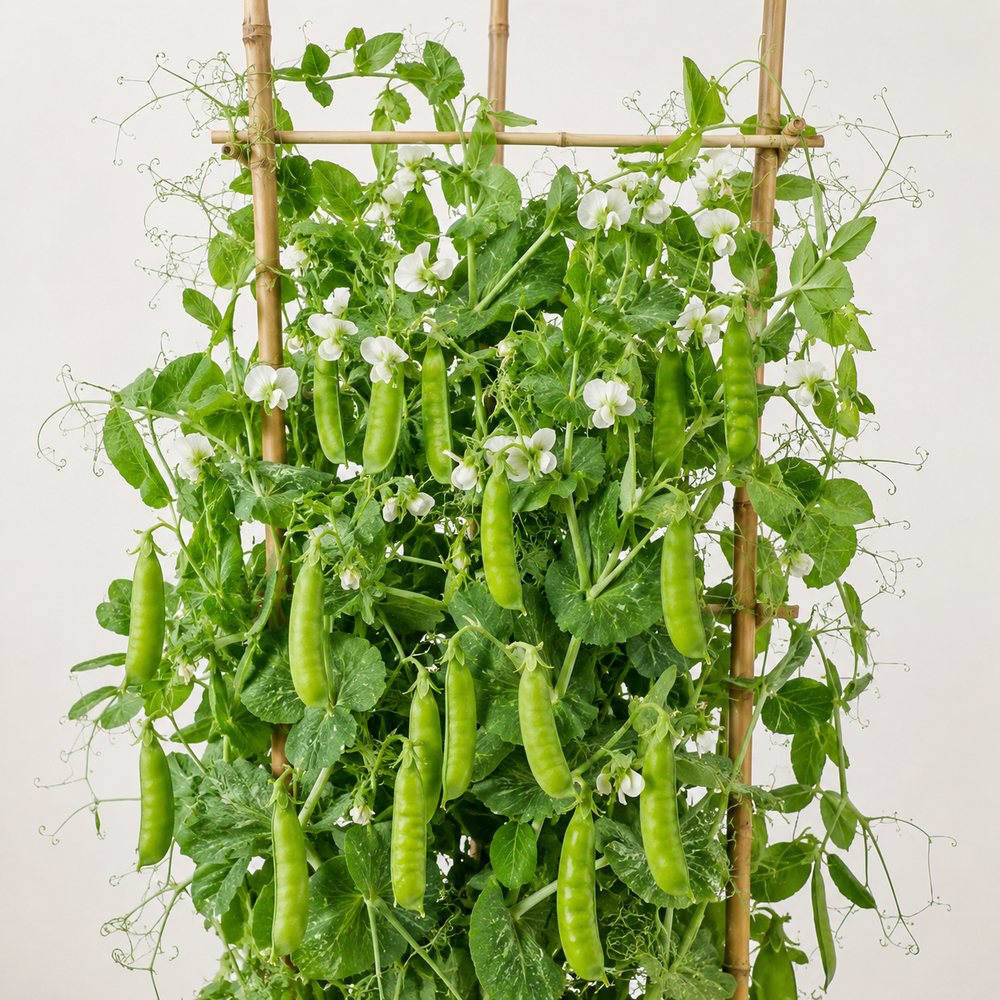
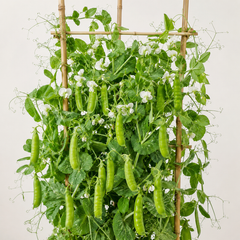
Provide suitable support such as:
Most pea varieties climb using tendrils.
RHS specifically recommends netting, chicken wire, bamboo canes or twiggy supports depending on plant height.
Maintain consistent moisture during:
Avoid severe drying during flowering.
Also avoid:
Peas need regular watering during dry weather, particularly once flowering and pod production begin.
Before sowing, incorporate GREEN GARDENS Vermicompost 🔗.
Peas are legumes and generally do not require heavy nitrogen feeding.
Excess nitrogen can encourage:
Use balanced nutrition only where additional feeding is required.
Pea plants produce attractive flowers that are generally:
Self-pollinating
Flowers are followed by developing pods.
Healthy flowering depends on:
Extreme heat can reduce flowering and pod setting.
After flowering, green pods begin to develop.
The peas inside gradually enlarge.
Maintain steady soil moisture during this stage.
Avoid allowing plants to wilt repeatedly while pods are filling.
Apply a light organic mulch around established plants.
Mulching helps:
Keep mulch slightly away from the main stems.
Inspect plants regularly for:
Good spacing and airflow are particularly important for reducing fungal problems.
Avoid prolonged waterlogging.
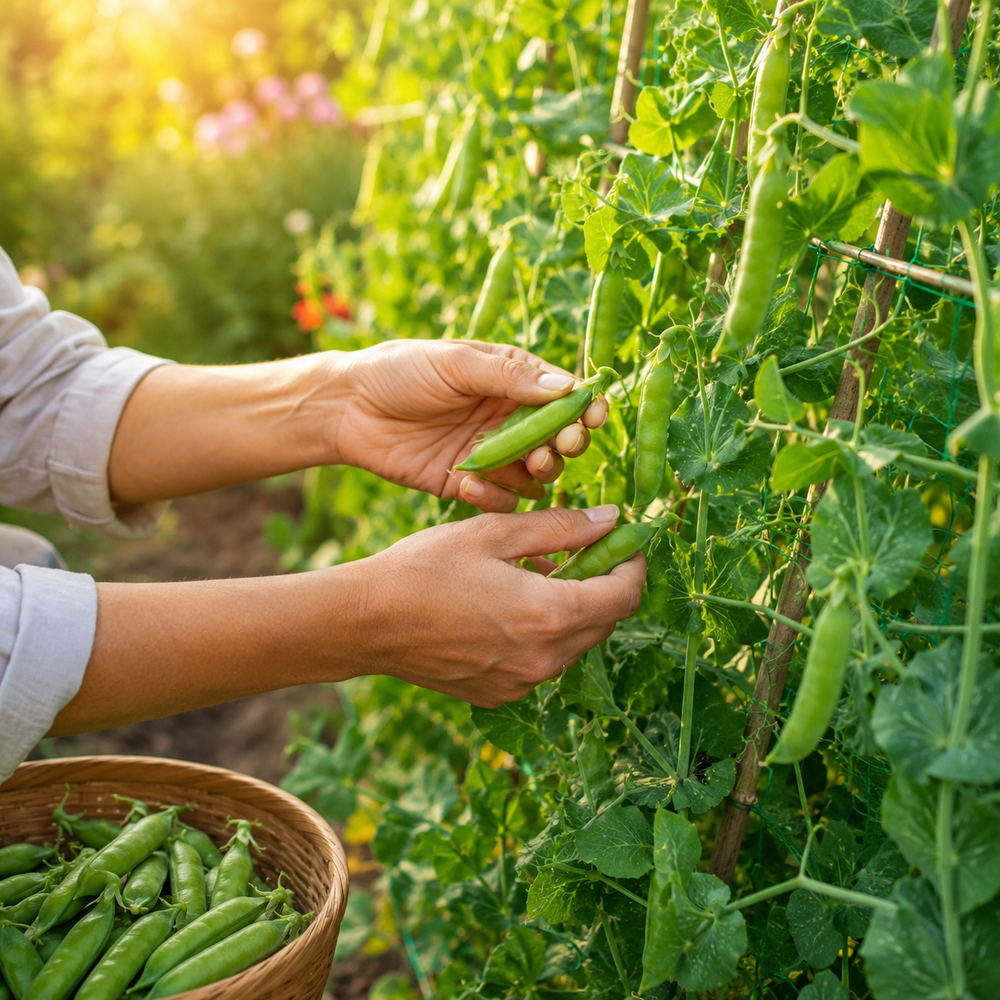
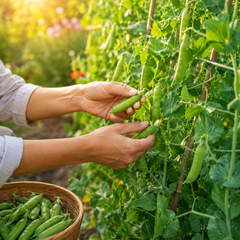
Begin harvesting when pods are:
Green, full and plump
but still tender.
Peas inside should be:
Well developed but soft and sweet
Do not wait until pods become yellow, hard or dry unless mature seed is required.
Harvest mature pods:
Every few days
during active production.
Regular picking encourages plants to continue forming pods. RHS specifically recommends frequent harvesting to catch peas at their sweetest and encourage continued production.
Use one hand to hold the vine while picking to avoid damaging the plant.
Young pea shoots may also be harvested where desired.
For pea-shoot production, plants can be cut when approximately:
10–15 cm tall
RHS notes that shoots cut above the base may sometimes regrow for a second harvest.
For maximum pod production, however, avoid harvesting large amounts of shoots from plants intended to produce peas.
G-11 Grow Bag – 11 × 10 inch 🔗
G-12 Grow Bag – 12 × 12 inch 🔗
Thanks for subscribing!
This email has been registered!


We are here to assist you