



- Choosing a selection results in a full page refresh.

Available 24/7 at
0300 110 7787
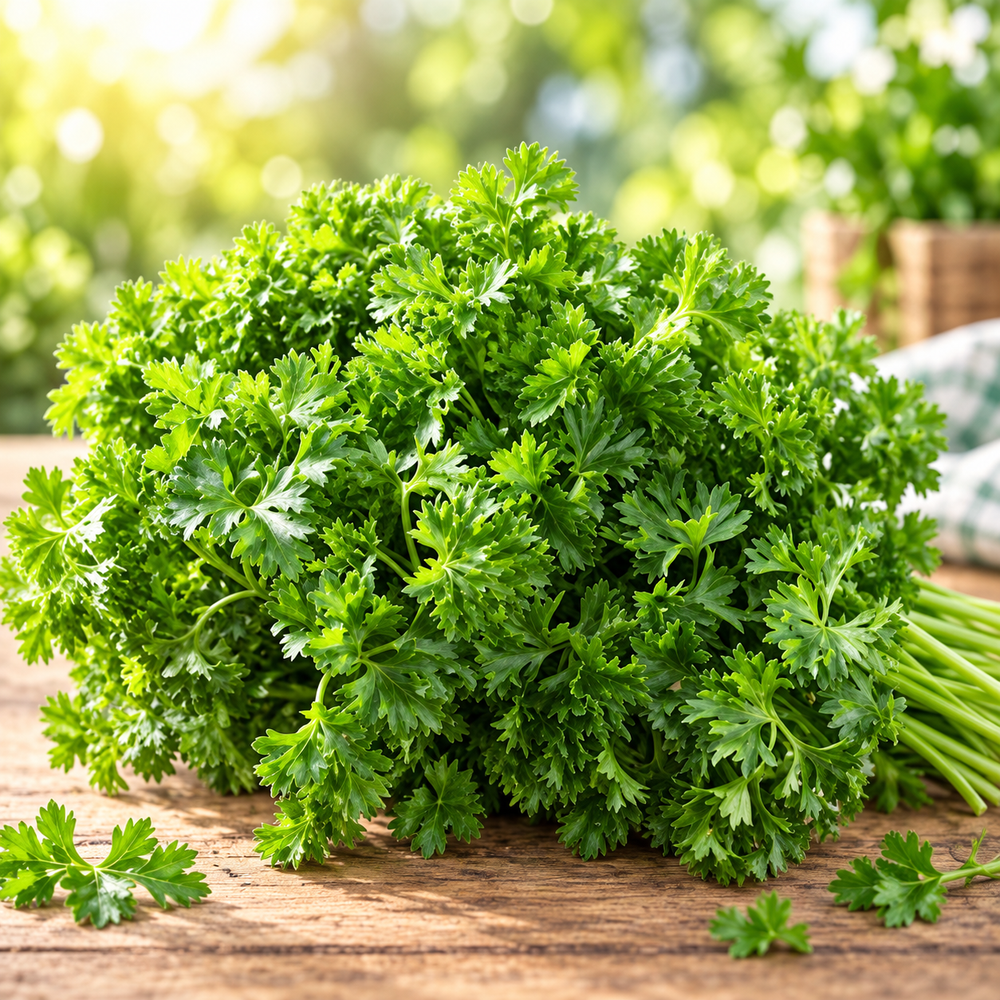



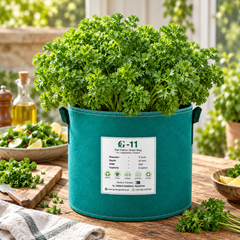
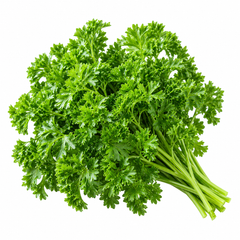
Approx. 100 seeds per pack.
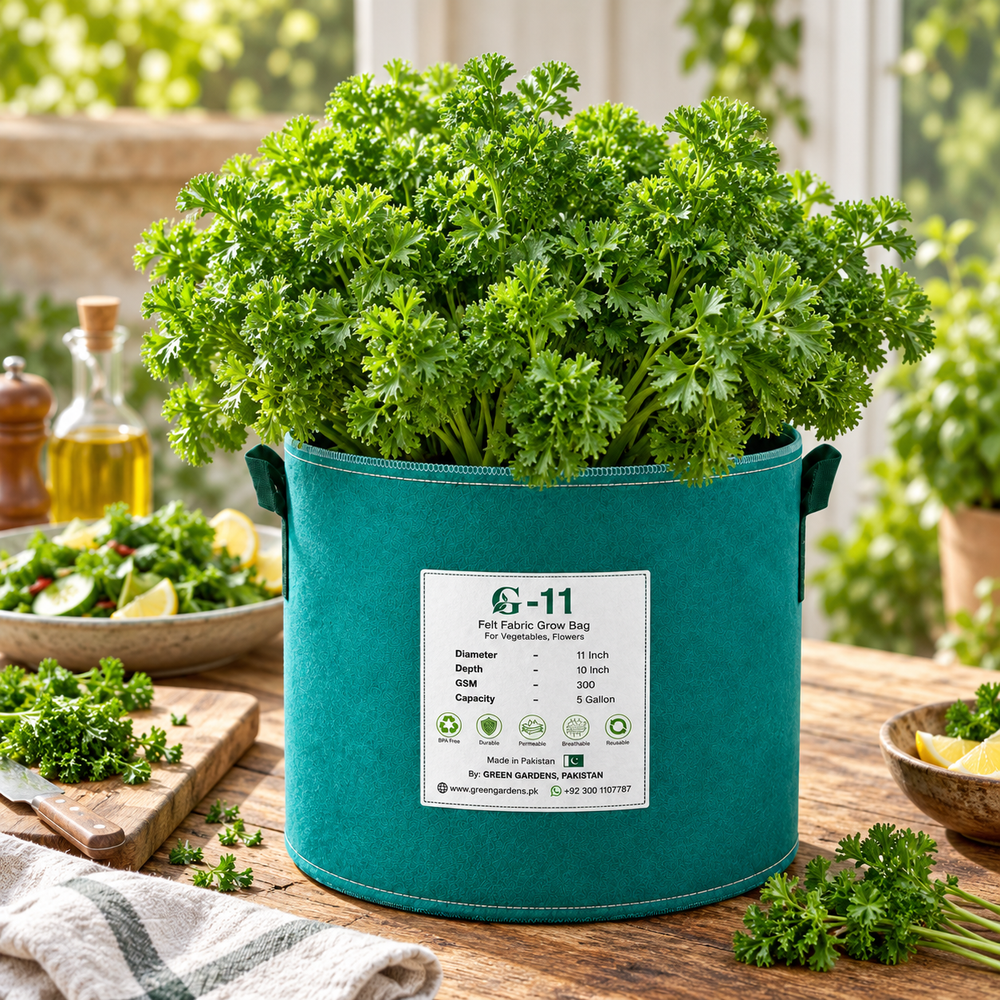
Grow Curly Leaf Parsley, a classic culinary herb producing dense, finely curled bright-green leaves with a fresh, mild flavour.
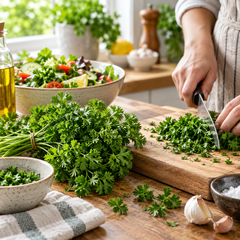
Excellent for garnishing, salads, soups, sauces, pasta, potatoes, egg dishes and everyday cooking.
Suitable for kitchen gardens, raised beds, pots, grow bags, balconies and rooftop gardening.
Germination Time: 14–30 days
Suitable Temperature: 18°C–21°C
Best Sowing Season: September - December
Couldn't load pickup availability
Free standard shipping on orders over RS 5000
High quality seeds,top germination,fast,strong, disease resistant plants with great yield.Tried multiple times always consistent results and healthy seedlings .
Curly Leaf Parsley belongs to the species Petroselinum crispum.
It is a biennial herb, meaning plants naturally produce foliage mainly during the first year and may flower and set seed during the second year.
For culinary production, parsley is generally treated like an annual and harvested mainly for its leaves during the first growing season.
Curly parsley is valued for its:
Compared with flat-leaf parsley, Curly Leaf Parsley has more tightly curled foliage and is particularly popular for decorative culinary use.
Plants can produce repeated harvests when outer stems are removed carefully while the central growth remains intact.
Exact plant size, curl intensity, leaf colour and maturity may vary according to seed strain, climate and crop management.
Curly Leaf Parsley is especially suitable for:
Its tightly curled foliage makes it especially attractive as a fresh garnish.
Parsley leaves may be added toward the end of cooking to preserve more of their fresh flavour.
Fresh leaves generally provide the best aroma, although parsley may also be frozen or dried.
Suitable for a compact Curly Parsley planting.
G-11 Grow Bag – 11 × 10 inch 🔗
Recommended for several Curly Parsley plants with comfortable growing space.
G-12 Grow Bag – 12 × 12 inch 🔗
Provides additional root volume and moisture stability for repeated harvesting.
Parsley also performs well in ordinary pots and containers, provided they have good drainage.
Use fertile, loose and well-drained soil rich in organic matter.
A practical GREEN GARDENS mix can be:
50% Bhalu Mitti (Sandy Soil) + 50% Vermicompost 🔗
Curly Parsley prefers:
An approximate soil pH of:
6.0–7.0
is suitable.
Parsley grows especially well in fertile, moisture-retentive but well-drained soil.
Avoid continuously waterlogged soil.
Curly Leaf Parsley can be:
Sow seeds approximately:
0.5–1 cm deep
Cover lightly with fine soil.
RHS recommends sowing parsley approximately 1 cm deep, while commercial seed guidance generally suggests around ¼–½ inch.
Water gently after sowing.
Keep the growing medium consistently moist.
Seeds generally germinate within:
14–30 days
at approximately:
18°C–21°C
Parsley is naturally slow to germinate and some seeds may take longer.
Do not allow the seedbed to dry during this period.
After germination, provide:
Thin overcrowded seedlings when necessary.
Avoid heavy watering that keeps the soil permanently saturated.
If seeds are started in modules or trays, transplant seedlings when they are:
Well established and approximately 10–15 cm tall
where practical.
RHS recommends transplanting indoor-raised parsley when plants reach approximately this size.
Handle roots carefully during transplanting.
Provide approximately:
4–6 hours or more of sunlight daily
Curly Parsley grows well in:
Full sun to partial shade
In Lahore, some afternoon shade can be helpful if temperatures become warm.
Parsley is adaptable to both sunny and partially shaded positions.
Maintain approximately:
15–30 cm between mature plants
depending on the desired plant size.
For compact household production, closer spacing may be used.
Commercial parsley guidance commonly recommends approximately 20–30 cm spacing, while RHS allows about 15–30 cm depending on variety.
Maintain consistent soil moisture throughout active growth.
Water whenever the upper soil begins to dry.
Avoid:
Parsley prefers moisture-retentive conditions but still requires good drainage.
Before sowing or transplanting, incorporate GREEN GARDENS Vermicompost 🔗.
Parsley performs best in fertile soil.
Where growth becomes weak during repeated harvesting, light balanced feeding may be applied.
Avoid excessive fertilizer application.
For a more continuous supply of fresh parsley, sow smaller batches periodically during suitable cool weather.
Succession sowing can help extend the harvesting period.
Apply a light organic mulch around established plants.
Mulching helps:
Keep mulch slightly away from the central crown.
Keep the parsley bed relatively weed-free.
Young parsley grows slowly and can easily be overtaken by fast-growing weeds.
Remove weeds carefully to avoid disturbing the developing roots.
Inspect plants regularly for:
Parsley is related to carrots and celery and may be affected by some of the same pests and diseases.
Good crop hygiene and proper drainage help maintain plant health.
Begin harvesting once plants have developed:
A healthy group of mature stems and leaves
Avoid removing large quantities from very young plants.
Harvest the outer stems first.
For continuous production:
Cut outer leafy stems close to the base
while leaving the central younger growth intact.
Regular harvesting encourages plants to continue producing fresh leaves.
Avoid cutting only the leaf tips from every stem.
Fresh Curly Parsley is best used soon after harvesting.
Leaves may also be:
For drying, place clean foliage in a:
Warm, shaded and well-ventilated location
until completely dry.
Store dried parsley in an airtight container.
Fresh parsley generally retains a stronger flavour than dried parsley.
G-11 Grow Bag – 11 × 10 inch 🔗
Thanks for subscribing!
This email has been registered!


We are here to assist you