




Best Sowing Season: September - November


- Choosing a selection results in a full page refresh.

Available 24/7 at
0300 110 7787
Approx. 200 seeds per pack.
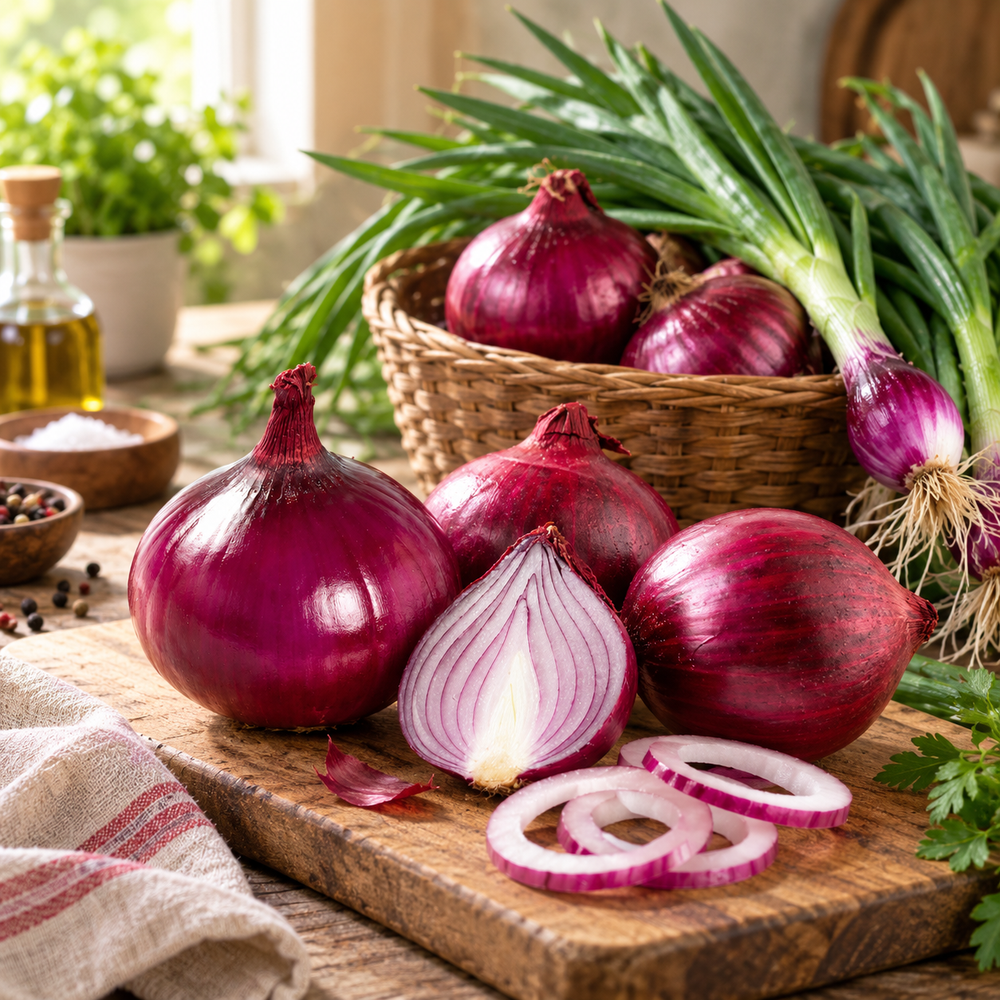
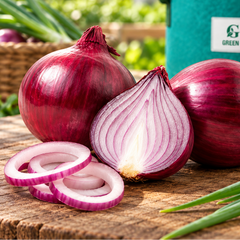
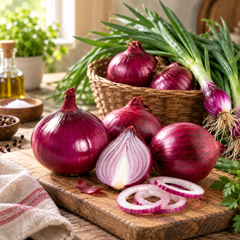
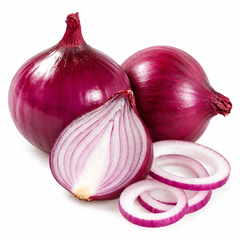
Grow Red Onion, a popular cool-season bulb vegetable producing attractive red to reddish-purple bulbs with crisp texture and characteristic onion flavour.
Excellent for salads, curries, gravies, pickles, chutneys, frying, biryani and everyday Pakistani cooking.
Suitable for kitchen gardens, raised beds, open soil and larger grow bags.
Germination Time: 7–14 days
Suitable Temperature: 15°C–25°C
Best Sowing Season: September - November
Couldn't load pickup availability
Free standard shipping on orders over RS 5000
Excellent
Red Onion belongs to the species Allium cepa.
It is grown primarily for its edible bulbs and is recognised by its:
Red Onion plants first develop upright hollow green leaves.
As plants mature, the bases of these leaves enlarge and form the edible bulb at or near soil level.
The crop may be established using:
Nursery & transplanting – useful for controlled plant spacing and uniform establishment.
Direct sowing – possible in finely prepared soil or containers.
Young plants may also be harvested before bulb formation for green-onion use.
Exact bulb colour, shape, size, pungency, maturity and storage quality may vary according to seed strain, climate and cultivation practices.
Red Onions are especially suitable for:
Fresh Red Onion adds:
Cooking softens the texture and develops a sweeter, richer flavour.
G-11 Grow Bag – 11 × 10 inch 🔗
Suitable for growing a small group of Red Onion plants with proper spacing.
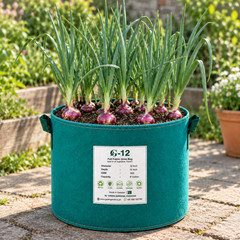
G-12 Grow Bag – 12 × 12 inch 🔗
Provides sufficient soil volume for several onion plants.
G-24 Grow Bag – 24 × 12 inch 🔗
Recommended for growing a larger group of Red Onions together.
The wide 24-inch growing surface of G-24 is particularly useful for onions because several plants can be spaced across the container while maintaining adequate root and bulb space.
Use fertile, loose and well-drained loamy soil rich in organic matter.
A practical GREEN GARDENS mix can be:
50% Bhalu Mitti (Sandy Soil) + 50% Vermicompost 🔗
Red Onions prefer:
An approximate soil pH of:
6.0–7.0
is suitable.
Avoid:
Loose soil allows developing bulbs to expand more freely.
For home gardening, Red Onion seeds can be started in:
Sow seeds approximately:
0.5–1 cm deep
Cover lightly with fine soil.
Water gently.
Keep the seedbed evenly moist until germination.
Seeds generally germinate within:
7–14 days
under suitable conditions.
An approximate temperature range of:
15°C–25°C
supports good germination and seedling establishment.
Keep the soil moist but not waterlogged.
After germination, provide:
Avoid overwatering.
Allow seedlings to develop several strong upright leaves before transplanting.
Transplant seedlings once they are strong enough to handle and have developed a healthy root system.
A useful stage is when seedlings are approximately:
Pencil-thin
with several established leaves.
Handle seedlings gently to minimise root damage.
Avoid burying the lower stem excessively deeply.
Provide:
6–8 hours of direct sunlight daily
Good sunlight supports:
Avoid deep shade.
For mature bulb production, maintain approximately:
8–10 cm between plants
Wider spacing generally encourages larger bulbs.
Where growing in rows, maintain approximately:
20–30 cm between rows
when sufficient space is available.
For green-onion harvesting, plants may be grown somewhat closer together.
Maintain consistent soil moisture during:
Water when the upper soil begins to dry.
Avoid:
As bulbs approach full maturity, gradually reduce unnecessary watering.
Before sowing or transplanting, incorporate GREEN GARDENS Vermicompost 🔗.
Red Onions benefit from fertile soil during early growth.
Balanced nutrition supports:
Avoid excessive nitrogen later in the crop.
Too much nitrogen can encourage continued leaf growth and delay bulb maturity.
Keep onion beds and containers free from aggressive weeds.
Onions have relatively shallow root systems and can suffer strongly from weed competition.
Remove weeds carefully to avoid damaging:
Regular light weeding is preferable to deep cultivation around established plants.
The onion bulb gradually enlarges as the plant matures.
Do not bury developing bulbs beneath heavy layers of soil.
The upper portion of the mature bulb may naturally become visible above the soil surface.
Healthy bulb development depends on:
Apply a light organic mulch around established plants if required.
Mulching can help:
Keep thick mulch away from the bulb neck and developing bulb.
Inspect plants regularly for:
Good airflow and drainage are particularly important.
Avoid:
Young plants can be harvested before full bulb formation for:
Green onion / spring onion-style use
Harvest when:
If mature bulbs are the objective, leave selected plants undisturbed.
Red Onion bulbs are generally ready when:
Reduce watering as maturity approaches.
Lift bulbs carefully from loose soil.
Avoid damaging or bruising them during harvesting.
After harvesting, cure bulbs in a:
Dry, shaded and well-ventilated location
Allow:
After curing:
Do not store wet or damaged onions together with healthy cured bulbs.
G-11 Grow Bag – 11 × 10 inch 🔗
G-12 Grow Bag – 12 × 12 inch 🔗
Thanks for subscribing!
This email has been registered!


We are here to assist you