






Best Sowing Season: September - November


- Choosing a selection results in a full page refresh.

Available 24/7 at
0300 110 7787
Pack Size: Approx. 50 seeds per pack.
Grow Leeks, a classic cool-season vegetable producing long, upright blue-green leaves and thick white to pale-green edible stems with a mild onion-like flavour.
Excellent for soups, stews, curries, stir-fries, pasta, baked dishes and everyday cooking.
Suitable for kitchen gardens, raised beds, open soil and larger grow bags.
Germination Time: 7–14 days
Suitable Temperature: 10°C–20°C
Best Sowing Season: September - November
Couldn't load pickup availability
Free standard shipping on orders over RS 5000
Leek belongs to the species Allium porrum and is closely related to onions, garlic and other members of the Allium family.
Unlike bulb onions, leeks are grown mainly for their:
The edible stem portion develops gradually as the plant grows.
Leeks have a milder and sweeter flavour than many common onions, making them especially useful in soups, sauces and slow-cooked dishes.
Plants develop slowly compared with many leafy vegetables, but they can produce substantial edible stems when provided with:
Leeks may also be harvested young as tender baby leeks.
Exact stem thickness, plant height, maturity period and yield may vary according to variety, temperature, soil fertility and crop management.
Leeks are especially suitable for:
The white and pale-green parts are most commonly used for cooking.
The leaves may also be used for flavouring stocks and soups where appropriate.
Wash leeks thoroughly before cooking because soil can collect between the overlapping leaf bases.
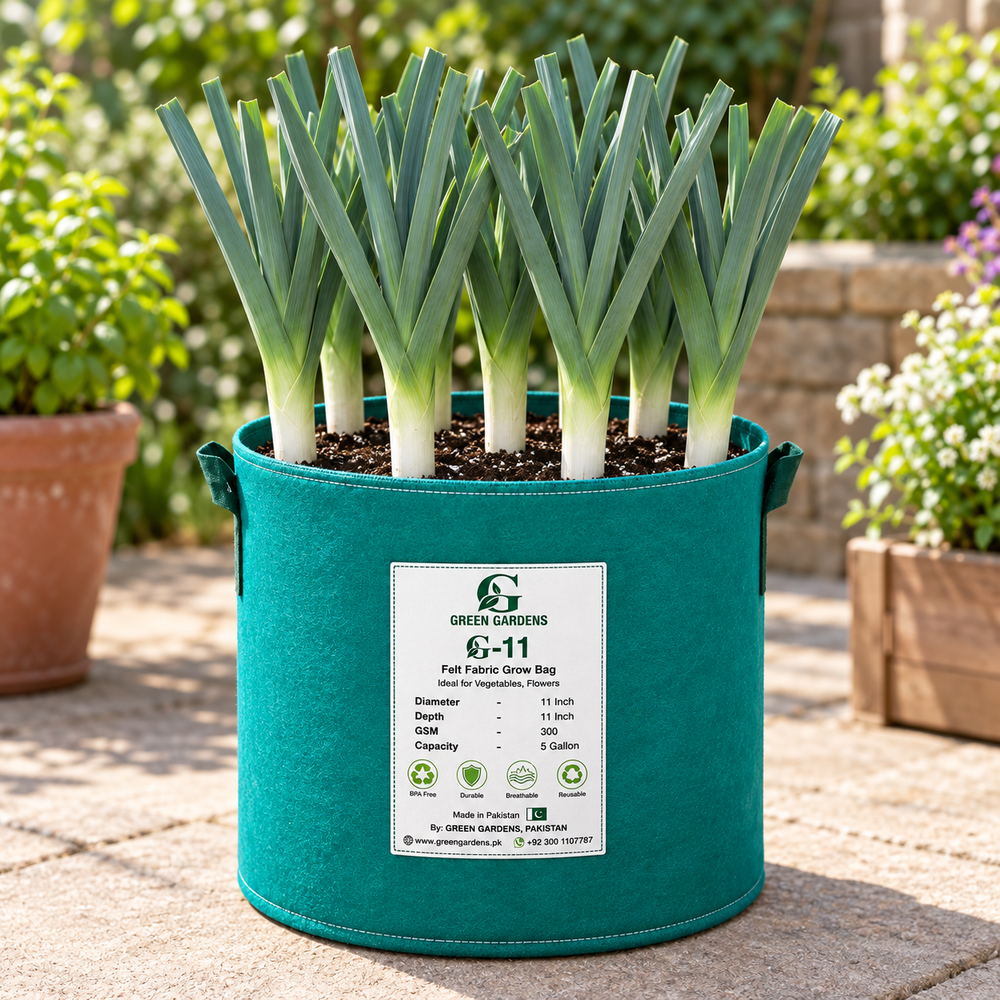
G-11 Grow Bag – 11 × 10 inch 🔗
Suitable for growing a small number of leek plants with adequate spacing.
G-15 P Grow Bag – 15 × 14 inch 🔗
Provides good depth and root volume for developing thicker stems.
G-24 Grow Bag – 24 × 12 inch 🔗
Suitable for growing several leek plants together.
For longer white stems, deeper containers or raised soil around the stems can help increase the blanched edible portion.
Use fertile, loose and well-drained loamy soil rich in organic matter.
A practical GREEN GARDENS mix can be:
50% Bhalu Mitti (Sandy Soil) + 50% Vermicompost 🔗
Leeks prefer:
An approximate soil pH of:
6.0–7.0
is suitable.
Avoid compacted or permanently waterlogged soil.
Leeks may be started in:
Sow seeds approximately:
0.5–1 cm deep
Cover lightly with fine soil.
Water gently after sowing.
For easier management, seeds can be started in a nursery area and seedlings transplanted later into their final growing position.
Keep the soil consistently moist but not waterlogged.
Seeds generally germinate within:
7–14 days
under suitable cool to mild conditions.
Germination may become slower when conditions are excessively cold or warm.
After germination, provide:
Thin overcrowded seedlings where necessary.
Allow young plants to establish a healthy root system before transplanting.
Transplant seedlings once they are strong enough to handle and have developed a healthy root system.
Plant seedlings approximately:
10–15 cm apart
For thicker mature stems, provide slightly wider spacing where possible.
Seedlings can be planted somewhat deeper than they were growing in the nursery to encourage development of a longer pale lower stem.
Provide:
6–8 hours of direct sunlight daily
Full sunlight supports:
Leeks can tolerate some light partial shade but generally perform best in good sunlight.
Maintain approximately:
10–15 cm between plants
Allow adequate space between rows or groups of plants for:
Avoid severe overcrowding.
Maintain steady soil moisture throughout the growing period.
Leeks require consistent moisture for good stem development.
Avoid:
Water deeply when required rather than keeping only the surface wet.
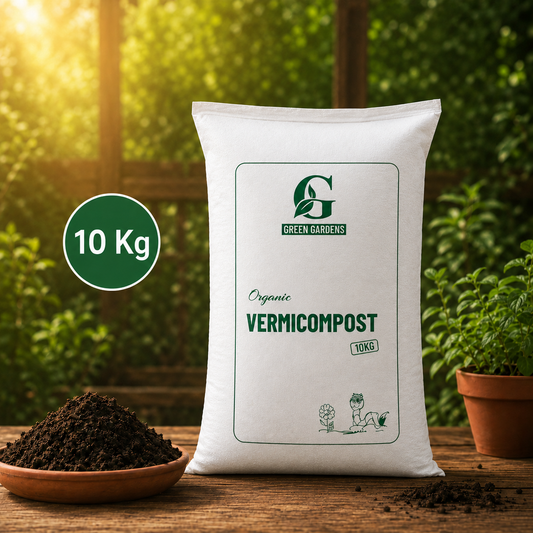
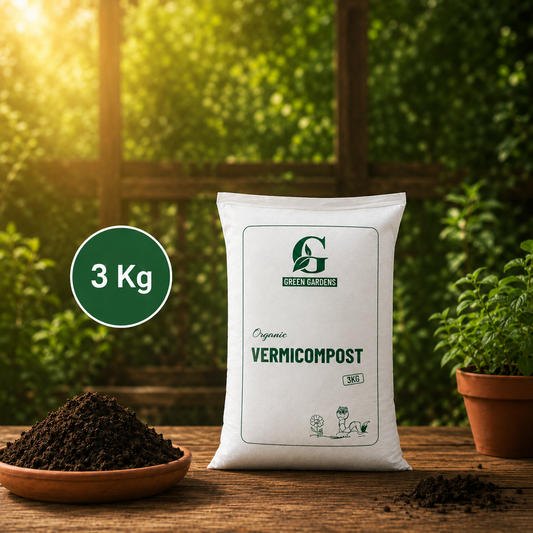
Before planting, incorporate GREEN GARDENS Vermicompost 🔗.
Leeks benefit from fertile soil containing sufficient organic matter.
During active growth, balanced feeding may be provided where soil fertility is low.
Avoid excessive fertilizer application.
To develop a longer white edible stem, gradually draw loose soil around the lower stems as the plants grow.
This process is called:
Earthing-up or blanching
Add soil gradually rather than burying the plant deeply in one step.
Avoid allowing soil to enter deeply between the central leaves.
Reducing light exposure around the lower stem helps produce a longer pale edible portion.
Apply a light organic mulch around established plants.
Mulching helps:
Keep mulch slightly away from the central leaf bases.
Keep the growing area relatively weed-free.
Leeks develop slowly and can suffer competition from weeds, particularly when young.
Remove weeds carefully to avoid disturbing the roots.
Inspect plants regularly for:
Good crop hygiene, adequate spacing and proper drainage help reduce many problems.
Avoid prolonged waterlogging and excessive crowding.
Young plants may be harvested early as:
Baby leeks
Harvest when stems are tender and have reached the desired thickness.
Baby leeks generally have a delicate texture and mild flavour.
Harvest mature leeks when the stems have developed sufficient thickness.
Loosen the surrounding soil before lifting to avoid damaging the stem.
Pull or lift the entire plant carefully.
During suitable cool weather, harvesting can be staggered according to kitchen requirements.
After harvesting:
Fresh leeks can be refrigerated for short-term storage.
For best flavour and texture, use them while fresh and crisp.
G-11 Grow Bag – 11 × 10 inch 🔗
Thanks for subscribing!
This email has been registered!