


Best Sowing Season: February – April & September – October


- Choosing a selection results in a full page refresh.

Available 24/7 at
0300 110 7787
Pack Size: Approx. 50–60 seeds per pack.
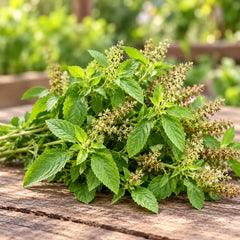
Grow beautifully aromatic Holy Basil (Tulsi), a traditional herb featuring fragrant green leaves, branching stems and delicate flower spikes with a distinctive warm, slightly spicy, clove-like aroma.
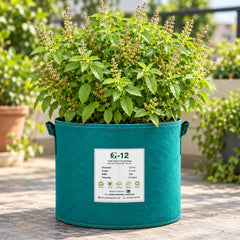
This versatile herb is ideal for kitchen gardens, herbal tea gardens, balconies, rooftop gardening and GREEN GARDENS grow bags. Tulsi is valued for its aromatic foliage, ornamental appearance and long history of traditional herbal use.
Germination Time: 7–14 days
Ideal Temperature: 25–30°C
Growing Guide Video: Gardening with Javed Iqbal
Best Sowing Season: February – April & September – October
Couldn't load pickup availability
Free standard shipping on orders over RS 5000
Holy Basil (Ocimum tenuiflorum, synonym Ocimum sanctum), commonly known as Tulsi, is a highly aromatic herb belonging to the mint family (Lamiaceae). Tulsi is valued for its distinctive fragrance, and attractive branching growth.
Unlike ordinary Sweet Basil (Ocimum basilicum), Tulsi has a distinctive spicy, clove-like aroma and is commonly grown for herbal infusions, aromatic foliage and ornamental purposes.
Botanical Name: Ocimum tenuiflorum (syn. Ocimum sanctum)
Common Name: Holy Basil / Tulsi / Sacred Basil
Family: Lamiaceae
Type: Aromatic culinary and traditional herbal plant
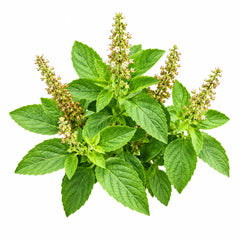
Leaves: Fragrant green foliage, sometimes with purplish tones
Flowers: Small white to pinkish-purple flower spikes
Plant Height: Approximately 30–90 cm
Growth Habit: Upright, bushy and branching
Sunlight: Full sun to partial shade during extreme heat
Special Features: Aromatic leaves, herbal tea use and pollinator-friendly flowers
G-8 Grow Bag – 8 × 8 inch – 1 young plant for initial growth.
G-11 Grow Bag – 11 × 10 inch – 1 plant.
G-12 Grow Bag – 12 × 12 inch – 1 mature plant.
Holy Basil develops a branching root system and performs well in medium-sized containers.
For prolonged growth and repeated harvesting, the G-12 grow bag is recommended.
50% Bhalu Mitti / Garden Soil + 30% GREEN GARDENS Vermicompost + 20% Cocopeat
Use fertile, loose, organic-rich and well-draining soil.
Maintain moderate moisture while avoiding waterlogging, which can damage the roots.
Method: Seed tray, nursery or direct sowing
Sowing Depth: Approximately 2–3 mm; cover very lightly
Germination: 7–14 days
Ideal Temperature: 25–30°C
Plant Spacing: Approximately 25–30 cm
Watering: Keep the seed-starting medium lightly and consistently moist
Sow seeds shallowly in a fine, well-draining growing medium.
Cover with a very thin layer of fine soil or cocopeat, allowing light to reach the seeds.
Mist gently after sowing to avoid displacing the tiny seeds.
Keep the seed tray in a warm, bright location away from intense midday sunlight.
When seedlings develop 2–3 sets of true leaves, transplant them carefully into individual pots or grow bags.
Avoid overcrowding and maintain adequate airflow.
Sunlight: Preferably 5–6 hours of direct sunlight daily. Provide light afternoon shade during extreme summer heat.
Watering: Water moderately when the upper soil begins to dry. Maintain consistent moisture without keeping the root zone waterlogged.
During winter, reduce watering according to temperature, sunlight and soil moisture.
First Harvest: Approximately 40–60 days after sowing
Harvesting Season: Spring, summer and protected autumn/winter
Growth Habit: Upright, bushy and branching
Plant Height: Approximately 30–90 cm
Harvested Part: Fresh aromatic leaves and tender shoots
Begin harvesting when plants are well established and have developed sufficient foliage.
Cut or pinch tender stems just above a pair of leaves to encourage branching.
Avoid removing more than approximately one-third of the plant at a time.
Regular harvesting encourages the production of fresh leaves and maintains an attractive, bushy plant.
Mix GREEN GARDENS Vermicompost into the growing medium before sowing or transplanting.
Apply small additional quantities during active growth if needed.
Avoid excessive nitrogen feeding, which may encourage soft, weak growth.
Holy Basil naturally develops upright, branching stems.
Pinch the growing tips when plants reach approximately 15–20 cm and have several sets of true leaves.
Regular pinching encourages lateral branches, producing a fuller and more productive plant.
Remove developing flower spikes when continuous tender leaf harvesting is the main objective.
Alternatively, allow selected stems to flower to attract bees and other beneficial pollinating insects.
Summer Care
Provide morning sunlight and light afternoon shade during extreme heat.
Maintain consistent soil moisture.
Ensure good drainage and airflow.
Avoid severe drying of container-grown plants.
Winter Care
Keep plants in a warm, sunny and sheltered location.
Protect from frost and cold winds.
Reduce watering during periods of slow growth.
Move smaller pots to protected areas during cold weather.
Holy Basil is not frost-hardy. In Lahore, winter protection is important for maintaining healthy plants.
Holy Basil is widely valued for its distinctive aroma and traditional herbal applications.
Common uses include:
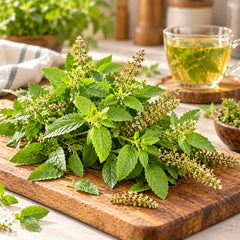
Tulsi herbal tea
Aromatic herbal infusions
Fresh herb blends
Culinary seasoning
aromatic garden use
Fragrant garden arrangements
Fresh or dried leaves are commonly used to prepare Tulsi tea.
These are seeds for planting in kitchen herb gardens.
Holy Basil is also suitable for:
Kitchen herb gardens
Balcony gardening
Rooftop gardening
Decorative pots
Aromatic herb borders
Pollinator-friendly gardens
GREEN GARDENS grow bags
Its branching foliage and delicate flower spikes make it an attractive addition to small home gardens.
Allowing selected plants to flower provides nectar resources for visiting pollinators.
Thanks for subscribing!
This email has been registered!