



Best Sowing Season: October - December


- Choosing a selection results in a full page refresh.

Available 24/7 at
0300 110 7787
Pack Size: Approx. 300–350 seeds per pack.
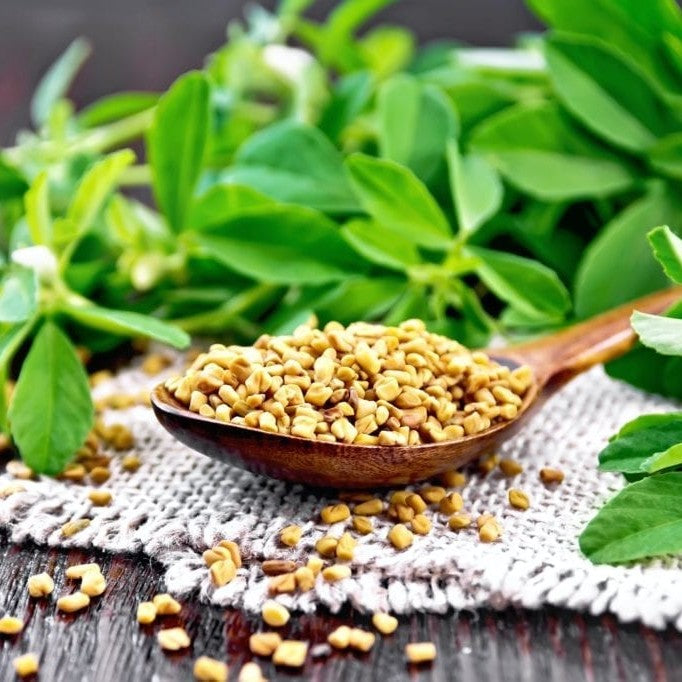
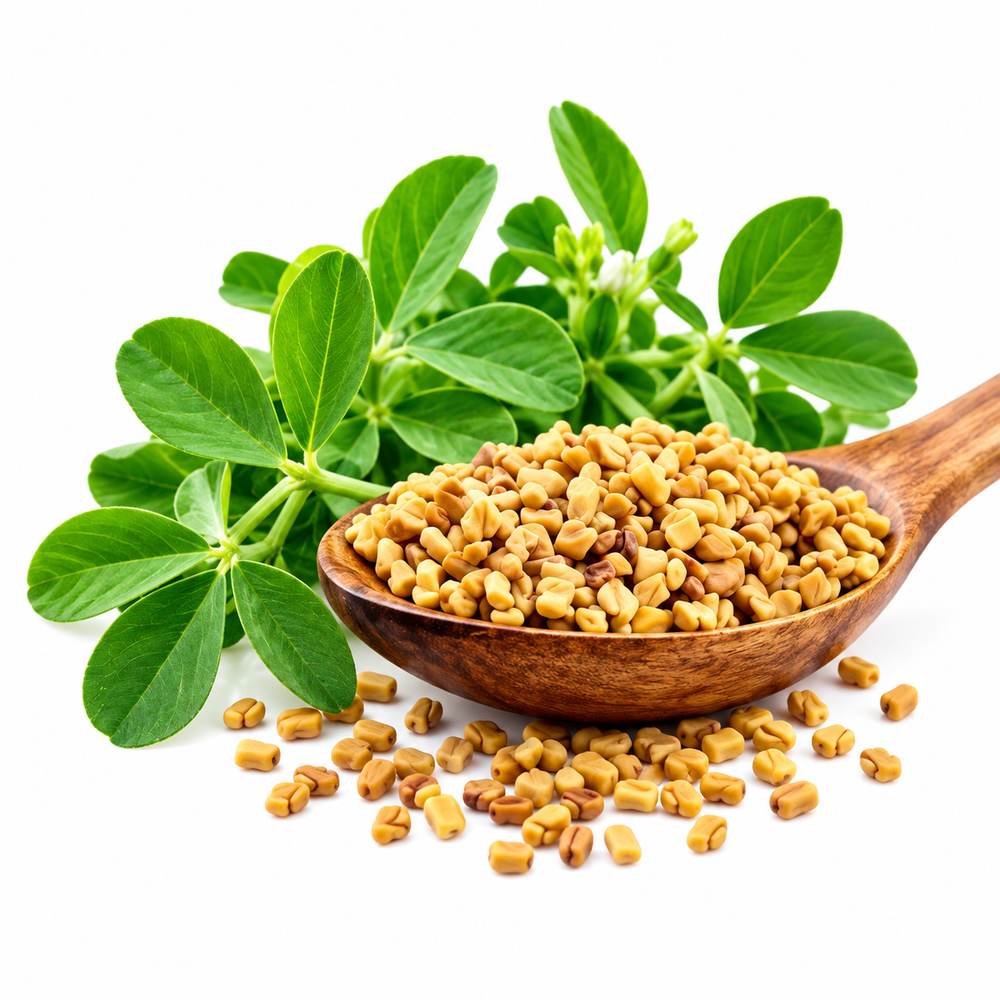
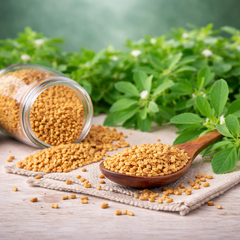
Grow Fenugreek (Methry), a fast-growing cool-season leafy herb and vegetable producing tender green leaves with the characteristic slightly bitter, aromatic flavour widely used in Pakistani cooking.
Excellent for fresh Methry leaves, curries, parathas, mixed vegetables and dried Kasuri Methry.
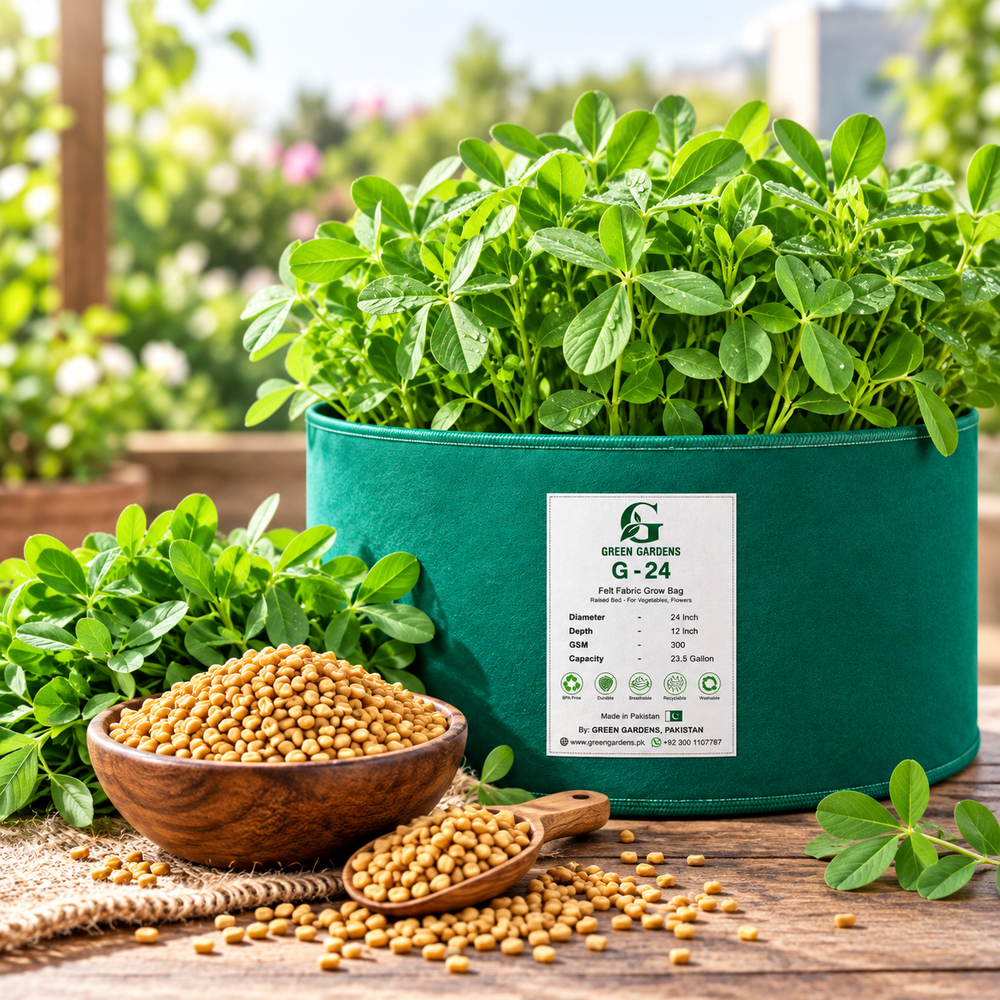
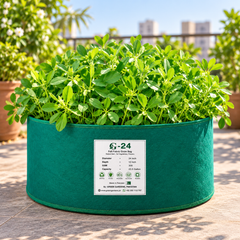
Suitable for kitchen gardens, raised beds, open soil, pots and grow bags.
Germination Time: 3–7 days
Suitable Temperature: 15°C–25°C
Best Sowing Season: October - December
Couldn't load pickup availability
Free standard shipping on orders over RS 5000
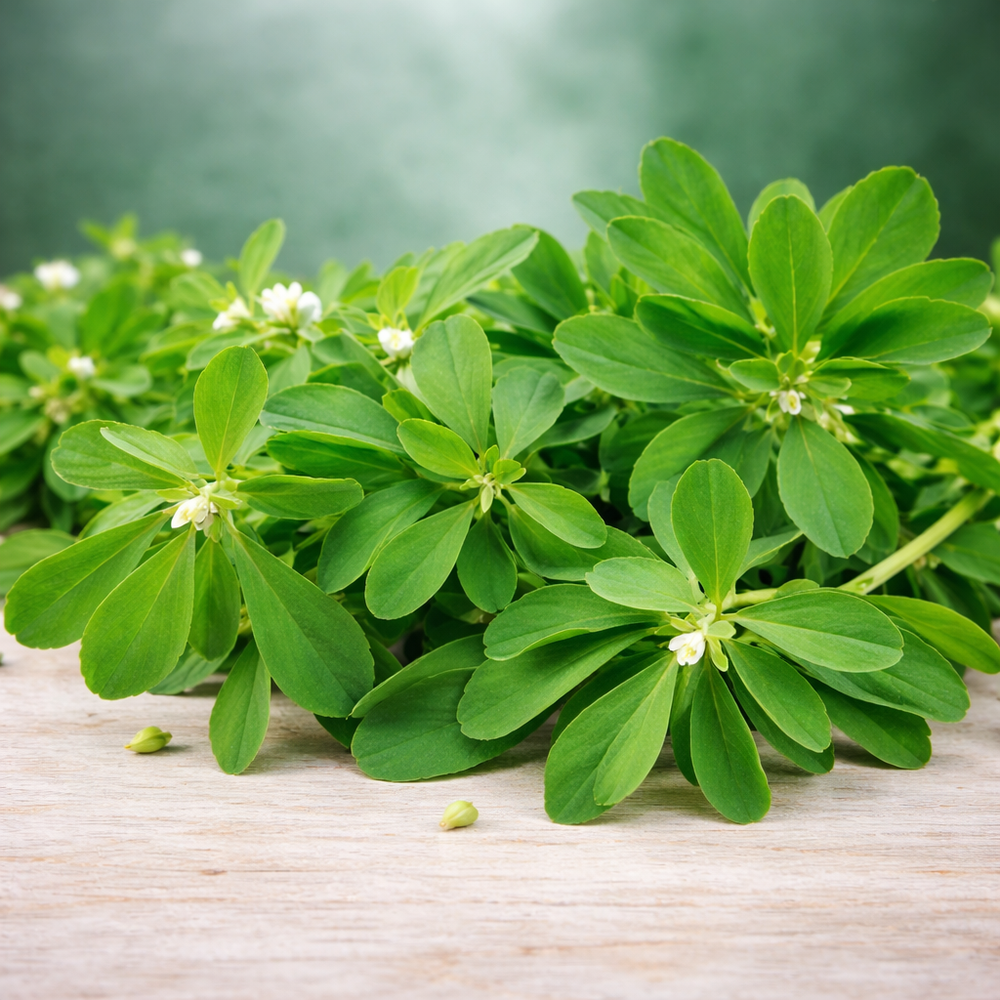
Fenugreek is an aromatic annual herb botanically known as Trigonella foenum-graecum.
In Pakistan it is commonly known as:
Methry
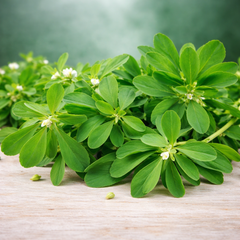
The plant produces small green leaves composed of three leaflets and develops a distinctive aromatic flavour that becomes stronger as the plant matures.
Fenugreek can be grown for:
When grown for fresh leaves, plants are usually harvested while young and tender.
If plants are allowed to mature, they produce small flowers followed by pods containing Fenugreek seeds.
Fenugreek belongs to the legume family, which means it can associate with nitrogen-fixing bacteria in suitable soil conditions.
Exact plant height, leaf size, maturity and seed production may vary according to climate, sowing density and crop management.
Fenugreek leaves are especially suitable for:
Young leaves provide a:
Fresh, aromatic and mildly bitter flavour
The leaves may be used fresh or dried.
For Kasuri Methry, harvest healthy leaves and dry them in a shaded, well-ventilated location before storing.
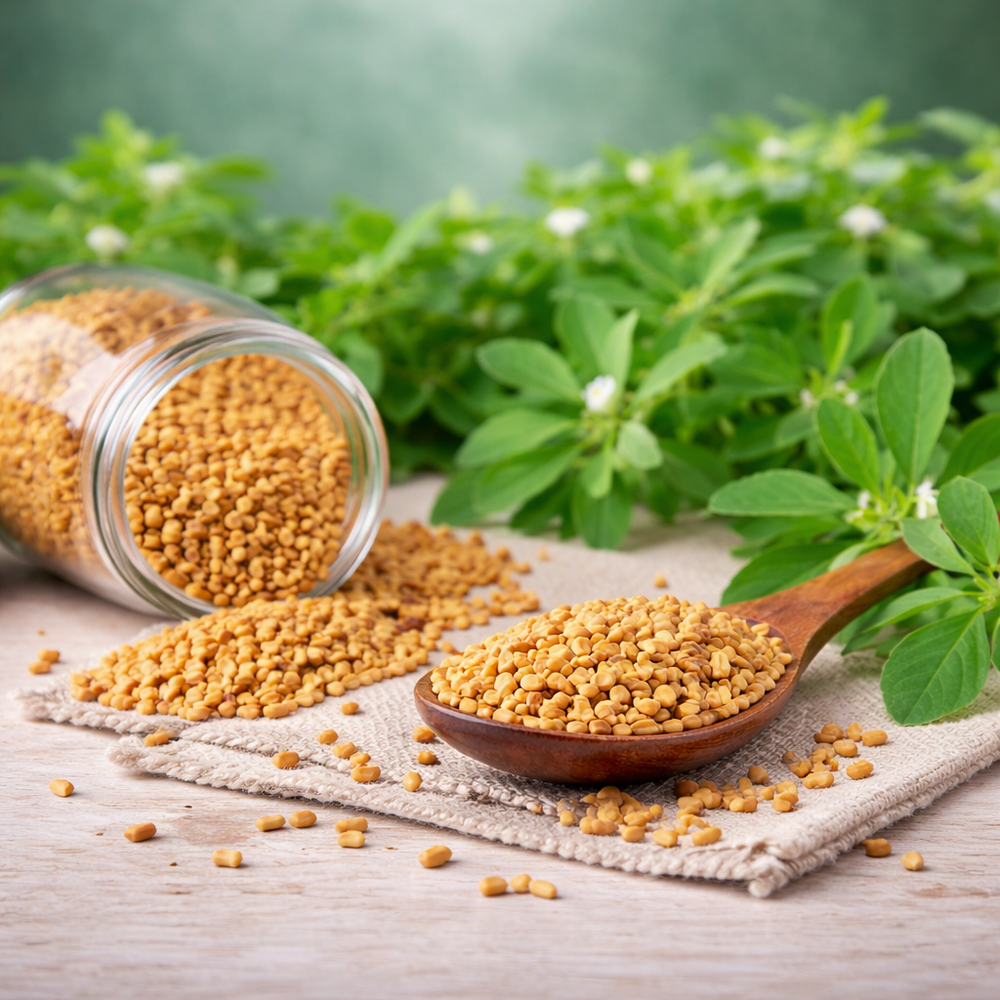
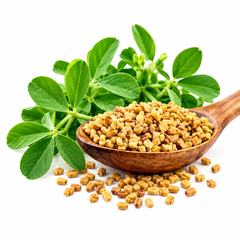
Fenugreek seeds can also be used as a spice once plants are allowed to fully mature.
Suitable for growing a small patch of Fenugreek for fresh leaves.
G-11 Grow Bag – 11 × 10 inch 🔗
Suitable for a larger cluster of Methry plants.
G-12 Grow Bag – 12 × 12 inch 🔗
Provides generous growing space for repeated leaf harvesting.
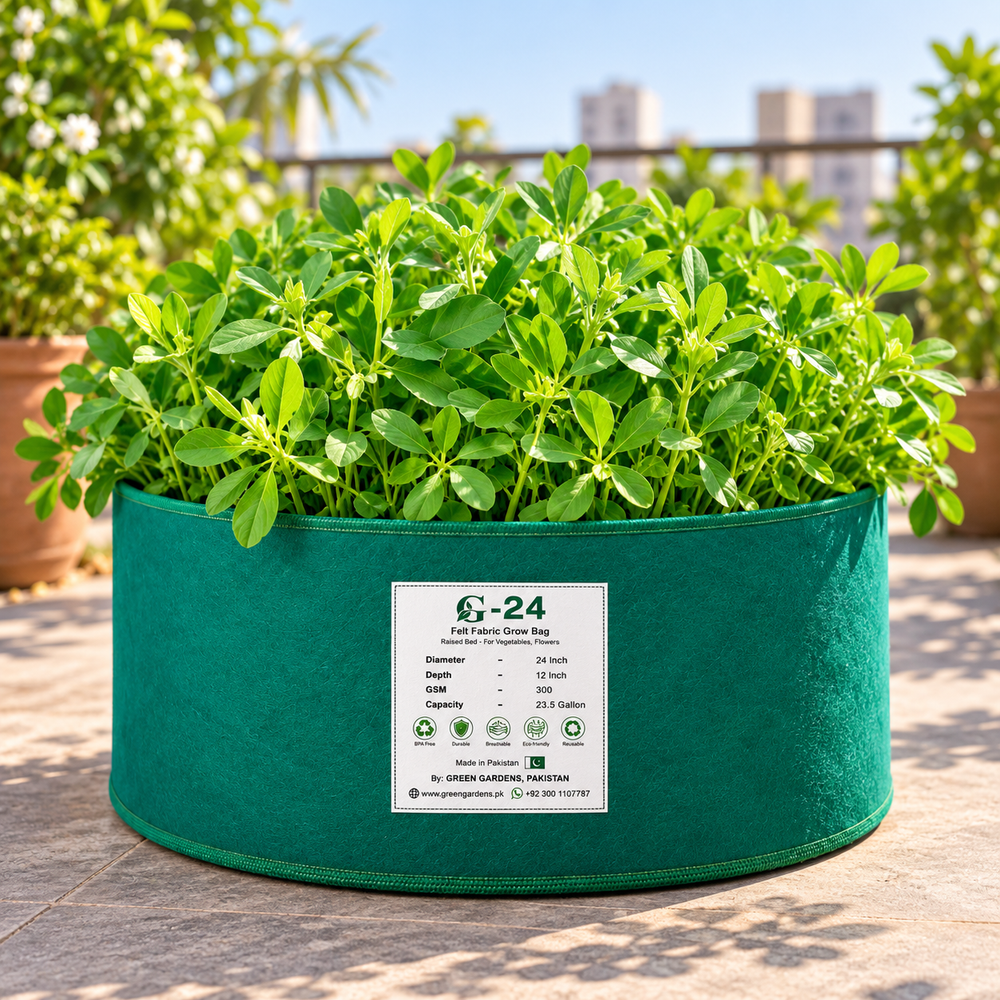
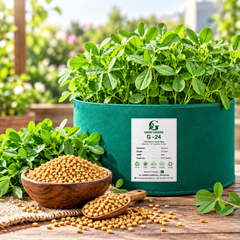
G-24 Grow Bag – 24 × 12 inch 🔗
Excellent for growing a broad patch of Fenugreek for regular kitchen harvesting.
Fenugreek does not require very deep soil when grown mainly for leaves, making it especially suitable for wide grow bags and containers.
Use fertile, loose and well-drained soil rich in organic matter.
A practical GREEN GARDENS mix can be:
50% Bhalu Mitti (Sandy Soil) + 50% Vermicompost 🔗
Fenugreek performs well in soil that:
An approximate soil pH of:
6.0–7.0
is suitable.
Avoid continuously waterlogged soil.
Fenugreek is best direct-sown into its final growing position.
Seeds may be broadcast over the soil surface or sown in shallow rows.
Sow approximately:
1–1.5 cm deep
Cover lightly with fine soil and water gently.
For leaf production, relatively close sowing is suitable.
Keep the soil evenly moist.
Seeds generally germinate quickly within:
3–7 days
under favourable cool to mild conditions.
Maintain approximately:
15°C–25°C
during establishment.
After germination, provide:
Fenugreek seedlings establish quickly and generally require little special care.
Avoid excessive watering.
Provide:
5–7 hours of direct sunlight daily
Full sun during Pakistan's winter months supports strong leaf development, healthy colour, compact growth and better flavour.
Light partial shade can also be tolerated.
For fresh leaf production, Fenugreek can be grown relatively closely.
Maintain approximately:
3–5 cm between plants
after thinning.
When growing plants specifically for seed production, increase spacing to approximately:
10–15 cm between plants
to allow better branching and pod development.
Keep the soil consistently moist during active leafy growth.
Water when the upper layer of soil begins to dry.
Avoid:
Consistent moisture helps produce tender leaves.
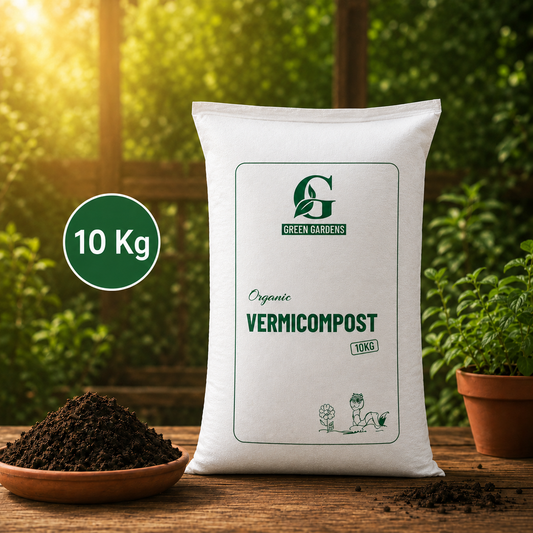
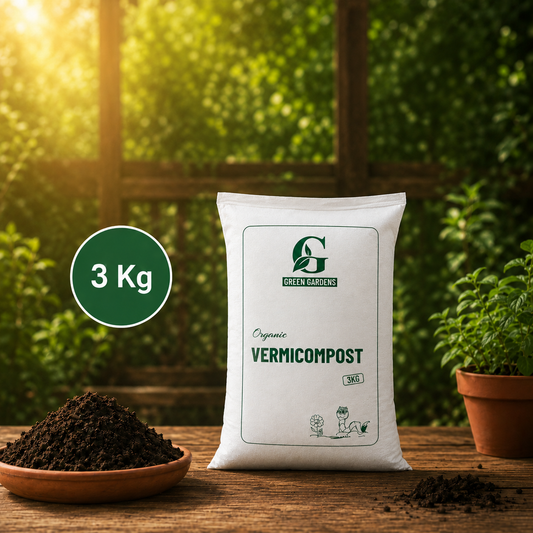
Before sowing, incorporate GREEN GARDENS Vermicompost 🔗.
Fenugreek generally does not require heavy feeding.
Because it is a legume, excessive nitrogen fertilizer is usually unnecessary.
If seeds germinate too densely, thin the seedlings once established.
Thinning helps improve airflow and reduces overcrowding.
For a continuous winter harvest, sow a new batch approximately every:
2–3 weeks
during suitable cool weather.
This provides a regular supply of young, tender Methry leaves.
Under suitable conditions, the first light harvest may begin approximately:
20–30 days after sowing
depending on temperature and growing conditions.
For repeated harvesting, cut leaves while leaving healthy lower growing points intact.
Cut mature leafy growth approximately:
5–7 cm above soil level
where sufficient healthy lower growth remains.
Plants may produce additional shoots after cutting.
If plants are allowed to mature, they eventually produce:
Allow selected plants to grow undisturbed if seed production is required.
Inspect plants regularly for:
Maintain good airflow and avoid prolonged waterlogging.
For fresh Methry, harvest leaves while they are:
Young, green and tender
For whole-bunch harvesting, plants can be pulled or cut near the base once they reach suitable size.
For dried Kasuri Methry, harvest healthy foliage before plants become excessively mature or woody.
For seed production, allow pods to mature and dry before collecting the seeds.
G-12 Grow Bag – 12 × 12 inch 🔗
Thanks for subscribing!
This email has been registered!