




Best Sowing Season: November - December


- Choosing a selection results in a full page refresh.

Available 24/7 at
0300 110 7787
Pack Size: Approx. 30–40 seeds per pack.
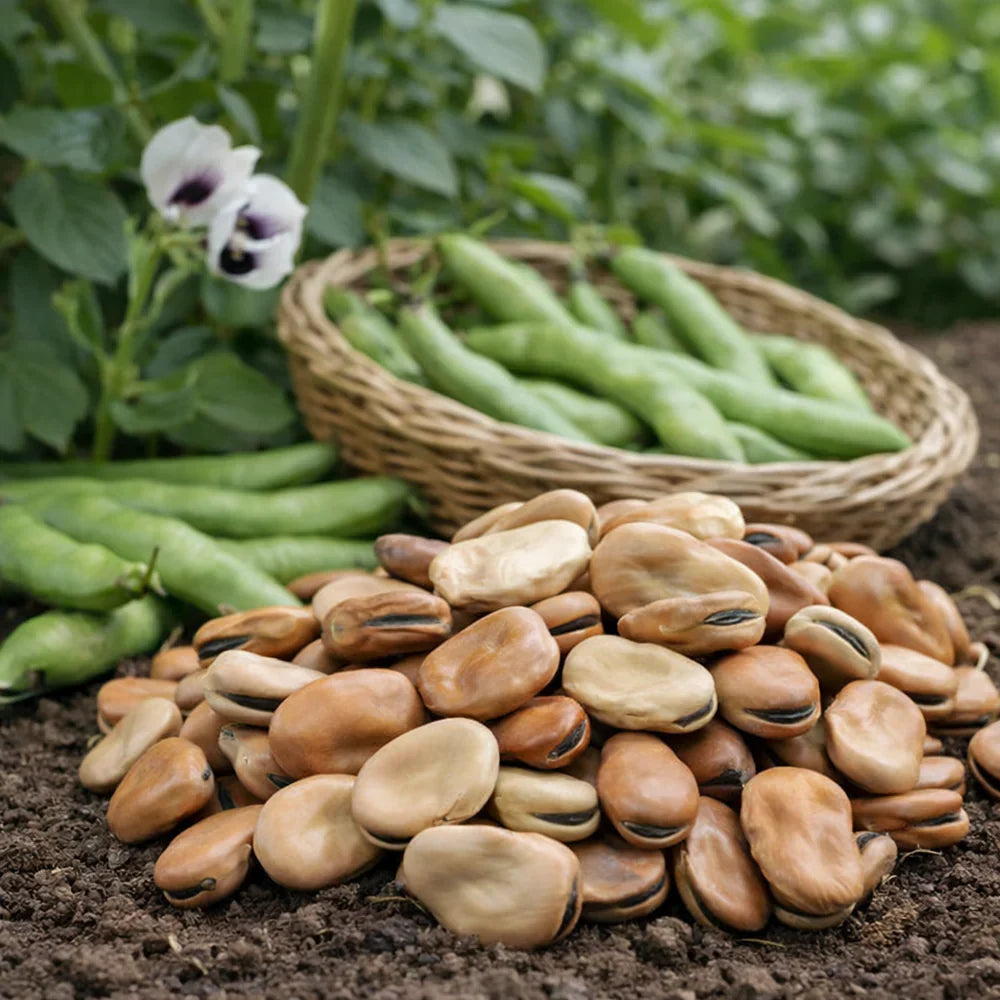
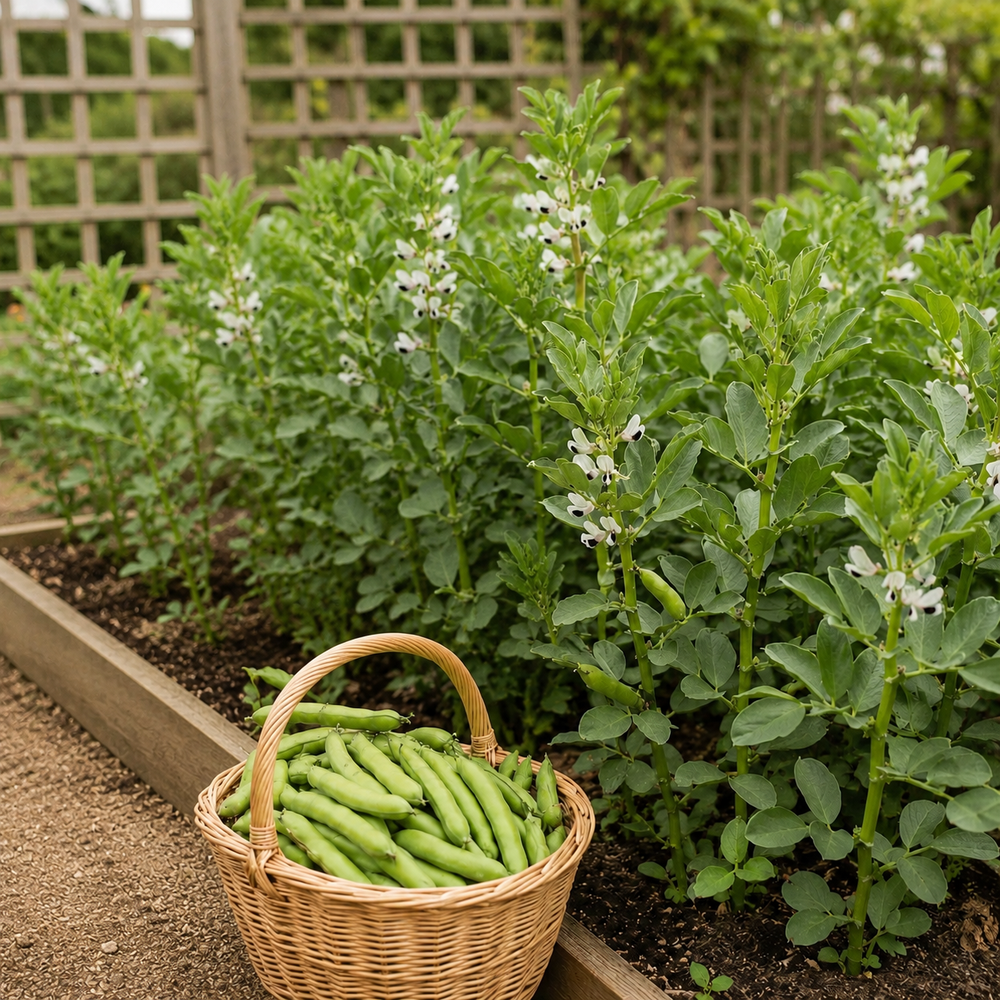
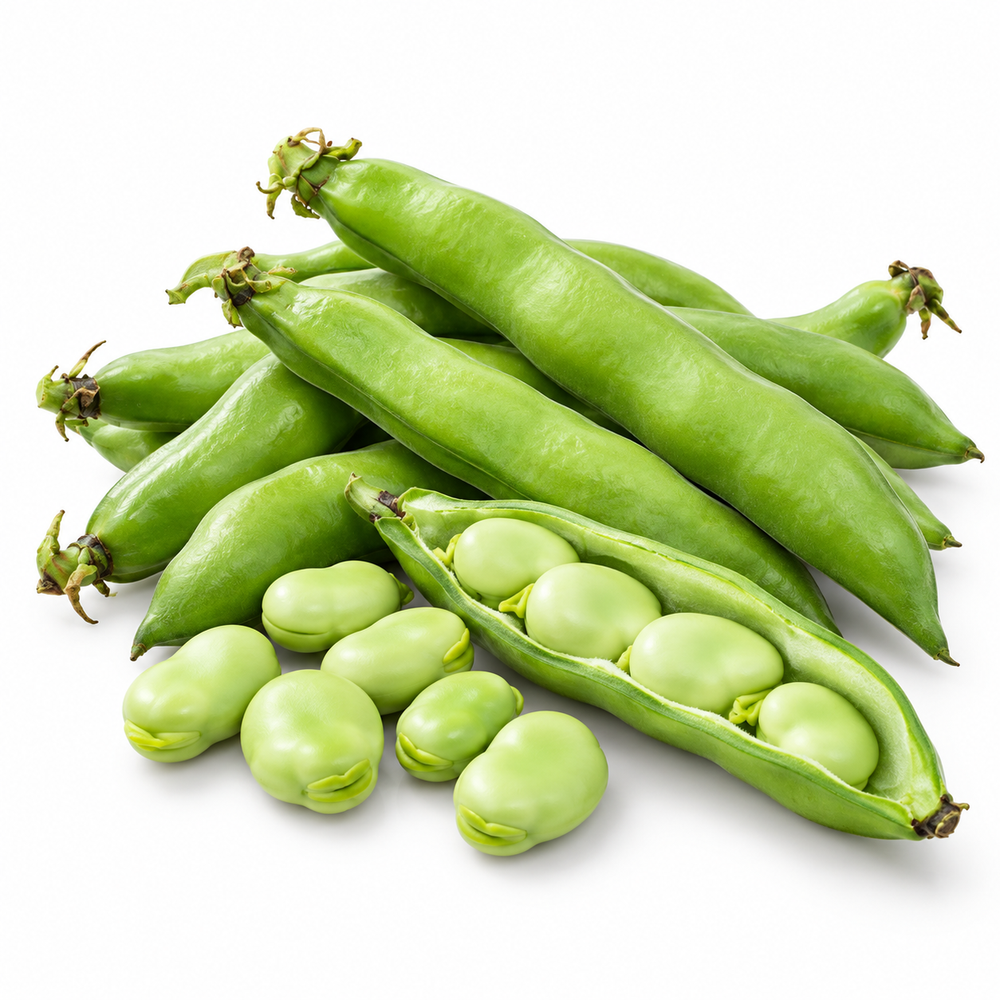
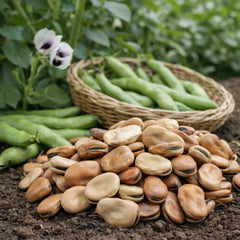
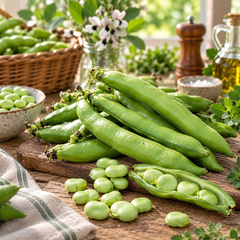
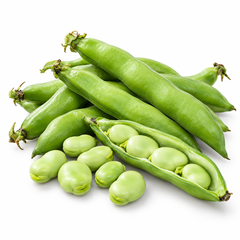
Grow Fava Beans / Broad Beans, produced at Khaplu, for vigorous upright plants, attractive white flowers with dark markings and long green pods filled with broad, fresh beans.
A productive cool-season vegetable suitable for kitchen gardens, raised beds, open soil and larger grow bags.
Germination Time: 7–14 days
Suitable Temperature: 10°C–20°C
Best Sowing Season: November - December
Couldn't load pickup availability
Free standard shipping on orders over RS 5000
Fava Beans, also known as Broad Beans, are a cool-season legume botanically known as Vicia faba.
These seeds are produced at Khaplu, a cold-region growing area in Gilgit-Baltistan, Pakistan.
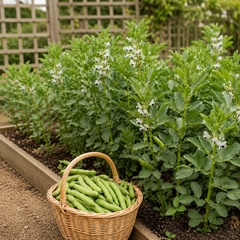
Plants develop strong upright stems, broad green leaves and distinctive white flowers commonly marked with dark or black patches.
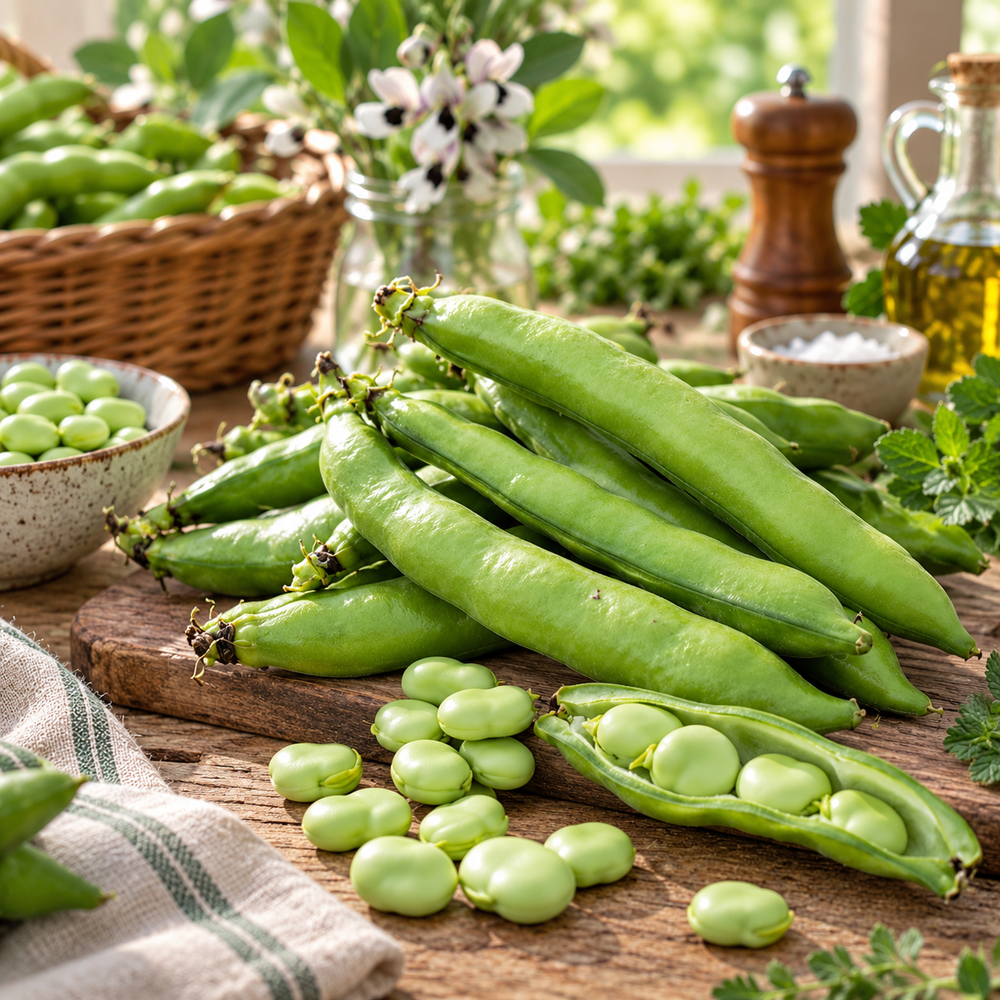
After flowering, long green pods develop containing several large, flat beans.
Fava Beans are well suited to winter vegetable gardening in Pakistan's plains and spring-to-early-summer cultivation in colder mountainous regions.
The crop can also contribute to soil fertility through its association with nitrogen-fixing bacteria, making legumes useful components in crop rotation.
Exact plant height, pod size and yield may vary according to climate, soil fertility and crop management.
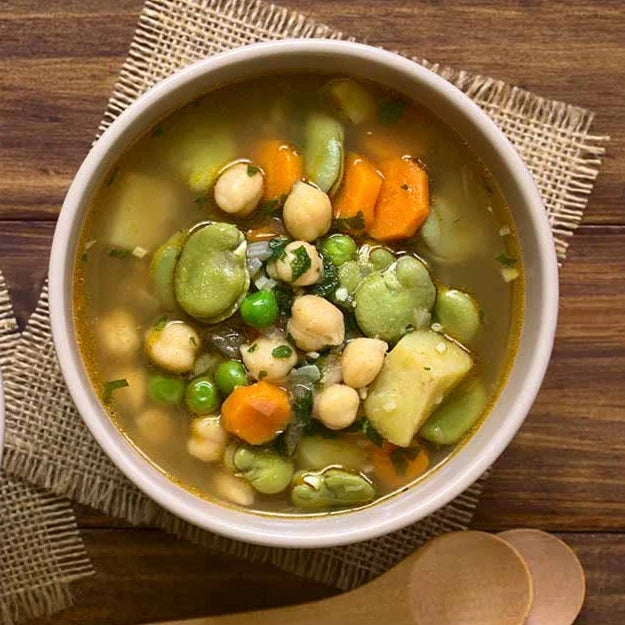
Fresh Fava / Broad Beans are especially suitable for:
Young beans have a tender texture and mild flavour.
For fresh use, harvest pods while they are green and well filled but before they become excessively hard.
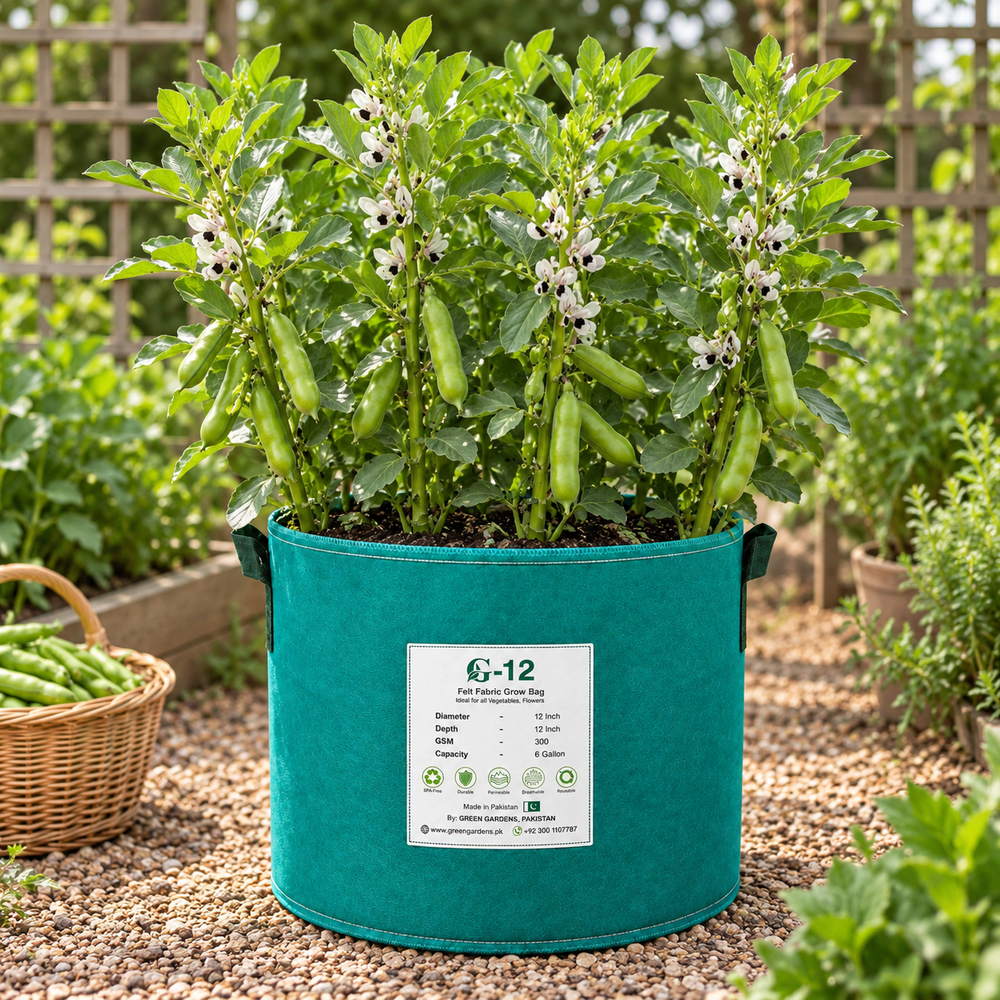
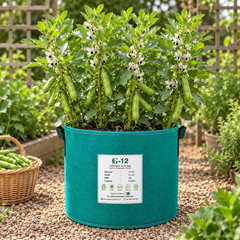
G-12 Grow Bag – 12 × 12 inch 🔗
Suitable for a small planting of approximately two well-spaced plants.
G-15 P Grow Bag – 15 × 14 inch 🔗
Provides improved root space and moisture stability for several plants.
G-24 Grow Bag – 24 × 12 inch 🔗
Recommended for growing a larger group of Fava Bean plants with adequate spacing.
Broad Beans perform particularly well in larger containers because plants develop strong upright growth and substantial root systems.
Use fertile, soft and well-drained soil rich in organic matter.
A practical GREEN GARDENS mix can be:
50% Bhalu Mitti (Sandy Soil) + 50% Vermicompost 🔗
Avoid hard, compacted or continuously waterlogged soil.
Fava Beans generally prefer soil that remains moderately moist while draining excess water freely.
Fava Beans are best direct-sown into their final growing position.
Sow approximately:
2.5–4 cm deep
Your current GREEN GARDENS listing recommends approximately 1–1.5 inches deep. (greengardens.pk)
Place seeds individually and cover with fine soil.
Water gently after sowing.
Keep the soil lightly and consistently moist.
Seeds generally germinate within approximately:
7–14 days
under suitable cool conditions.
Avoid overwatering during germination.
Provide:
6–8 hours of direct sunlight daily
Full sun supports strong stems, flowering and pod development.
In unexpectedly warm conditions, protection from harsh late-afternoon heat can help reduce stress.
Maintain approximately:
15–20 cm between plants
Your current GREEN GARDENS guidance recommends:
6–8 inches between plants
and approximately:
45–60 cm between rows. (greengardens.pk)
Adequate spacing improves airflow and pod development.
Fava Bean plants generally develop:
Strong, upright stems
Unlike climbing French beans, they normally do not require a tall trellis.
However, mature plants may benefit from light support.
Provide support in windy locations or when plants become heavily loaded with pods.
Suitable support includes:
Supporting a row helps prevent plants from falling outward.
Maintain moderate and consistent soil moisture.
Water when the upper soil begins to dry.
Consistent moisture is particularly important during:
Avoid prolonged waterlogging.
Before sowing, incorporate GREEN GARDENS Vermicompost 🔗.
Your existing GREEN GARDENS guidance also suggests light supplementary feeding if required after plant establishment. (greengardens.pk)
Because Fava Beans are legumes, avoid excessive nitrogen fertilization.
Too much nitrogen can encourage excessive vegetative growth.
Fava Bean plants produce attractive white flowers, commonly with dark markings.
Flowers are generally self-fertile, while bees and other pollinating insects can assist pollination and improve fruit set.
Healthy flowering generally leads to development of elongated green pods.
Apply a light organic mulch around established plants.
Mulching helps:
Keep mulch slightly away from the main stems.
Inspect plants regularly for common problems such as:
Good airflow and avoiding prolonged waterlogging can help reduce disease pressure.
Check tender growing tips frequently for aphids.
For fresh beans, harvest pods when they are:
Green, tender and well filled
Do not wait until pods become excessively dry or leathery unless the crop is being grown specifically for mature dry seed.
Young pods can be harvested earlier for tender beans.
Regular picking helps maintain good crop performance during the productive period.
G-12 Grow Bag – 12 × 12 inch 🔗
Thanks for subscribing!
This email has been registered!