




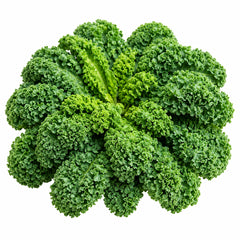
Best Sowing Season: February - April & September - November


- Choosing a selection results in a full page refresh.

Pack Size: Approx. 30 seeds per pack.
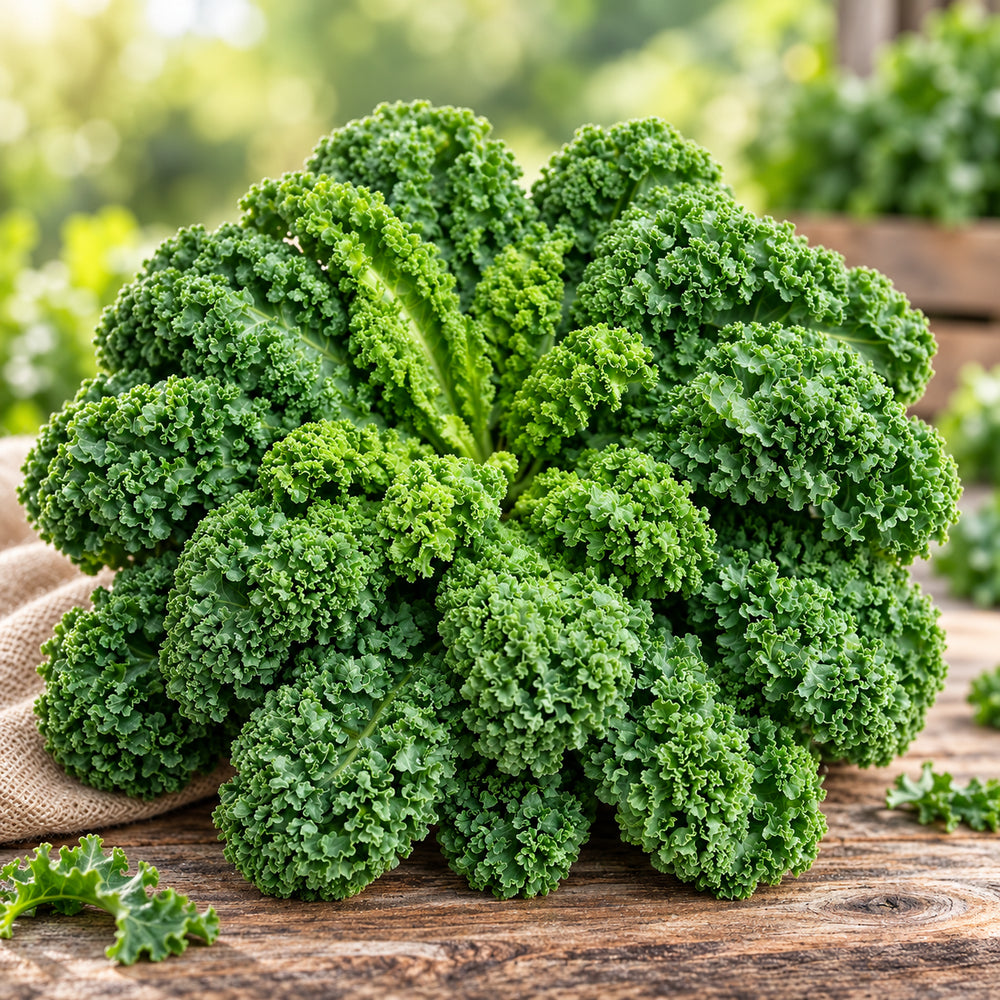
Grow Curly Kale, a nutritious leafy green producing attractive dark-green, tightly curled leaves with a fresh, slightly earthy flavour. Suitable for kitchen gardens, raised beds, pots and grow bags.
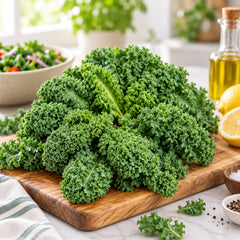
Excellent for salads, smoothies, soups, sautés and healthy everyday meals.
Germination Time: 5–10 days
Suitable Temperature: 12°C–25°C
Best Sowing Season: February - April & September - November
Couldn't load pickup availability
Free standard shipping on orders over RS 5000
Curly Kale is a leafy vegetable botanically known as Brassica oleracea var. sabellica.
It develops a rosette of deeply curled, dark-green leaves and is valued for its continuous leaf production and high nutritional value.
Unlike heading cabbage, kale does not form a compact head. Instead, leaves are harvested individually from the outside while the central growing point continues producing new foliage.
Curly Kale is generally a cool-season crop, but it can tolerate a range of temperatures once established.
The plants are suitable for repeated harvesting, making them particularly useful for home and kitchen gardens.
Exact leaf size, curl, colour and growth rate may vary according to temperature, fertility, watering and crop management.
Curly Kale leaves are especially suitable for:
Young leaves are generally more tender and suitable for fresh salads.
Larger mature leaves are excellent for cooking, soups and sautés.
G-8 Grow Bag – 8 × 8 inch 🔗
Suitable for one compact kale plant or several young plants grown for baby-leaf harvesting.
G-11 Grow Bag – 11 × 10 inch 🔗
Recommended for one mature Curly Kale plant with comfortable root space.
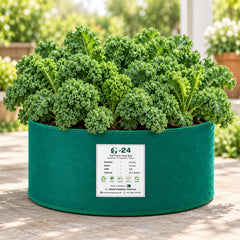
G-24 Grow Bag – 24 × 12 inch 🔗
Suitable for approximately three to four kale plants with adequate spacing.
Kale develops a broad leafy canopy, so sufficient spacing helps improve airflow and leaf quality.
Use fertile, loose and well-drained soil rich in organic matter.
A practical GREEN GARDENS mix can be:
50% Bhalu Mitti (Sandy Soil) + 50% Vermicompost 🔗
Kale prefers fertile soil that retains moisture while allowing excess water to drain freely.
Good organic matter supports lush, tender foliage and repeated harvesting.
Curly Kale seeds can be sown directly into prepared beds, pots or grow bags, or started in nursery trays.
Sow approximately:
0.5–1 cm deep
Cover lightly with fine soil or growing medium.
Keep the seedbed evenly moist.
Seeds generally germinate within:
5–10 days
under suitable cool to mild conditions.
Maintain approximately:
12°C–25°C
for reliable germination.
Very high temperatures can reduce germination uniformity and seedling quality.
Provide approximately:
4–6 hours of direct sunlight daily
Full sun is suitable during cool weather.
During warmer periods, light afternoon shade can help maintain tender foliage and reduce heat stress.
If seeds are started in nursery trays, transplant seedlings when they develop approximately:
3–4 true leaves
Handle seedlings carefully and water immediately after transplanting.
Avoid transplanting during the hottest part of the day.
Maintain approximately:
30–45 cm between plants
This allows enough room for mature leaf development and good airflow.
For baby-leaf production, plants may be grown closer together.
Keep the soil consistently moist but not waterlogged.
Kale produces the best tender leaves when moisture remains reasonably stable.
Water deeply whenever the upper soil begins to dry.
Avoid repeated severe drying, particularly during warm weather.
Before planting, incorporate GREEN GARDENS Vermicompost 🔗.
Because kale is grown mainly for foliage, moderate nitrogen availability supports healthy leafy growth.
However, avoid excessively heavy feeding.
Apply a light organic mulch around established plants.
Mulching helps:
Keep mulch slightly away from the main stem.
Harvest the outer leaves first while leaving the central growing point intact.
This allows the plant to continue producing fresh leaves over an extended period.
Regular harvesting also encourages continued new growth.
Curly Kale prefers cool to mild weather.
During warmer conditions:
Excessive heat can make leaves tougher and may encourage premature flowering.
Inspect kale plants regularly for common brassica pests such as:
Also watch for:
Remove badly affected leaves and maintain good airflow.
Begin harvesting outer leaves when plants are approximately:
15–20 cm tall
Pick young outer leaves regularly and leave the central growing point intact.
Continuous harvesting encourages fresh new foliage.
G-11 Grow Bag – 11 × 10 inch 🔗
Thanks for subscribing!
This email has been registered!