


Best Sowing Season: October–February


- Choosing a selection results in a full page refresh.

Available 24/7 at
0300 110 7787
Approx. 70-80 seeds per pack.
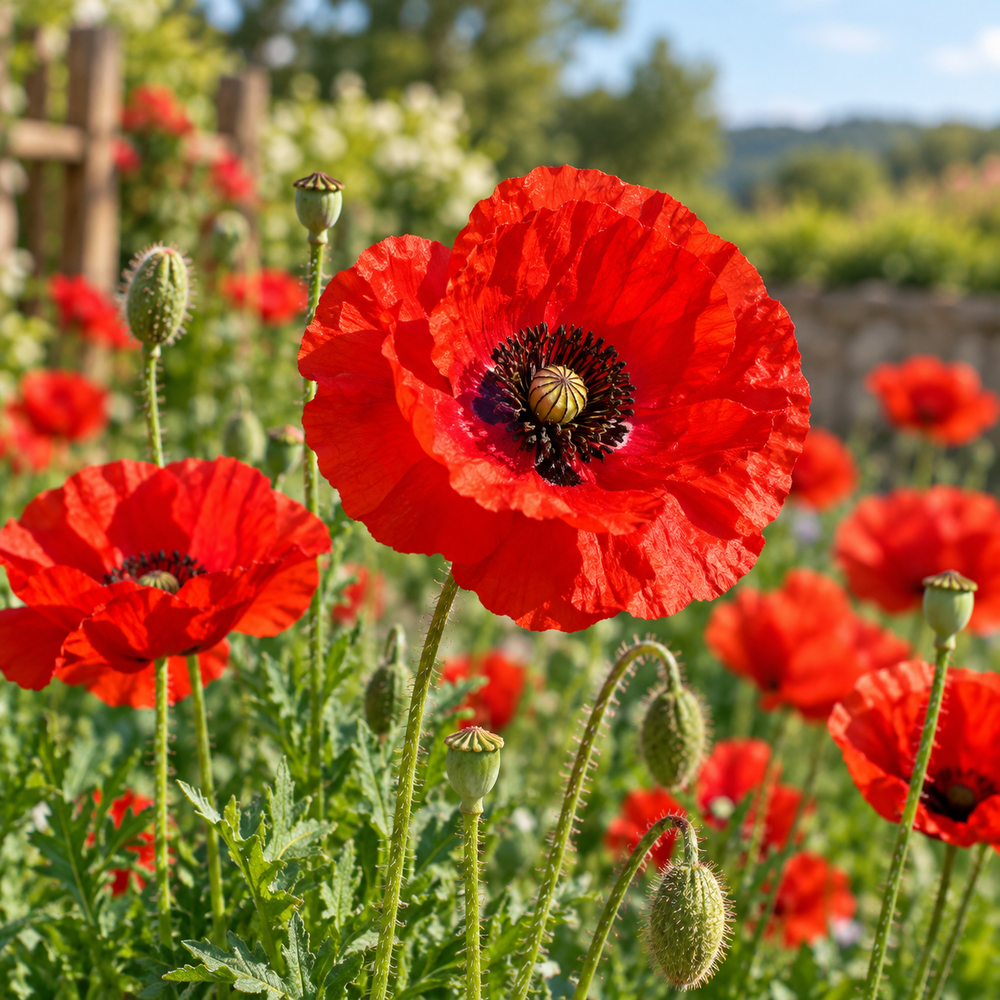
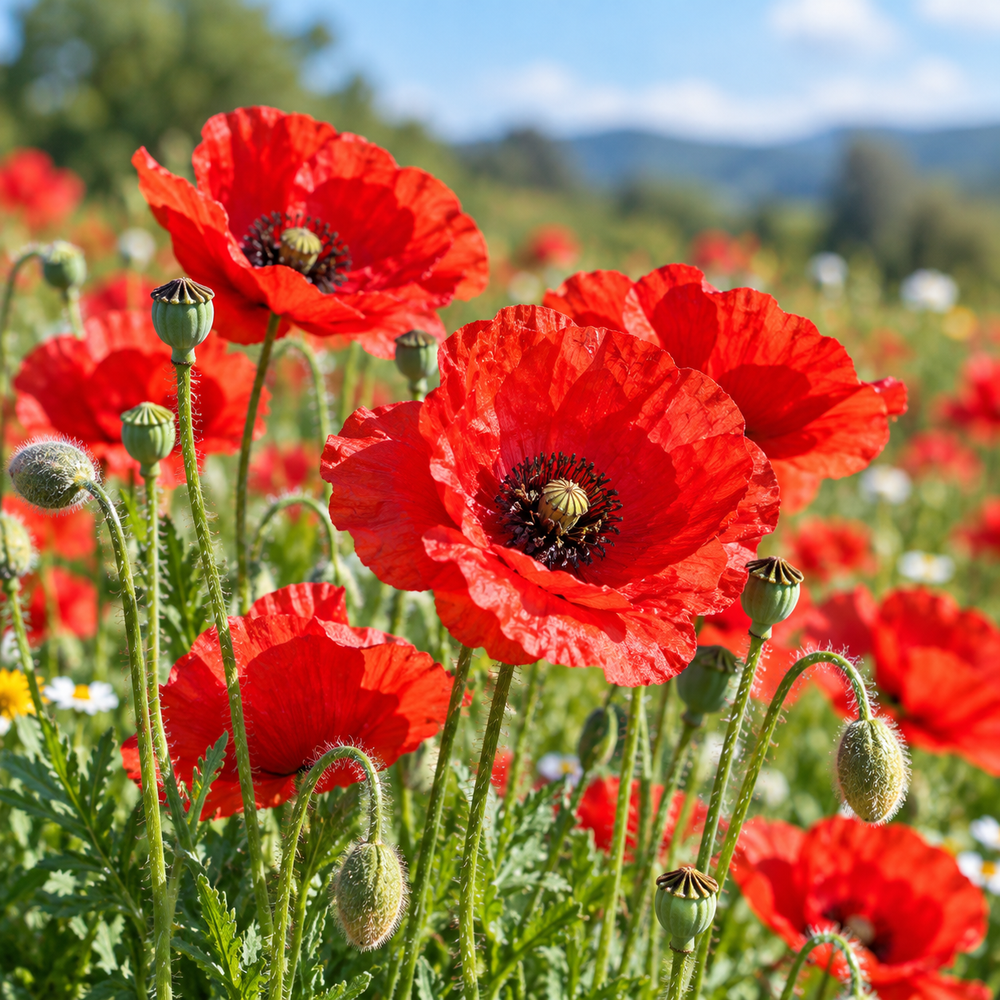
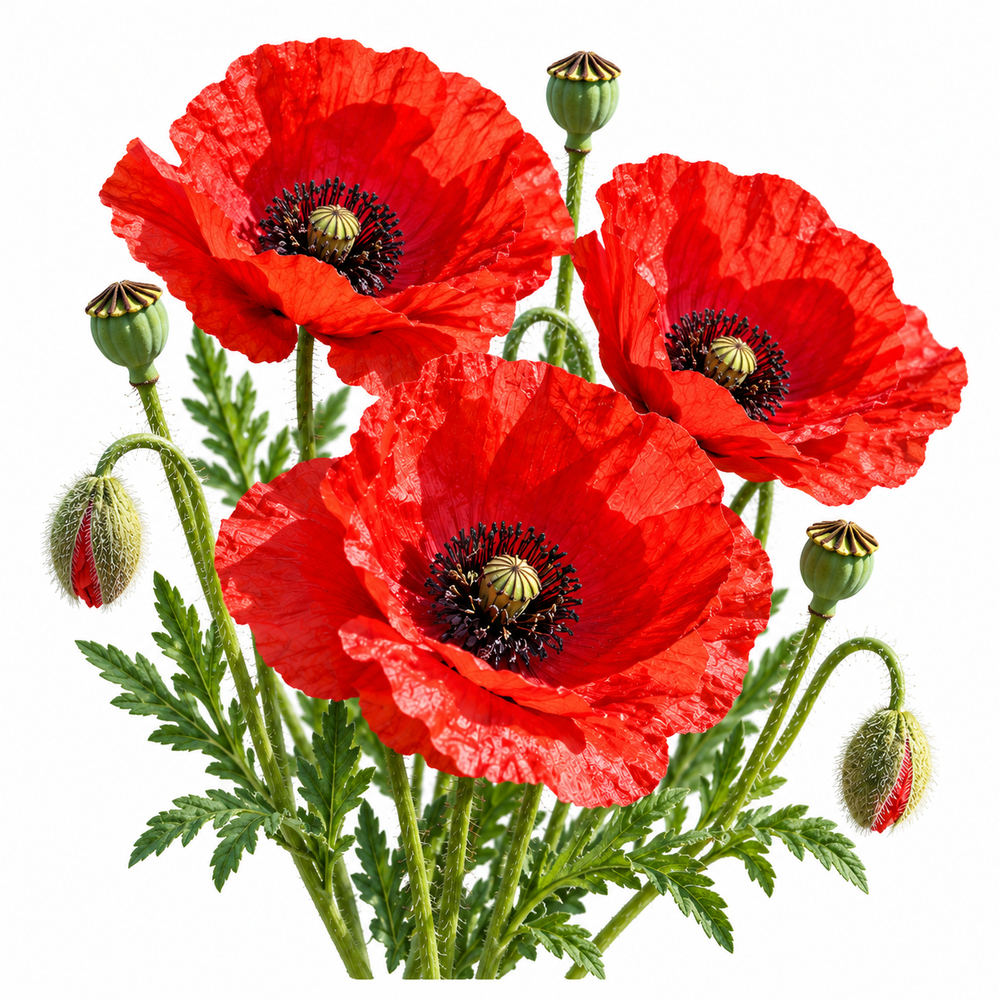
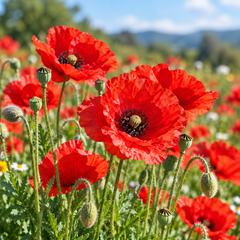
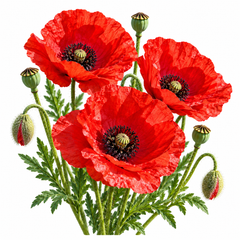
Grow beautiful Corn Poppy Red (Papaver rhoeas), a graceful winter flowering annual producing striking silky bright red flowers with a characteristic dark to black centre.
Its delicate, paper-like petals and slender upright stems create a beautiful natural display in flower beds, borders, pots, grow bags and cottage-style winter gardens.
Corn Poppy is especially valued for its vivid red colour, elegant flower form, easy direct-sowing habit and charming natural appearance during the cool season.
Germination Time: 7–20 days
Ideal Temperature: Approximately 16°C–24°C
Best Sowing Season: October–February
Couldn't load pickup availability
Free standard shipping on orders over RS 5000
Corn Poppy (Papaver rhoeas) is a classic annual poppy known for its:
Bright red, silky flowers and prominent dark centre.
It is also commonly known as:
The plant develops slender upright stems carrying:
Delicate, cup-shaped flowers with fine paper-like petals.
Its natural appearance makes it particularly attractive when several plants are grown together.
G-11 Grow Bag – 11 × 10 inch 🔗
Suitable for growing:
One to two Corn Poppy plants
while maintaining adequate spacing.
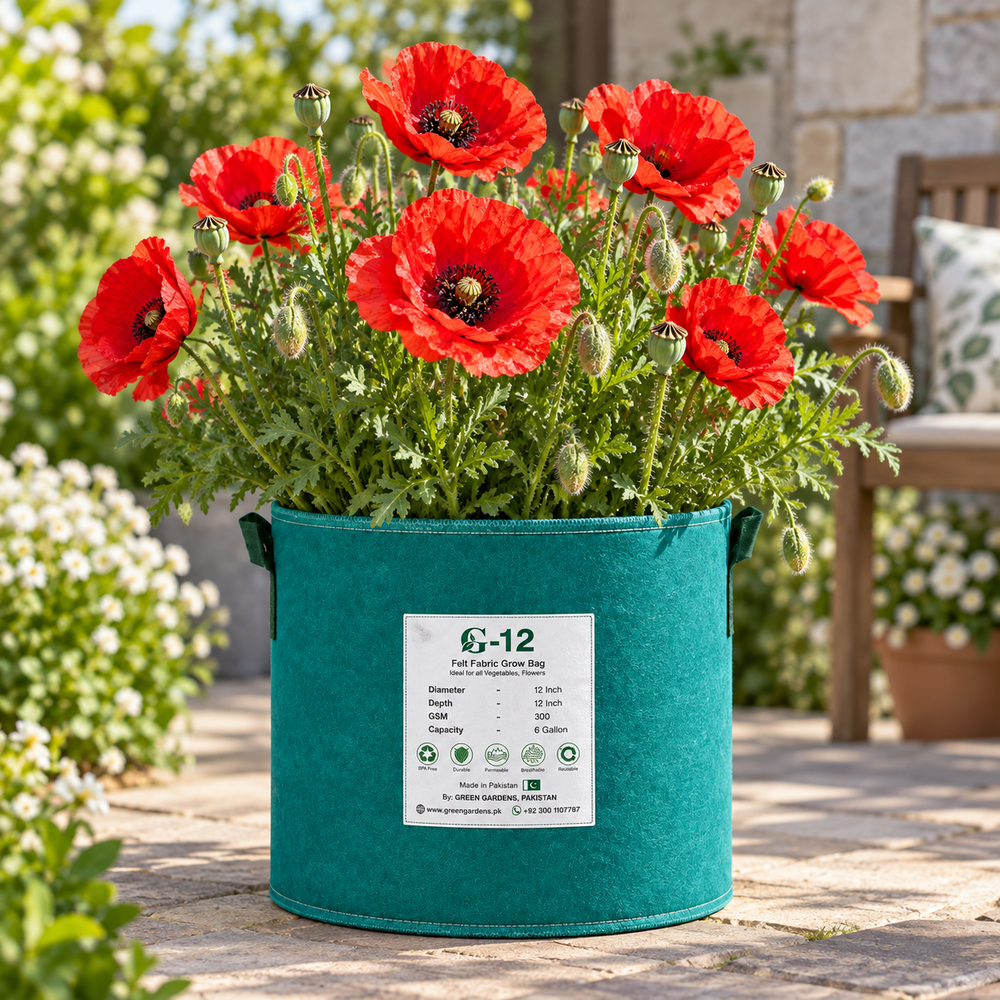
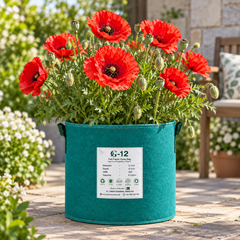
G-12 Grow Bag – 12 × 12 inch 🔗
Recommended for a small group planting of Corn Poppies.
The wider surface area allows several plants to create a more natural flowering display.
G-24 Grow Bag – 24 × 12 inch 🔗
Excellent for growing:
Several Corn Poppy plants together
for an attractive mass-flowering effect.
Use:
60% Bhalu Mitti / Sandy Soil + 30% GREEN GARDENS Vermicompost 🔗 + 10% Cocopeat
Corn Poppy prefers:
Light, loose and well-draining soil.
It does not require excessively rich growing media.
Avoid:
A relatively light and moderately fertile soil encourages:
Balanced growth and flowering.
Corn Poppy is especially suitable for:
Direct sowing in its final growing position.
Seeds can be sown directly in:
Because the seeds are extremely small:
Scatter them thinly over prepared soil.
Press them gently against the soil surface and use only:
A very light covering of fine growing medium.
Do not bury seeds deeply.
Water carefully using:
A fine mist or gentle spray.
Corn Poppies develop:
A delicate taproot
and generally dislike unnecessary root disturbance.
For this reason:
Direct sowing is strongly preferred.
Avoid routine transplanting wherever possible.
If plants emerge too densely:
Thin the weaker seedlings carefully rather than lifting and replanting them.
Seeds generally germinate within approximately:
7–20 days
under suitable cool-to-mild conditions.
Germination depends on:
Keep the seedbed:
Lightly and consistently moist
during establishment.
Avoid:
Waterlogging or strong watering that may displace the tiny seeds.
A suitable germination temperature range is approximately:
16°C–24°C
Cool-to-moderate temperatures support:
Reliable Corn Poppy germination and seedling establishment.
Very hot conditions can reduce:
Seedling quality and later flowering performance.
Routine transplanting is:
Not recommended.
Corn Poppy develops a delicate taproot and usually establishes better when:
Sown directly where it will flower.
If transplanting becomes unavoidable:
Direct sowing remains the preferred method.
After germination, thin seedlings to approximately:
15–20 cm / 6–8 inches apart.
Adequate spacing encourages:
For a more natural mass planting:
Allow plants to appear irregularly rather than arranging them in rigid rows.
Provide:
Full sun.
For maximum flowering:
6+ hours of direct sunlight daily
is recommended.
Good winter sunlight encourages:
Excessive shade may result in:
Weak, stretched plants with reduced flowering.
During germination:
Keep the upper soil layer lightly moist.
Once established:
Water when the soil begins to dry.
Avoid:
Established Corn Poppies can tolerate:
Moderately dry conditions
better than constantly wet soil.
Corn Poppy does not require:
Heavy feeding.
At planting time, use a moderate amount of:
in the growing medium.
Avoid excessive nitrogen fertilizer because it may encourage:
Excess foliage with weaker flowering.
Moderately fertile soil is generally sufficient.
G-11 Grow Bag – 11 × 10 inch 🔗
G-12 Grow Bag – 12 × 12 inch 🔗
Thanks for subscribing!
This email has been registered!


We are here to assist you