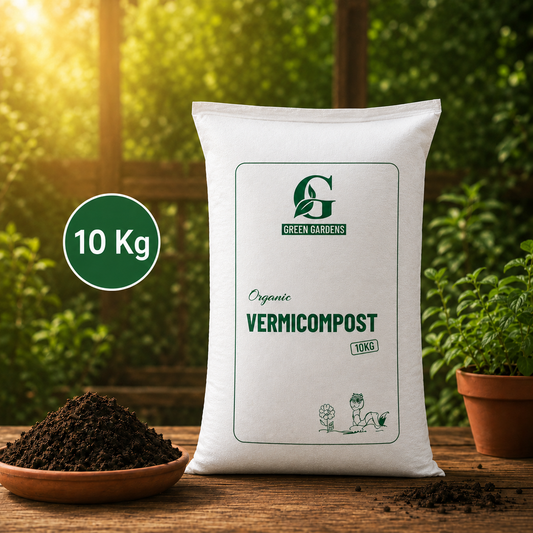

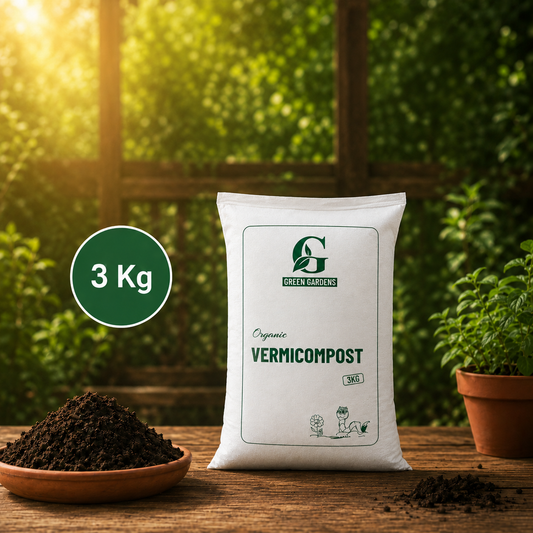



Best Sowing Season: Mid-September–Mid-October


- Choosing a selection results in a full page refresh.

Available 24/7 at
0300 110 7787
Pack Size: Approx. 600 seeds per pack.
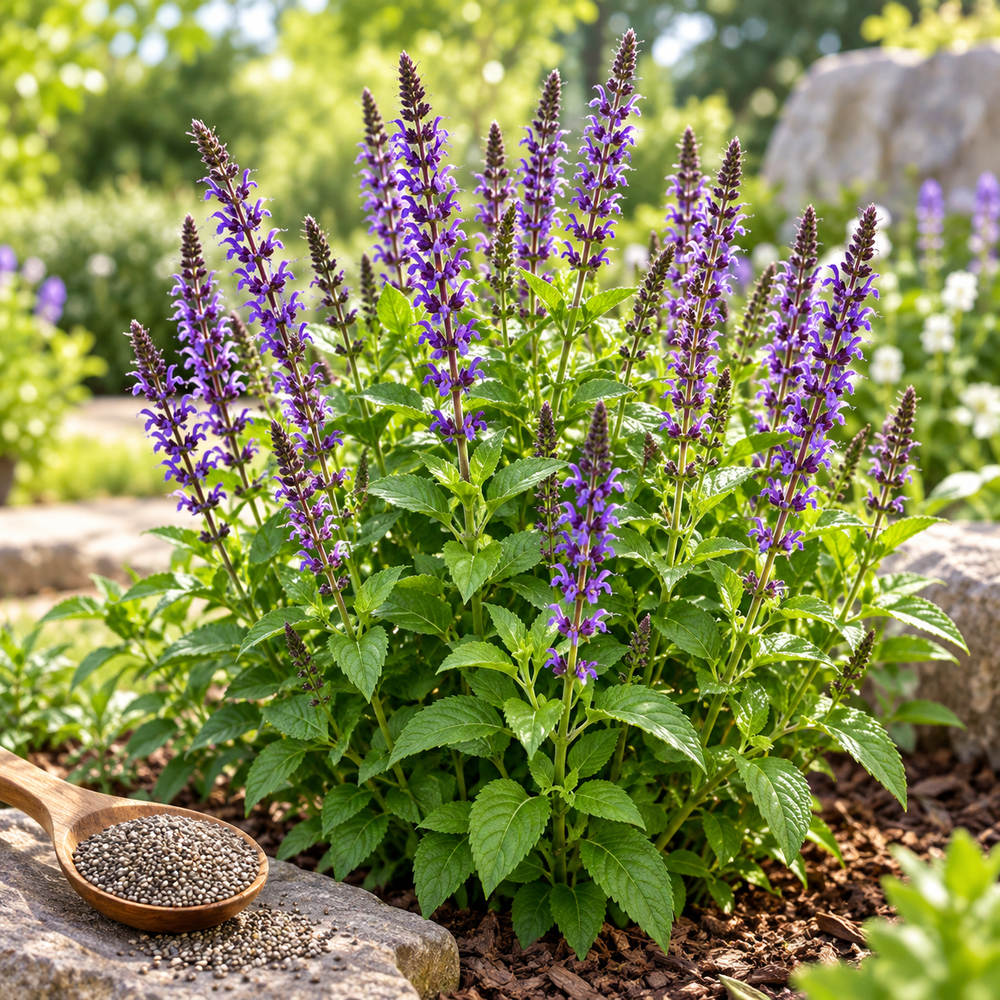
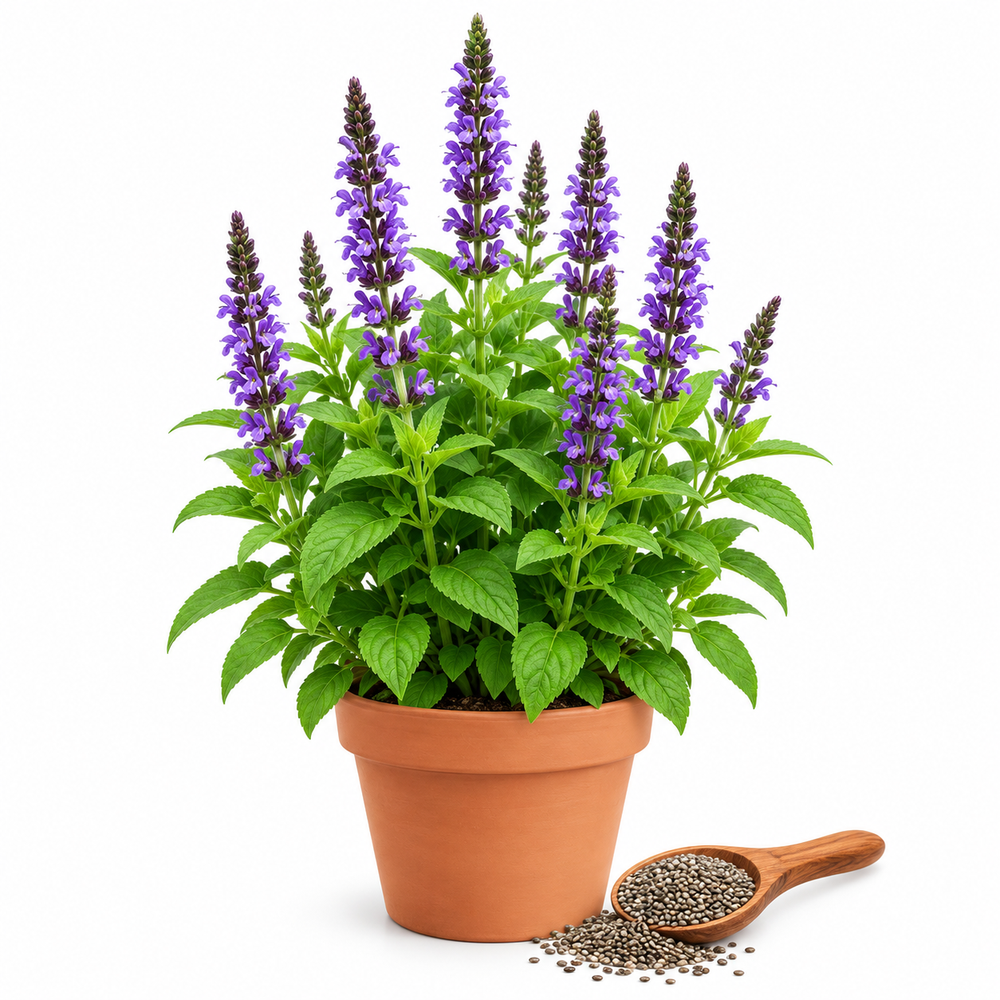
Grow your own Chia (Salvia hispanica), a fast-growing annual herbaceous plant from the mint family cultivated primarily for its small, nutritious edible seeds.
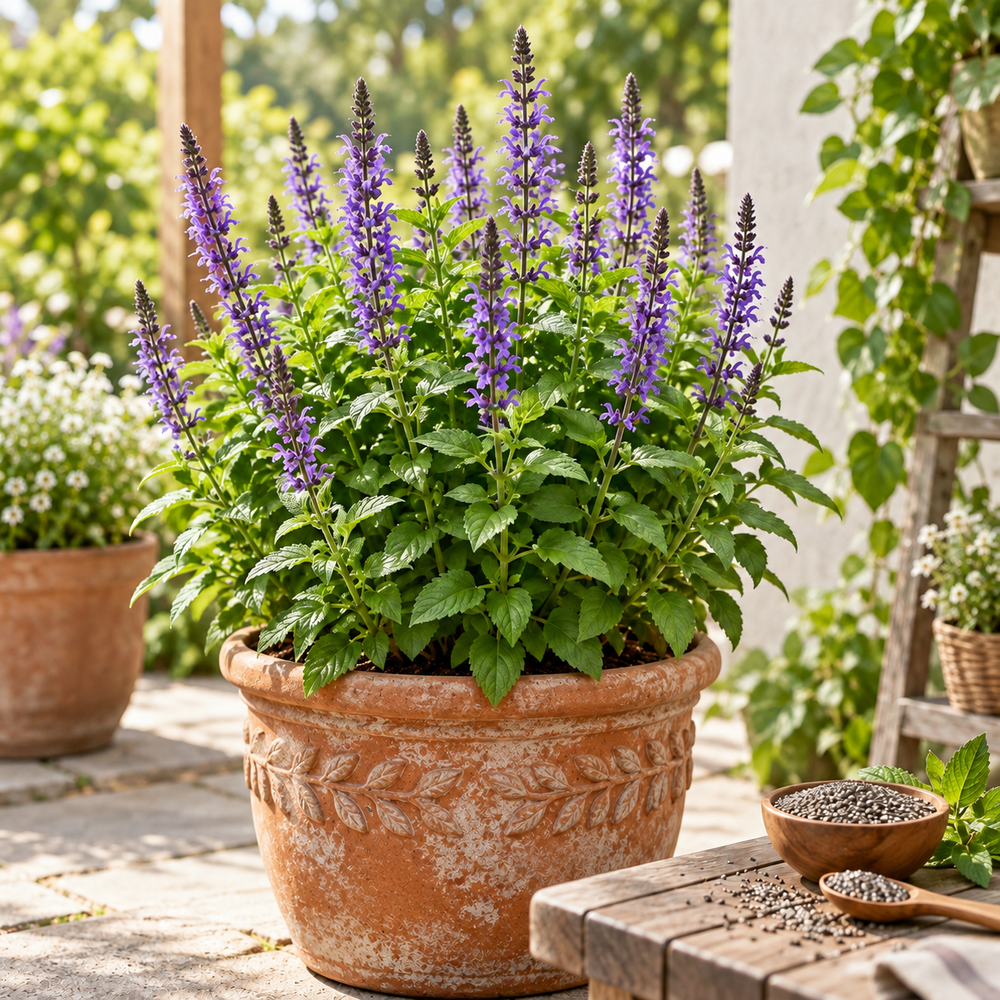
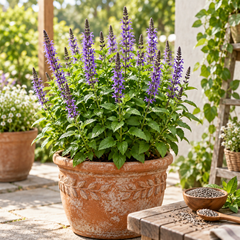
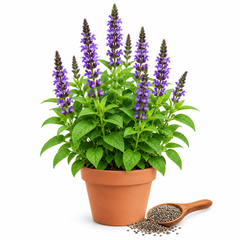
Chia develops attractive green foliage followed by upright flower spikes carrying small purple, lavender to whitish flowers. After pollination, the flower heads mature and produce the familiar tiny mottled black, grey and white chia seeds.
Excellent for kitchen gardens, raised beds, sunny home gardens and suitably sized grow bags where plants can complete their flowering and seed-production cycle.
Best Sowing Season: Mid-September–Mid-October
Couldn't load pickup availability
Free standard shipping on orders over RS 5000
Chia is valued for its:
Because Chia can develop into a:
3–5 feet tall plant
adequate root space and physical stability are important.
G-12 Grow Bag – 12 × 12 inch 🔗
Highly recommended for one Chia plant.
The G-12 provides suitable soil volume for:
Avoid allowing many seedlings to mature together in one G-12.
Thin to:
One strong plant
for better individual development.
G-20 F Grow Bag – 20 × 16 inch | 22 Gallon 🔗
Excellent where:
Larger root volume and greater stability
are desired for tall plants.
G-24 Grow Bag – 24 × 12 inch 🔗
Suitable for growing:
Several Chia plants together
provided proper spacing is maintained.
Chia performs best in:
Loose, fertile and well-draining soil.
A practical GREEN GARDENS mix can include:
60% Bhalu Mitti / Sandy Soil + 30% GREEN GARDENS Vermicompost 🔗 + 10% Cocopeat
The growing medium should provide:
Sandy loam is especially suitable.
Avoid:
Prepare a:
Fine, loose and well-draining seed bed or growing medium.
Before sowing:
For containers, fill the grow bag almost completely before sowing.
Chia seeds are:
Tiny
and should not be buried deeply.
Deep sowing can reduce successful emergence.
Scatter seeds lightly over the prepared surface.
Then:
Press them gently into the growing medium.
Cover with only:
A very thin layer of fine soil
or lightly rake the surface.
Ideal sowing depth is approximately:
Surface to 2–3 mm deep.
Immediately after sowing:
Apply a very light mist or gentle shower.
Avoid strong watering because the tiny seeds can easily:
Maintain gentle moisture until seedlings establish.
Under suitable conditions, Chia generally germinates within approximately:
7–14 days.
Germination can vary according to:
During germination:
Chia seeds become:
Gel-like / mucilaginous when wet.
This is a natural property of the seed coat.
For sowing:
Do not soak Chia seeds overnight.
If heavily soaked before planting, they can develop a sticky mucilage layer and become difficult to distribute evenly.
For easier sowing:
Use dry seed → surface sow → gently mist after sowing.
This allows moisture to reach the seed naturally while it remains correctly positioned in the growing medium.
Once seedlings emerge:
Chia seedlings can initially appear delicate but develop rapidly after establishment.
Because the seeds are small, home gardeners may accidentally sow too densely.
Once seedlings establish:
Thin aggressively rather than allowing severe overcrowding.
Retain the healthiest plants.
Overcrowding can lead to:
Chia can be:
Direct sown or transplanted while young.
Direct sowing is simple for garden beds and large grow bags.
If started in a nursery tray, transplant seedlings when they are still young and have developed a healthy root system.
Handle carefully and water after transplanting.
Avoid keeping seedlings crowded in nursery trays for too long.
For home garden cultivation, maintain approximately:
20–30 cm / 8–12 inches between plants.
For rows, wider spacing of approximately:
45–60 cm / 18–24 inches between rows
can make watering, weeding and harvesting easier.
Correct spacing supports:
Chia performs best in:
Full sun.
Provide approximately:
6–8 hours of direct sunlight daily.
Good sunlight encourages:
Avoid growing the crop in:
Deep shade.
Traditional Chia is strongly influenced by:
Day length.
Shortening days help trigger:
Flower initiation.
This means a plant can grow vegetatively for some time before producing flower spikes.
For seed production:
Correct seasonal timing is more important than simply producing a large green plant.
Very late or poorly timed sowing may reduce the period available for:
During germination and establishment:
Keep the soil consistently but lightly moist.
Once plants are established:
Reduce watering frequency.
Water deeply when required rather than keeping the soil continuously wet.
Avoid:
Established Chia plants develop:
Useful drought tolerance
but prolonged severe dryness during flowering and seed development can reduce productivity.
Before sowing, enrich the growing medium with:
Moderate fertility is generally sufficient.
During active vegetative growth, light balanced feeding may be provided where required.
Avoid excessive nitrogen because it may produce:
Very lush, soft vegetative growth
and may also make tall plants more vulnerable to lodging.
During approximately the first:
4–6 weeks
keep the growing area relatively free of weeds.
Young Chia plants can initially face strong competition from weeds for:
Once established, the developing canopy helps shade the surrounding soil.
Chia produces upright flower spikes carrying:
Small purple, lavender to whitish flowers.
Flowering is an important stage because these spikes later develop:
Mature Chia seeds.
Good flowering depends on:
Chia belongs to the mint family and its small flowers can attract:
Allow healthy plants to complete flowering naturally where the goal is:
Seed production.
After flowering and pollination:
Seeds gradually develop within the maturing flower heads.
During this stage:
The tiny mature seeds may be:
The current GREEN GARDENS crop guidance indicates approximately:
100–120 days to maturity
under suitable growing conditions.
However, actual maturity can vary considerably according to:
For home gardeners, the most reliable indicator is:
The condition of the flower / seed heads rather than counting days alone.
Chia seed heads are approaching harvest when:
Do not harvest while seed heads are still:
Green and immature.
When seed heads are mature:
Use clean pruning scissors to cut:
Dry or nearly dry mature flower spikes.
Place the harvested spikes on:
Allow them to dry completely.
Once fully dry:
Rub or gently beat the seed heads
to release the tiny seeds.
Separate:
using a fine sieve and gentle winnowing.
Before storing seed:
Ensure it is completely dry.
Moist seed can develop:
Store completely dry harvested Chia seed in:
A clean, dry and airtight container.
Keep it away from:
If seed is being saved specifically for next season:
Label the container with the harvest date.
Because Chia can grow approximately:
3–5 feet tall
mature plants may be vulnerable to:
Strong wind or lodging.
This is particularly important in:
Where required:
Provide staking or wind protection.
Avoid excessive nitrogen feeding, which can also encourage softer, weaker stems.
During Lahore's winter:
Chia is:
Sensitive to severe frost
so young plants and flower spikes may require protection during unusually cold conditions.
Correct sowing time helps Chia complete most of its crop cycle before:
Extreme late-spring and early-summer heat.
As temperatures rise strongly:
This is one reason the:
September–October sowing window
is particularly useful for Lahore.
Chia is generally:
Relatively trouble-free
under suitable conditions.
Inspect plants occasionally for:
Pay particular attention during:
Avoid unnecessary pesticide applications, especially while plants are flowering.
Maintain:
Avoid:
Root problems are more likely where:
Drainage is poor.
Salvia hispanica is the species cultivated commercially for:
Edible Chia seeds.
However, GREEN GARDENS seed packs are sold primarily as:
Seeds for cultivation.
Do not consume the original sowing seed unless the pack is specifically labelled as:
Food-grade / intended for direct human consumption.
Home-harvested seed intended for food use should only come from plants that have been:
G-12 Grow Bag – 12 × 12 inch 🔗
G-20 F Grow Bag – 20 × 16 inch | 22 Gallon 🔗
Thanks for subscribing!
This email has been registered!


We are here to assist you