


Best Sowing Season: October–November & February–April


- Choosing a selection results in a full page refresh.

Available 24/7 at
0300 110 7787
Approx. 40-50 seeds per pack.
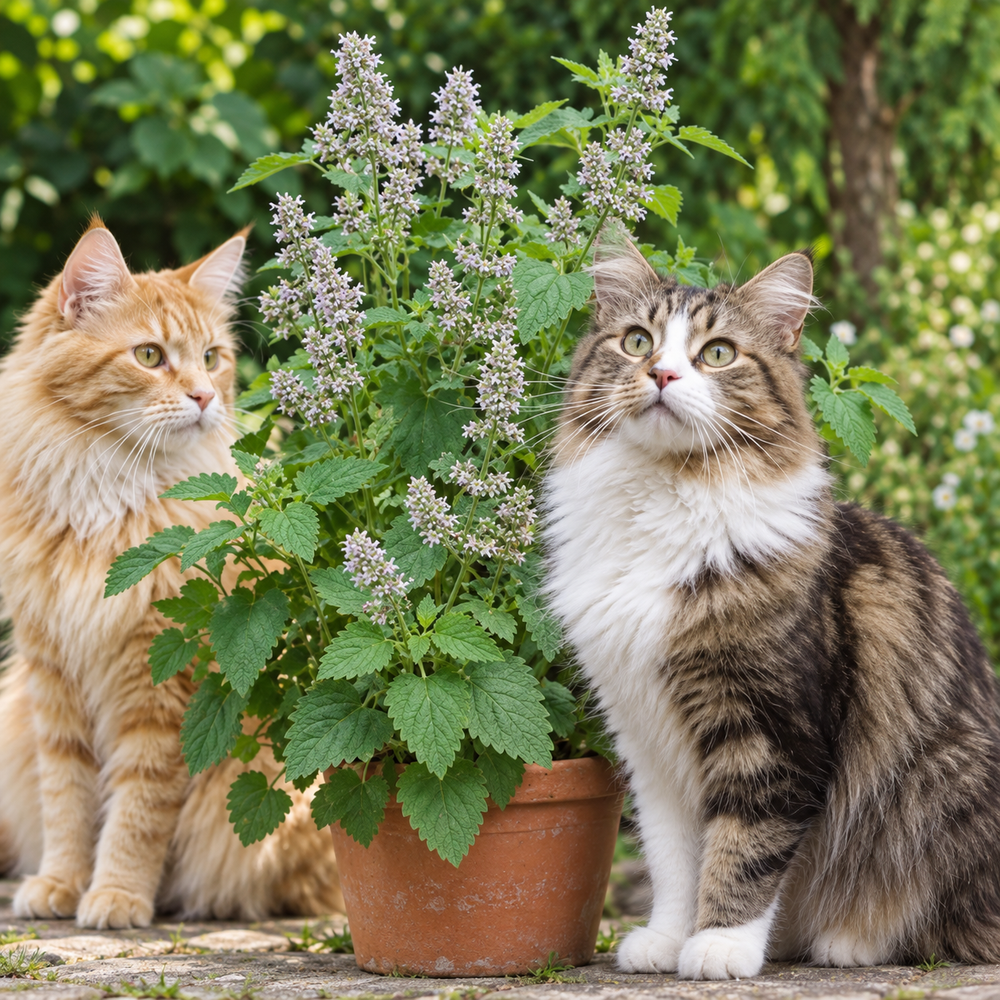
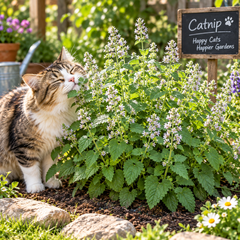
Grow aromatic Catnip (Nepeta cataria), a hardy perennial herb from the mint family, famous for its soft grey-green foliage, refreshing mint-like fragrance and natural attraction for many cats.
Catnip develops into a bushy aromatic plant and is excellent for herb gardens, kitchen gardens, pots, grow bags, rooftop gardens and home landscapes.
Once established, it is a vigorous and relatively easy-care perennial that can continue growing for several seasons under suitable conditions.
Germination Time: 7–10 days
Ideal Temperature: 16°C–21°C
Best Sowing Season: October–November & February–April
Couldn't load pickup availability
Free standard shipping on orders over RS 5000
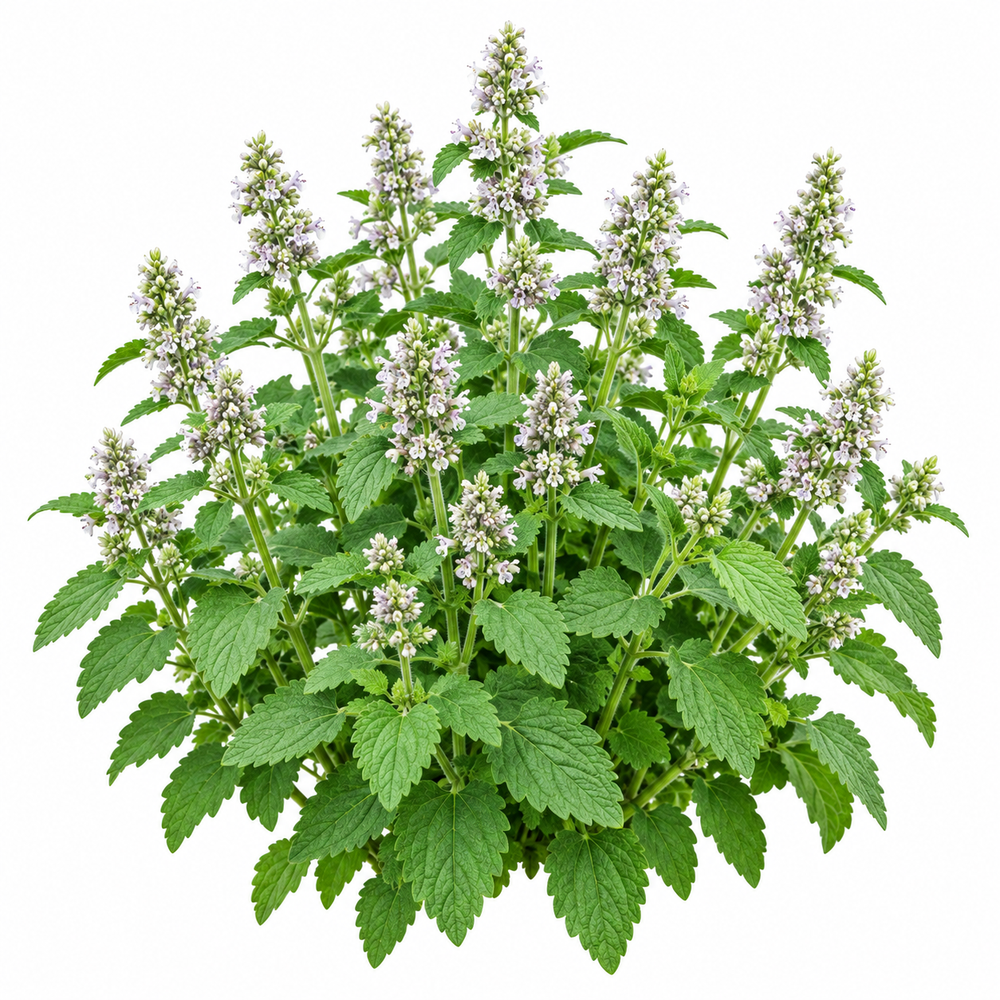
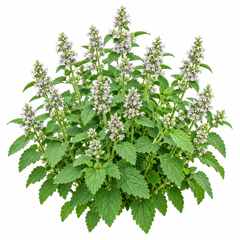
Catnip (Nepeta cataria) is an aromatic perennial herb that develops soft, slightly hairy, grey-green leaves with a characteristic mint-like fragrance.
Mature plants may also produce small:
White to pale lavender flowers
on upright flowering stems.
Catnip is especially famous because its foliage contains naturally occurring aromatic compounds that many cats find highly attractive.
G-11 Grow Bag – 11 × 10 inch 🔗
Recommended minimum grow bag for one Catnip plant.
Suitable with regular watering and pruning.
G-12 Grow Bag – 12 × 12 inch 🔗
Highly recommended for one strong and bushy Catnip plant.
The larger soil volume provides better:
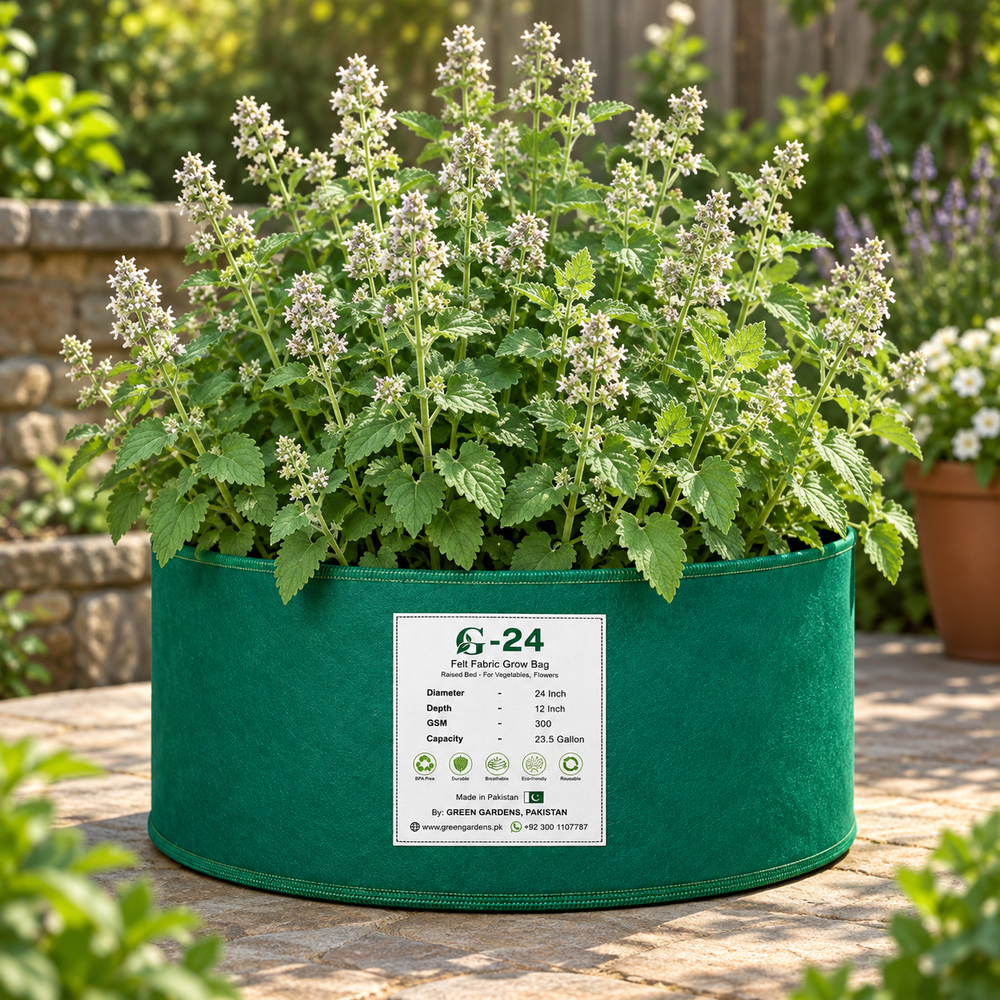
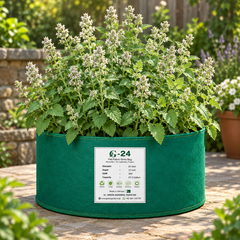
G-24 Grow Bag – 24 × 12 inch 🔗
Suitable for growing several Catnip plants together with proper spacing.
Use:
60% Bhalu Mitti / Sandy Soil + 30% GREEN GARDENS Vermicompost 🔗 + 10% Cocopeat
Catnip prefers a growing medium that is:
Loose, moderately fertile and well-draining.
It can tolerate relatively modest soils once established.
Avoid:
Catnip seeds can be started in:
Seeds may also be directly sown when outdoor conditions are suitable.
Catnip seeds are small and should be:
Pressed gently onto the surface or covered only very lightly.
Do not bury seeds deeply.
A very thin covering of fine growing medium is sufficient.
Water using:
A gentle mist or fine spray
to avoid displacing the seeds.
Keep the medium lightly moist until germination.
Catnip seeds benefit from:
Light during germination.
Therefore:
Do not cover the seeds deeply with soil.
Press them gently into the growing medium and apply only a very light covering.
Seeds generally germinate within approximately:
7–10 days
under suitable conditions.
Germination can become slower if:
Maintain:
Recommended germination temperature:
16°C–21°C
Moderate temperatures generally support reliable Catnip germination.
After seedlings emerge, gradually provide:
Increasing light and gentle direct sunlight.
Transplant seedlings when they are:
Strong, healthy and carrying several true leaves.
Before transplanting:
Transplant preferably:
During the late afternoon.
Water gently after transplanting.
For garden beds, maintain approximately:
30–45 cm / 12–18 inches between plants.
Adequate spacing provides:
For grow bags:
Grow one plant per G-11 or G-12 Grow Bag.
Catnip grows best in:
Full sun to partial shade.
For compact and healthy growth, provide approximately:
5–6+ hours of good sunlight daily.
During Lahore's intense summer heat, some protection from the strongest afternoon sun can help container-grown plants avoid excessive stress.
During germination:
Keep the growing medium lightly and consistently moist.
During early establishment:
Water regularly without creating waterlogged conditions.
Once established:
Water when the upper soil layer begins to dry.
Catnip generally prefers good drainage and should not remain continuously wet.
At planting time, mix a moderate quantity of:
into the growing medium.
Catnip generally does not require heavy feeding.
A light top dressing of Vermicompost can be provided during active growth when required.
Avoid excessive nitrogen because it may encourage:
Soft, excessively leafy growth.
Under suitable conditions, mature Catnip may reach approximately:
60–120 cm / 24–48 inches in height.
Plants develop a:
Branching, upright and bushy growth habit.
Regular light pruning can help maintain:
A compact and fuller plant shape.
When young plants are well established, pinch the growing tips lightly to encourage:
Established plants can also be lightly trimmed when they become tall or untidy.
Avoid removing excessive foliage from:
Very young or recently transplanted plants.
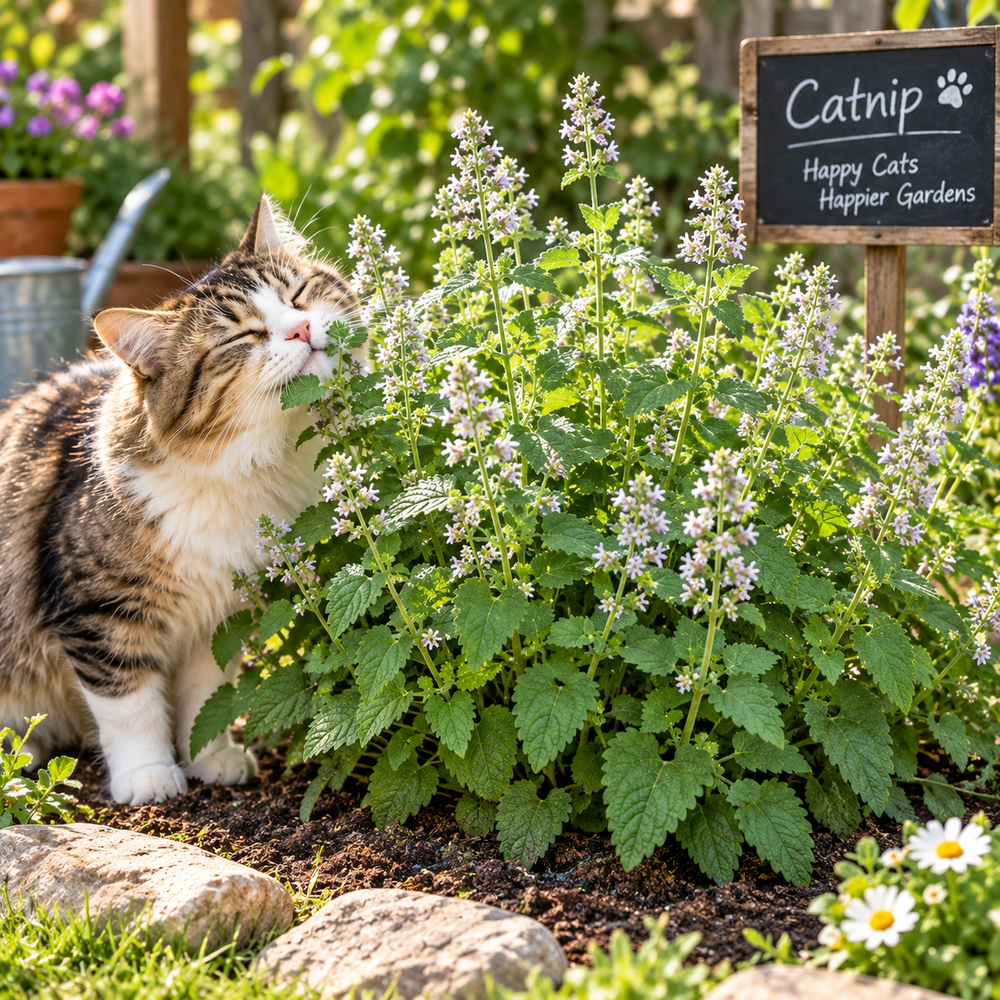
Catnip is famous for its natural attraction to many cats.
Cats may:
Because interested cats can physically damage young plants:
Protect newly established seedlings until the plants become strong.
Container-grown Catnip can also be placed where cats can access it under supervision.
Once the plant is well established, leaves can be harvested as required.
For fresh use:
Cut healthy leaves or tender stems using clean scissors.
For larger harvests:
Trim established stems while leaving enough healthy foliage for regrowth.
Avoid repeatedly removing most of the foliage from young plants.
Healthy Catnip leaves and stems can be dried for later use.
After harvesting:
Keep dried Catnip in:
A clean, dry and airtight container.
Established Catnip can produce small flowers, usually in:
White to pale lavender shades.
Flowers are carried on upright stems above the aromatic foliage.
Pruning or trimming after flowering can help maintain:
A neat and bushy plant.
Catnip is a:
Perennial herb.
Under suitable growing conditions, established plants can survive for more than one growing season.
In Lahore and other hot plains, long-term performance depends on:
Container-grown plants may require additional care during periods of extreme heat.
During Lahore's winter:
Cool conditions generally support healthy vegetative growth once plants are established.
During Lahore's summer:
Established plants generally handle summer conditions better than:
Young seedlings or recently transplanted plants.
G-11 Grow Bag – 11 × 10 inch 🔗
G-12 Grow Bag – 12 × 12 inch 🔗
Thanks for subscribing!
This email has been registered!


We are here to assist you