




Best Sowing Season: October - November


- Choosing a selection results in a full page refresh.

Available 24/7 at
0300 110 7787
Pack Size: Approx. 40–50 seeds per pack.
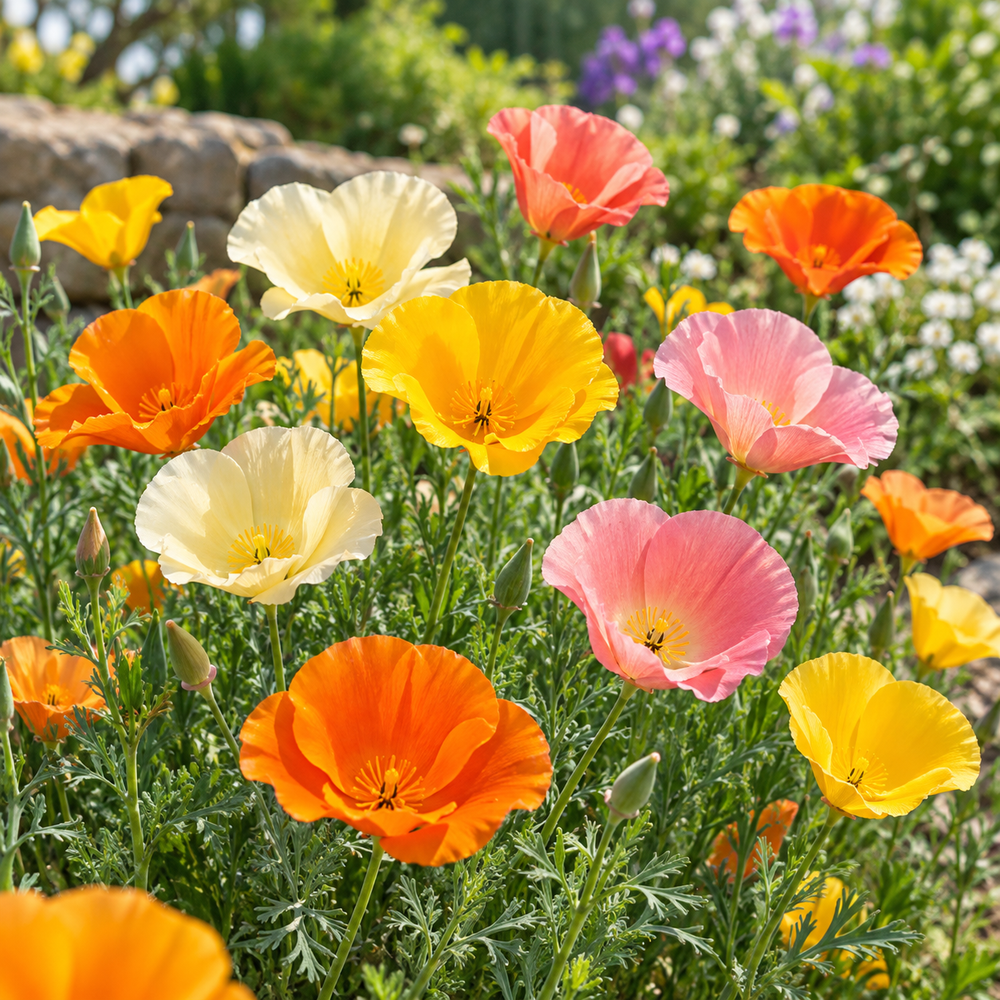
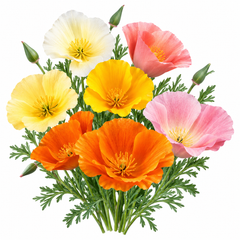
Grow the cheerful Californian Poppy Mix (Eschscholzia californica), an easy-to-grow cool-season annual producing beautiful silky, cup-shaped flowers in a colourful mix of warm and soft shades above finely divided blue-green foliage.
This low-growing flowering plant is especially attractive in flower beds, borders, rock gardens, pots, grow bags, pathway edges and mass plantings.
California Poppies perform particularly well in sunny locations with well-draining soil and, once established, are relatively tolerant of dry conditions.
Best Sowing Season: October - November
Couldn't load pickup availability
Free standard shipping on orders over RS 5000
Californian Poppy is valued for its:
G-11 Grow Bag – 11 × 10 inch 🔗
Highly recommended for Californian Poppy.
Because this plant dislikes unnecessary root disturbance, seeds can be:
Direct sown into the final G-11 Grow Bag.
After germination, thin seedlings to maintain sufficient spacing for healthy growth.
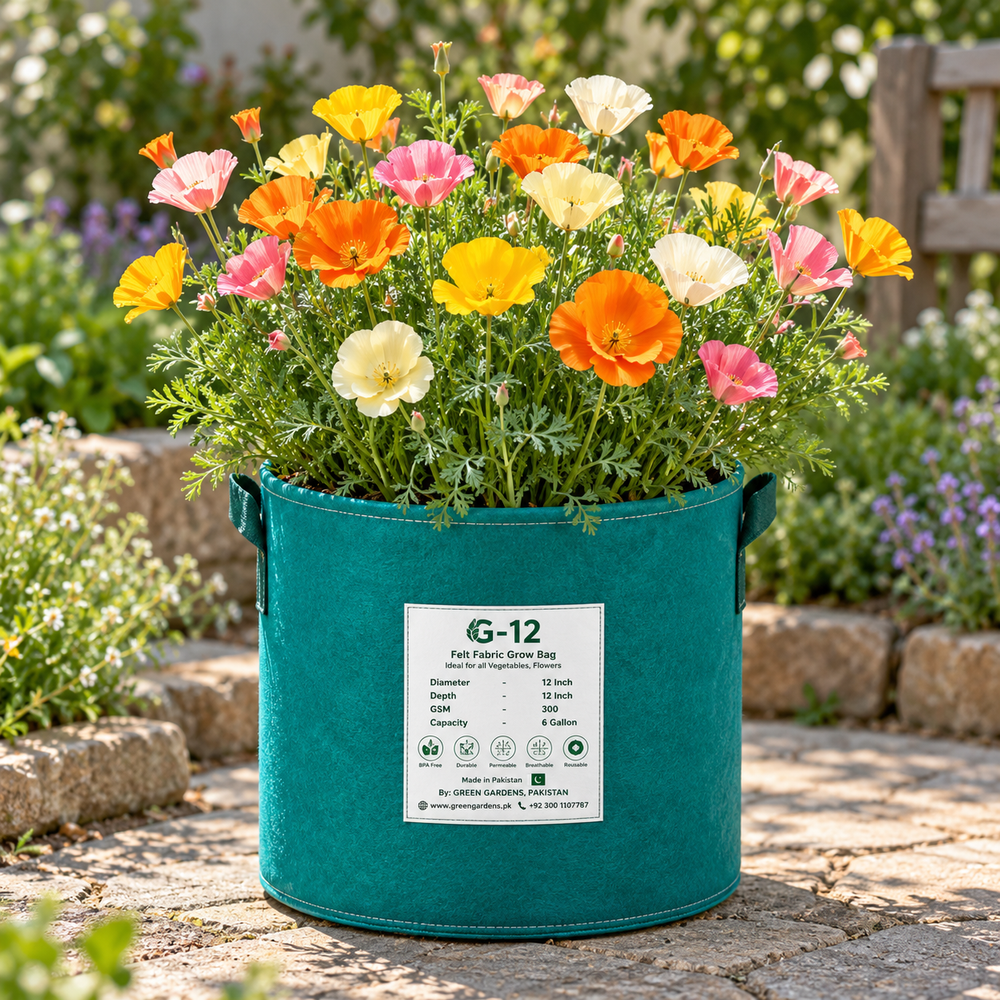
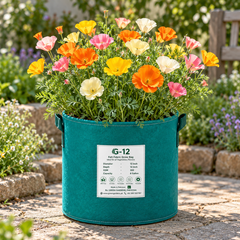
G-12 Grow Bag – 12 × 12 inch 🔗
Also an excellent option for creating a slightly fuller flowering display.
G-24 Grow Bag – 24 × 12 inch 🔗
Excellent for growing several Californian Poppy plants together for a colourful mass-flowering effect.
Maintain proper spacing rather than allowing seedlings to become severely overcrowded.
Californian Poppy prefers:
Light, sandy and very well-draining soil.
Unlike many heavy-feeding flowering plants, it does not require excessively rich soil.
A practical growing mix may include:
A practical mix can be approximately:
70% Sandy Soil + 20% Cocopeat + 10% Vermicompost
The most important requirements are:
Avoid:
Rich soil may encourage:
Excessive leafy growth with fewer flowers.
Californian Poppy develops a root system that does not appreciate unnecessary disturbance.
For best results:
Direct sow the seeds where the plants will grow and flower.
Suitable final locations include:
Avoid repeated transplanting.
The current GREEN GARDENS growing guidance allows seeds to be soaked for approximately:
4–6 hours before sowing
as an optional step.
However, soaking is not essential.
Seeds can also be sown directly into prepared moist soil.
Sow seeds approximately:
0.5 cm deep
and cover lightly with fine soil.
Do not bury excessively deep.
After sowing, water using:
A fine shower or gentle spray.
Avoid strong irrigation that may wash seeds away or move them too deeply into the soil.
Keep the upper soil layer:
Lightly and consistently moist
until germination.
Under suitable cool-season conditions, germination generally occurs within approximately:
14–21 days
although timing can vary according to:
A germination temperature of approximately:
16–18°C
is particularly favourable.
During germination:
Californian Poppy should ideally be:
Direct sown in its final growing position.
Its seedlings can be difficult to transplant successfully once the roots become established.
Therefore:
Do not routinely raise large seedlings in trays and then disturb their roots.
Direct sowing usually gives simpler establishment.
Once seedlings emerge:
Healthy seedlings should remain relatively compact.
Because direct sowing is preferred, thinning is often more practical than transplanting.
When seedlings become established:
Remove weaker or overcrowded seedlings carefully.
Keep the strongest plants at suitable spacing.
When thinning, avoid disturbing the roots of the plants that will remain.
Transplanting is:
Not preferred for Californian Poppy.
If transplanting becomes necessary, move seedlings when they are:
Very young
and disturb the root system as little as possible.
Where possible:
Sow directly into the final pot, grow bag or garden location instead.
Maintain approximately:
15–20 cm / 6–8 inches between plants.
Suitable spacing encourages:
Californian Poppy performs best in:
Full sun.
Provide approximately:
6–8 hours of direct sunlight daily.
Strong winter sunlight encourages:
Californian Poppy flowers are strongly influenced by light.
The flowers typically:
Open in bright sunlight
and may naturally:
Close during cloudy weather, at night or in dull conditions.
This is normal plant behaviour and does not indicate that the flowers are unhealthy.
During germination and early seedling growth:
Maintain gentle, consistent moisture.
Once plants become established, they are relatively:
Drought tolerant.
Water when the soil has begun to dry rather than maintaining permanently wet conditions.
Avoid:
California Poppies generally perform better with:
Slightly drier conditions than excessively wet soil.
Californian Poppy is:
Not a heavy feeder.
Before sowing, only a modest amount of:
is required where soil is poor.
Avoid excessive fertilisation.
Too much nitrogen or very rich compost can encourage:
Large leafy plants with reduced flowering.
For this plant:
More fertiliser does not necessarily mean more flowers.
Californian Poppy produces:
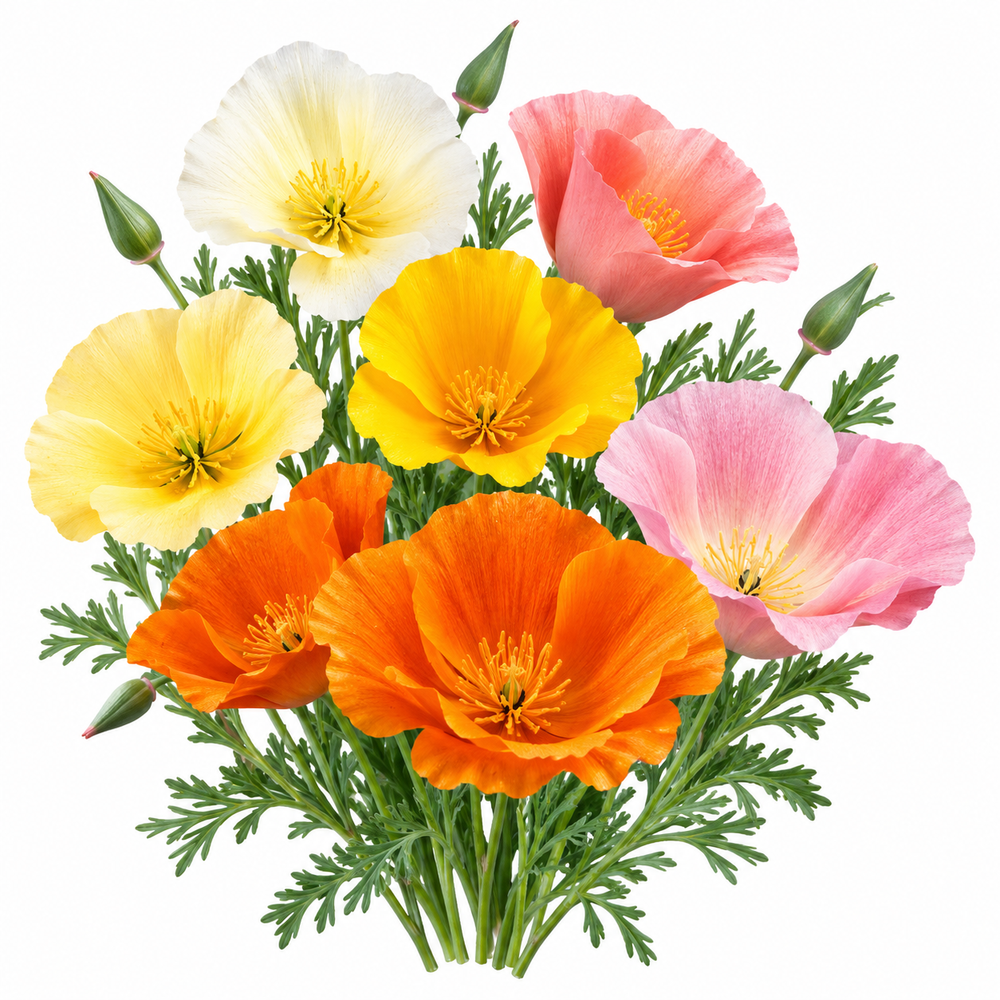
Silky, cup-shaped flowers
held above finely divided foliage.
The mixed seed selection can create a colourful natural-looking display.
In Lahore and the hot plains of Pakistan, autumn-sown plants can flower during:
Winter through spring
depending on temperature and sowing time.
Flowering performance is best when plants receive:
Remove faded flowers regularly if:
Extended flowering is desired.
Deadheading can help:
If natural reseeding is desired, allow some healthy seed pods to mature on the plant.
Under suitable conditions, Californian Poppies may:
Self-seed naturally.
Mature seed pods can release seeds into nearby soil, and new plants may appear in a later suitable season.
If self-seeding is not desired:
Remove faded flowers and seed pods before they mature fully.
One of the major advantages of Californian Poppy is its ability to perform in:
Sunny, relatively dry and well-drained locations.
Once established, it requires less frequent watering than many moisture-loving winter flowers.
This makes it especially useful for:
During winter:
Cool sunny conditions generally provide excellent flowering.
For Lahore and the hot plains of Pakistan, Californian Poppy performs best from:
Cool winter into mild spring weather.
As temperatures become excessively hot:
It should therefore primarily be treated as a:
WINTER flower for Lahore and similar climates.
Californian Poppy is generally:
Relatively trouble-free.
Inspect plants occasionally for:
Healthy plants grown in sunny, well-drained conditions generally require limited pest intervention.
The most important disease prevention measure is:
Good drainage.
Maintain:
Avoid:
Californian Poppies generally have few serious disease problems when grown under suitable conditions.
The colourful flowers can attract:
They are particularly attractive when grown in:
Large groups or naturalistic flower displays.
Californian Poppy Mix is particularly suitable for:
Its combination of:
Bright colour + fine foliage + low maintenance + drought tolerance
makes it an excellent winter flower for sunny locations.
This product contains:
Mixed Californian Poppy Seeds.
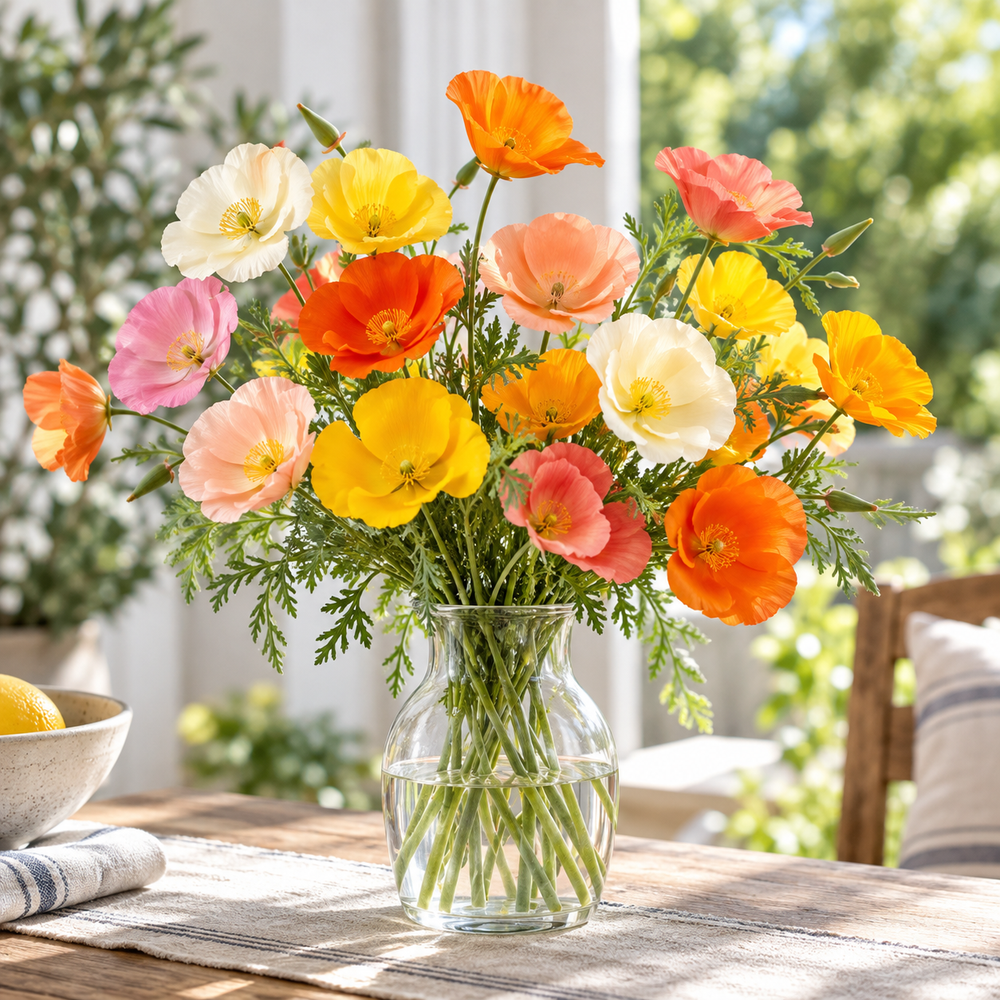
Expected shades may include:
Orange, Yellow, Golden, Cream, White, Pink, Rose, Red-Orange and Other Mixed Tones.
Because this is a mixed seed selection:
The exact number or proportion of each flower colour cannot be guaranteed.
Individual plants may naturally vary in:
These differences can result from:
Product photographs represent the general appearance and colour range expected from mature plants grown under suitable conditions.
G-11 Grow Bag – 11 × 10 inch 🔗
G-12 Grow Bag – 12 × 12 inch 🔗
Thanks for subscribing!
This email has been registered!