


Best Sowing Season: November - December


- Choosing a selection results in a full page refresh.

Available 24/7 at
0300 110 7787
Approx. 30-40 seeds per pack.
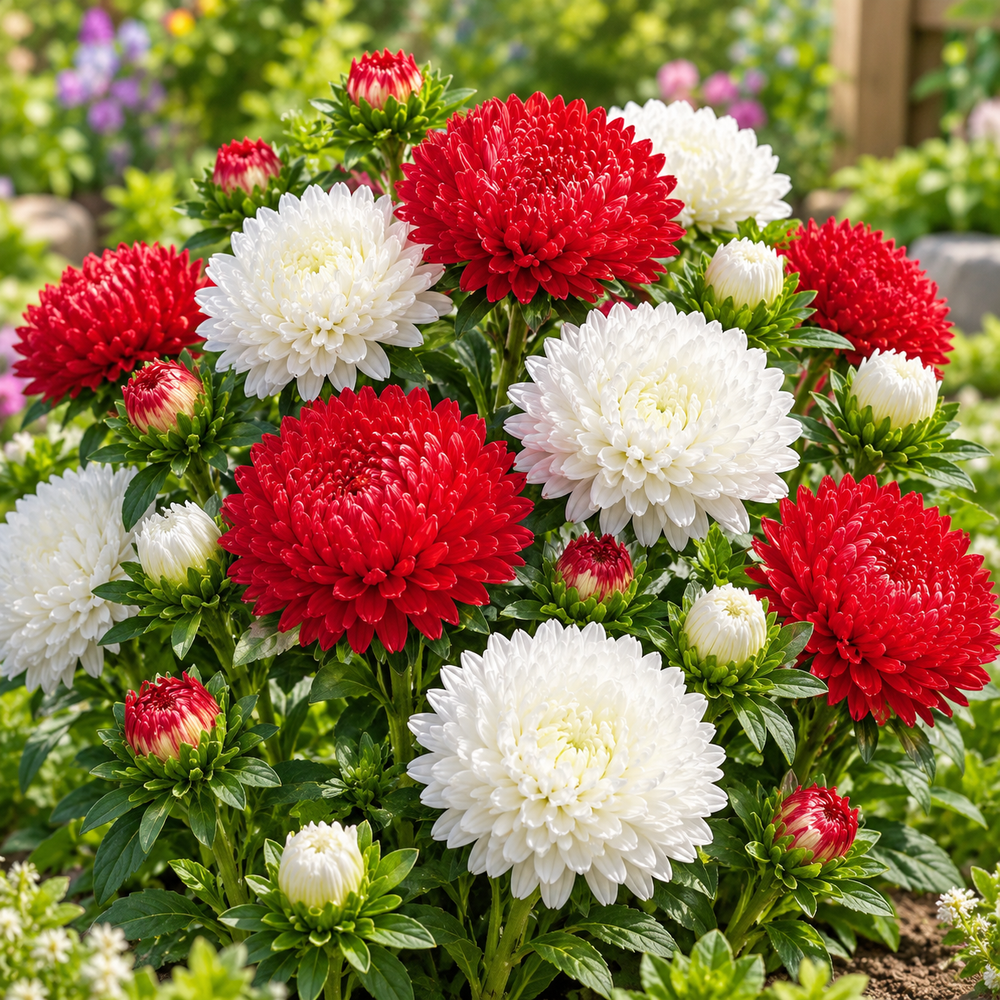
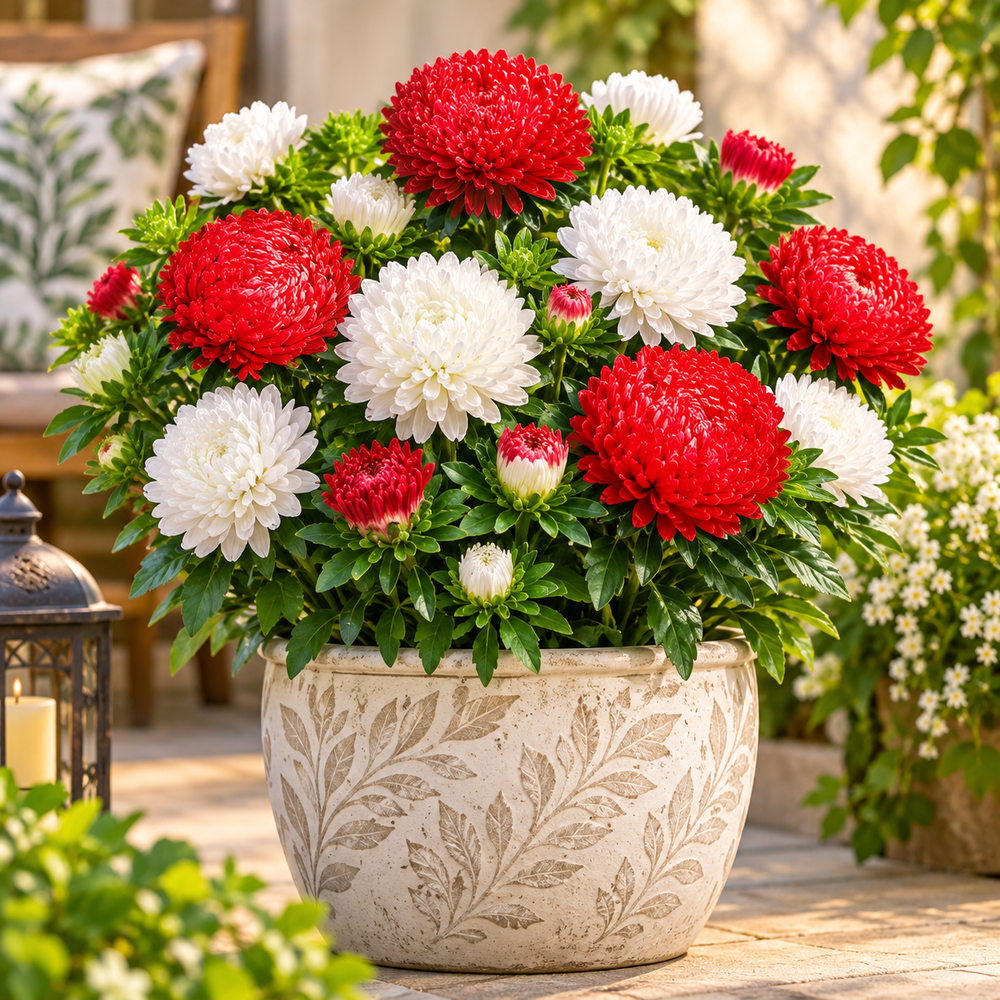
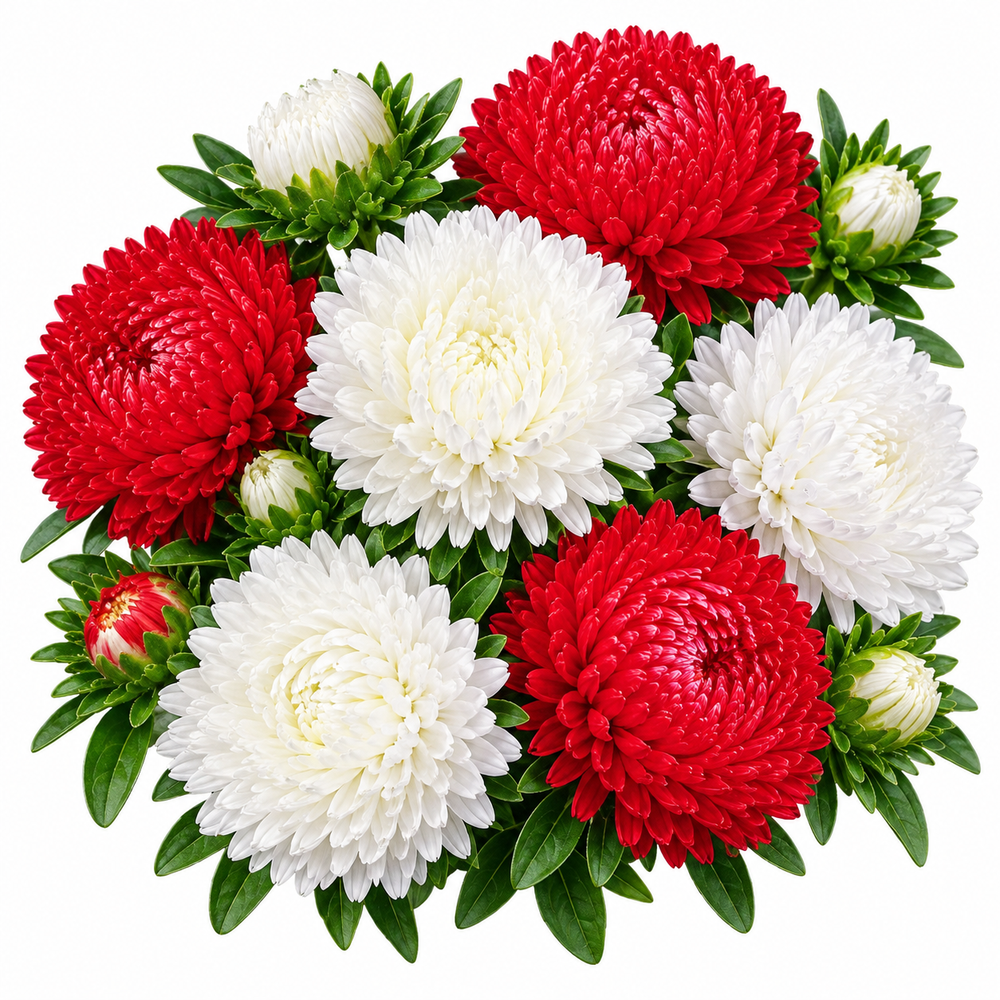
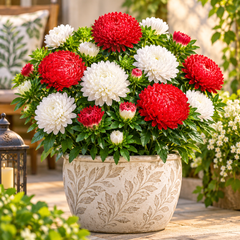
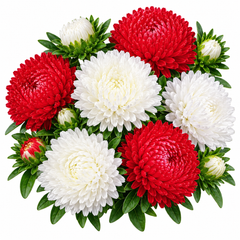
Grow spectacular Aster Peony Red & White (Callistephus chinensis), a beautiful winter flowering annual producing large, densely double peony-like blooms in striking red and white colours.
Its upright branching growth, strong flowering stems and full decorative blooms make it excellent for flower beds, borders, pots, grow bags, rooftop gardens and colourful winter displays.
Aster Peony is especially valued for its large double flowers, elegant rounded flower form, attractive Red & White colour combination and long-lasting seasonal flowering performance.
Germination Time: 10–14 days
Ideal Temperature: 21°C–22°C
Best Sowing Season: November - December
Couldn't load pickup availability
Free standard shipping on orders over RS 5000
Aster Peony Red & White is a decorative form of:
China Aster (Callistephus chinensis)
selected for its:
Large, densely double flowers with a rounded, peony-like appearance.
Unlike single or semi-double Asters, Peony-type blooms develop numerous overlapping petals that create:
A fuller, deeper and more luxurious flower form.
The combination of vibrant red and elegant white flowers creates a striking seasonal display.
G-11 Grow Bag – 11 × 10 inch 🔗
Suitable for:
One Aster Peony plant.
Regular watering and feeding should be maintained during active growth.
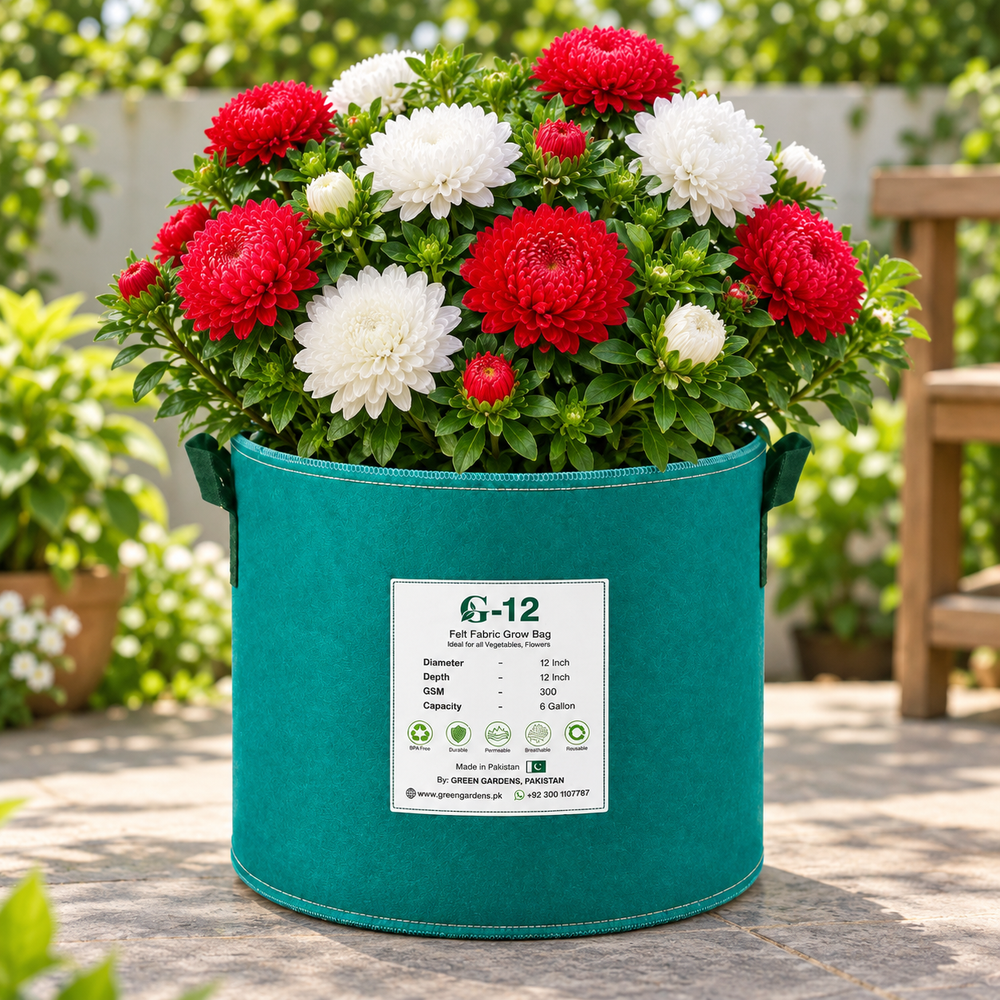
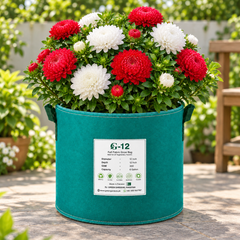
G-12 Grow Bag – 12 × 12 inch 🔗
Highly recommended for one strong and well-branched Aster Peony plant.
The larger soil volume provides better:
G-24 Grow Bag – 24 × 12 inch 🔗
Excellent for growing:
Several Aster Peony plants together while maintaining appropriate spacing.
Use:
60% Bhalu Mitti / Sandy Soil + 30% GREEN GARDENS Vermicompost 🔗 + 10% Cocopeat
The growing medium should be:
Loose, fertile and well-draining.
China Asters prefer soil that retains moderate moisture while allowing excess water to drain quickly.
Avoid:
Seeds can be started in:
For home gardening:
Nursery sowing followed by transplanting is recommended.
Sow seeds approximately:
3–5 mm deep.
Cover lightly with fine growing medium.
Water gently after sowing.
Maintain:
Consistent light moisture until germination.
Do not keep the growing medium continuously saturated.
Seeds generally germinate within approximately:
10–14 days
under suitable conditions.
Good germination is encouraged by:
Avoid:
Deep sowing or excessive watering.
Recommended germination temperature:
21°C–22°C
This temperature range supports:
Fast and relatively uniform China Aster germination.
Once seedlings emerge:
Provide bright natural light and gradually introduce them to direct sunlight.
Transplant seedlings when they are:
Healthy, established and carrying several true leaves.
A practical transplanting stage is when seedlings reach approximately:
5–6 cm in height.
Before transplanting:
Transplant preferably:
During the late afternoon.
Water gently after transplanting.
Maintain approximately:
20–30 cm / 8–12 inches between plants.
Adequate spacing helps provide:
Avoid overcrowding China Asters.
Provide:
Full sun.
For strong growth and good flowering:
6–8 hours of direct sunlight daily is recommended.
Good sunlight encourages:
Plants grown in excessive shade may become:
Stretched, weaker and less floriferous.
During germination:
Keep the growing medium lightly and consistently moist.
During early establishment:
Water regularly without waterlogging.
Once plants are established:
Water when the upper soil layer begins to dry.
Water preferably around:
The root zone.
Avoid keeping the foliage unnecessarily wet for prolonged periods.
At planting time, incorporate a moderate quantity of:
into the growing medium.
During active growth:
A light top dressing of Vermicompost can be applied when required.
Avoid excessive nitrogen fertilizer because it may encourage:
Heavy vegetative growth at the expense of flowering.
Balanced nutrition encourages:
Strong stems and larger, better-quality blooms.
Aster Peony develops an:
Upright, branching growth habit.
Peony-flowered China Asters commonly reach approximately:
50–70 cm / 20–28 inches tall
under suitable growing conditions.
Actual height depends on:
The upright habit makes the plant especially suitable for:
Middle and back sections of seasonal flower beds.
The outstanding characteristic of this variety is its:
Peony-like double flower form.
Each flower develops:
Numerous overlapping petals arranged densely toward the centre.
This produces a:
Rounded, full and luxurious bloom
that is visibly different from single or standard daisy-style Asters.
This product produces:
Red & White flowers.
The contrast between:
Rich red blooms and elegant white blooms
creates an attractive two-colour winter display.
Natural variation may occur in:
For Lahore and similar hot plains, November–December sowing generally provides flowering during:
Winter into early spring.
Exact flowering time depends on:
Healthy plants can continue producing flowers over an extended period when:
Faded blooms are removed regularly.
Remove faded flowers regularly.
Deadheading helps:
Cut faded flower heads carefully without damaging:
New side buds or healthy branches.
Aster Peony generally develops upright stems.
However, plants carrying multiple large double flowers may benefit from:
Light support.
Support is particularly useful when plants are grown:
Use a:
Bamboo cane or suitable plant support
and tie stems loosely.
China Asters perform best with:
Good airflow and well-draining soil.
For healthier plants:
Where possible, avoid repeatedly growing China Asters in exactly the same garden soil every season.
During Lahore's winter:
Aster Peony Red & White performs particularly well as a:
WINTER / COOL-SEASON flowering annual
in Lahore and other hot plains of Pakistan.
China Aster prefers:
Cool to mild growing conditions.
As temperatures rise strongly during late spring:
For Lahore and similar hot plains, Aster Peony should therefore primarily be planned for:
Winter and early spring flowering.
Aster Peony (Callistephus chinensis) is an:
ANNUAL flowering plant.
It completes its normal life cycle during one growing season.
For the following winter:
Fresh seeds should normally be sown again.
G-11 Grow Bag – 11 × 10 inch 🔗
G-12 Grow Bag – 12 × 12 inch 🔗
Thanks for subscribing!
This email has been registered!


We are here to assist you