



- Choosing a selection results in a full page refresh.

Available 24/7 at
0300 110 7787
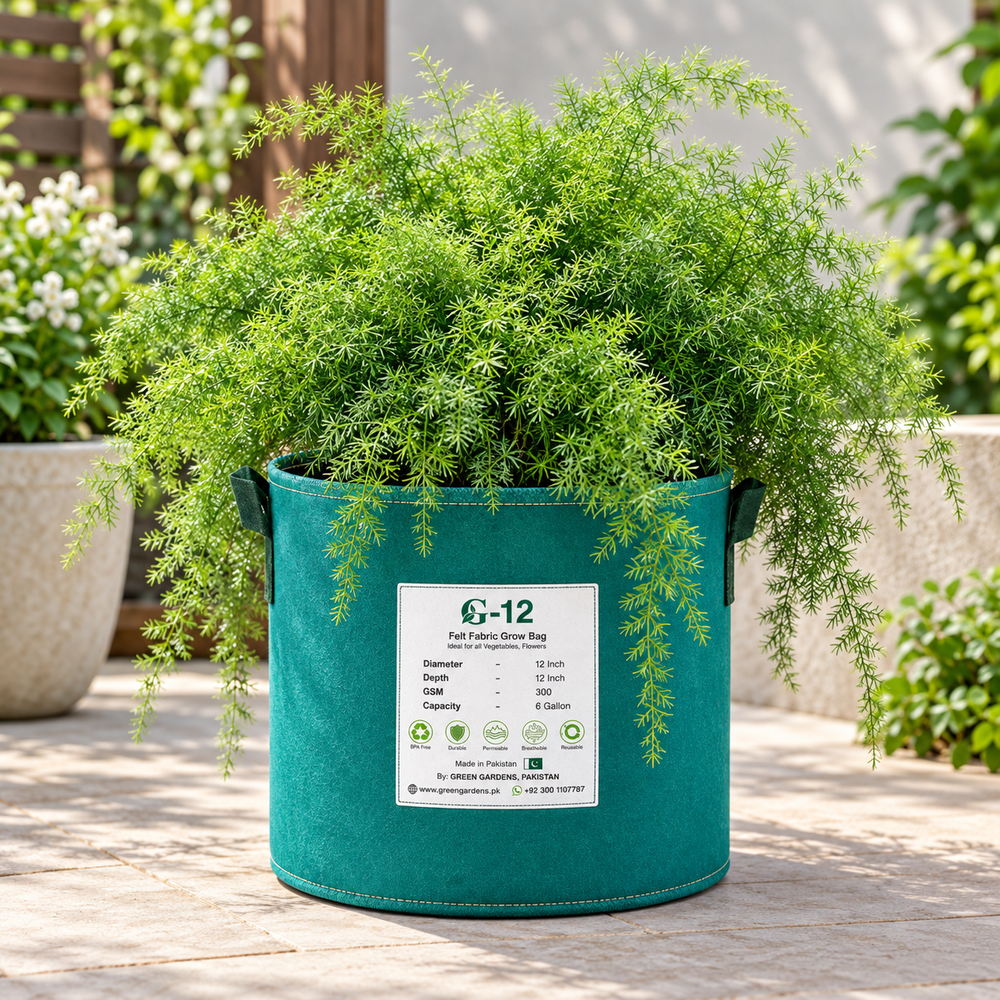
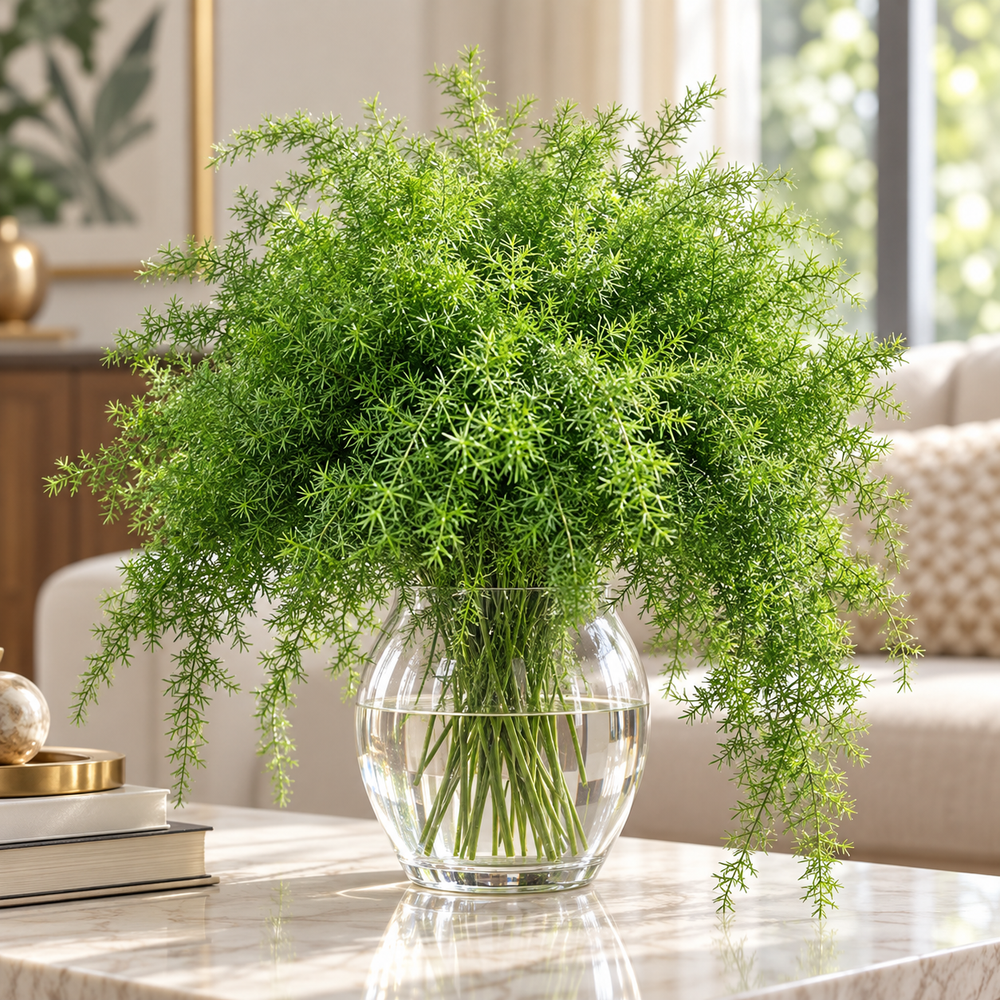


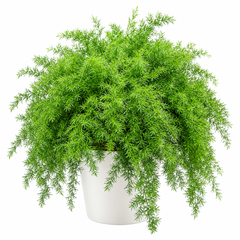
Pack Size: 20 seeds per pack.
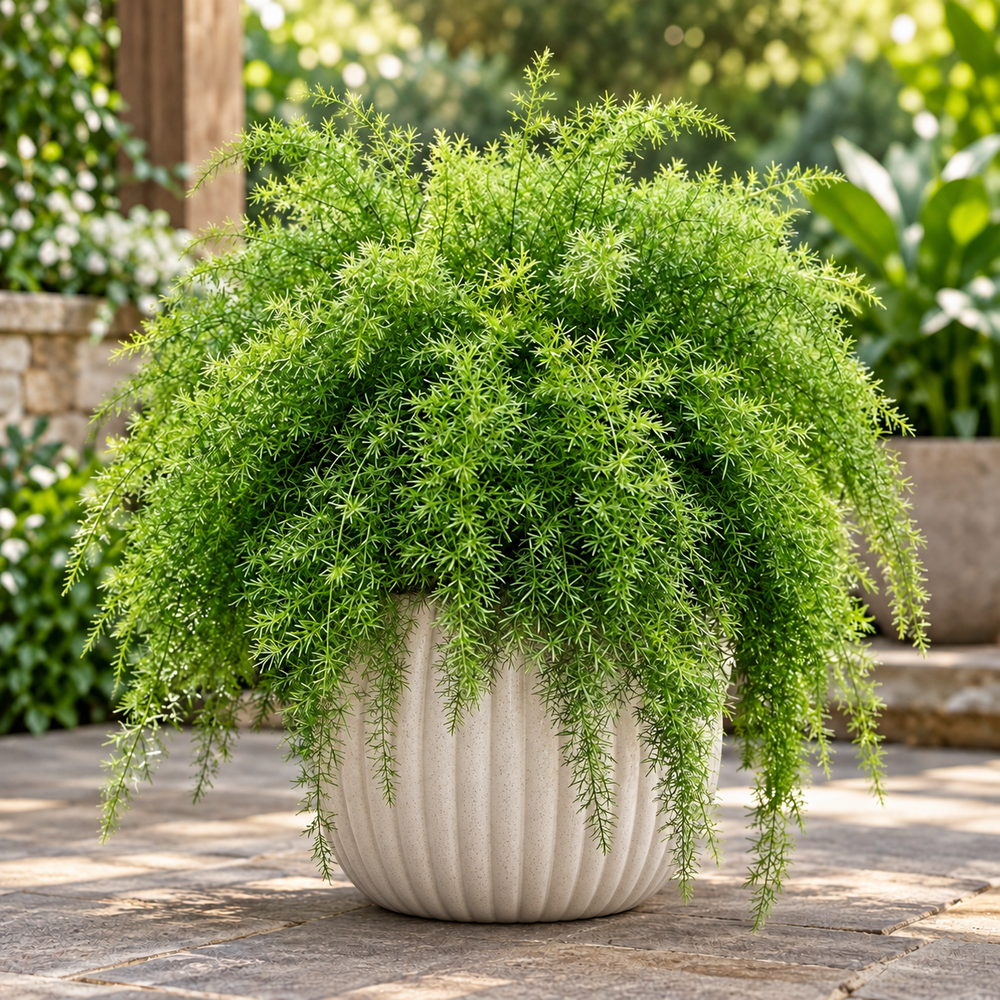
Grow the elegant Asparagus Fern, a beautiful ornamental perennial valued for its soft, delicate and feathery green foliage.
Despite its common name, Asparagus Fern is not a true fern. It belongs to the Asparagus group and develops graceful foliage that adds texture and fresh greenery to indoor and outdoor spaces.
Excellent for pots, grow bags, hanging baskets, patios, balconies, shaded garden areas and bright indoor locations.
Once established, it is a long-lasting, low-maintenance ornamental foliage plant.
Best Sowing Season: October–April
Couldn't load pickup availability
Free standard shipping on orders over RS 5000
Asparagus Fern is an attractive ornamental plant recognized for its:
Depending on the growing type and conditions, mature stems may grow upright, arch outward or cascade attractively over the sides of containers.
G-11 Grow Bag – 11 × 10 inch 🔗
Highly recommended for Asparagus Fern.
It provides good root volume while remaining manageable for patios, balconies and home gardens.
G-12 Grow Bag – 12 × 12 inch 🔗
Also an excellent option where a larger and fuller plant is desired.
For normal container growing:
G-11 or G-12 is an excellent choice.
Asparagus Fern is also particularly attractive in:
Hanging baskets and elevated planters
where arching stems can cascade naturally.
Use a:
Loose, fertile and well-draining growing medium.
A practical mix may include:
The soil should provide:
Avoid permanently wet, heavy or compacted soil.
Asparagus Fern seeds may germinate slowly.
Before sowing:
Soak seeds in normal water overnight for approximately 12–24 hours.
This can help soften the seed coat and support more uniform germination.
Seeds can be started in:
Place seeds onto the moist growing medium and:
Cover lightly with approximately 0.5 cm of fine growing medium.
Do not bury deeply.
Water gently after sowing.
Prefer:
A fine mist or gentle shower
so the seeds are not displaced.
Keep the growing medium consistently moist but never waterlogged.
Asparagus Fern seeds are naturally slower than many seasonal flower seeds.
Germination may take approximately:
3–6 weeks
under suitable conditions.
Some seeds may emerge earlier or later.
Patience is important.
Keep the growing medium:
Do not discard the seed tray too early simply because germination is taking longer than ordinary flower seeds.
Once seedlings emerge:
Allow seedlings to become properly established before transplanting.
Transplant young plants when they are strong enough to handle comfortably.
Avoid damaging the developing root system.
After transplanting:
For garden beds or larger containers, maintain approximately:
6–8 inches / 15–20 cm between young plants.
Mature plants can gradually develop into fuller clumps.
Asparagus Fern performs particularly well in:
Bright filtered light, partial shade or gentle morning sunlight.
For Lahore and other hot climates:
Protect from intense afternoon summer sun.
Strong summer sunlight can cause:
Indoor plants should be placed where they receive:
Bright natural indirect light.
During active growth, maintain:
Moderate and consistent soil moisture.
Water when the upper layer of soil begins to dry.
Avoid:
Container-grown plants may require more frequent watering during hot weather.
During Lahore’s hot summer:
Hanging baskets may dry faster than normal pots and should be checked regularly.
Asparagus Fern can continue growing during mild winter weather.
During cooler conditions:
Growth may naturally become slower during colder weather.
During active growth, apply:
lightly around established plants.
A mild balanced fertiliser may also be used periodically where required.
Avoid excessive fertiliser application.
Asparagus Fern responds well to light pruning.
Remove:
If an established plant becomes overgrown, selected stems can be cut back near the base to encourage fresh growth.
Light tip pruning can also help maintain a fuller appearance.
Asparagus Fern is an excellent ornamental container plant for bright indoor locations.
Place it near:
Avoid:
Adequate natural light is important for maintaining healthy green foliage.
Asparagus Fern is particularly attractive in:
Hanging baskets.
The graceful arching or cascading stems can flow over the sides of the basket, creating an elegant foliage display.
Hanging baskets should be checked more frequently for moisture because they can dry faster than ground-level containers.
Inspect plants periodically for:
Pay attention to:
Good airflow and healthy growing conditions help maintain stronger plants.
Asparagus Fern develops a vigorous underground root system as it matures.
Good drainage is important because continuously wet soil may cause root problems.
As container-grown plants mature, they may eventually require:
Established plants may be propagated through:
Seeds or division of mature clumps.
Division is generally carried out once plants have developed a substantial root system.
Asparagus Fern is sold as an:
Ornamental foliage plant only.
It should not be confused with edible asparagus.
If mature plants produce berries:
Do not treat the berries as edible fruit.
Keep berries and plant material away from pets and small children who may attempt to eat them.
Repeated contact with some Asparagus Fern types may also irritate sensitive skin.
Asparagus Fern is a perennial foliage plant and should not be expected to germinate as quickly as common seasonal flowers.
Seeds may take approximately:
3–6 weeks or occasionally longer
to germinate depending on:
Germination may also be somewhat uneven.
Young seedlings begin relatively small and gradually develop their characteristic feathery foliage as plants mature.
Product photographs represent the expected appearance of established plants under suitable growing conditions.
G-11 Grow Bag – 11 × 10 inch 🔗
Thanks for subscribing!
This email has been registered!