



Best Soil Mix for Vegetables and Flowers in Pakistan – Complete Home Gardening Guide
Healthy plants begin below the surface. A good soil mix must hold enough moisture for roots while also providing air, drainage, nutrients and physical support. There is no single perfect recipe for every plant, but a few balanced formulas work very well for vegetables and flowers grown in Pakistani home gardens, pots and grow bags.
Quick links: Shop Vermicompost, Cocopeat, Fertilizers and Grow Bags.
What Makes a Good Potting or Container Mix?
A practical mix needs four qualities: structure, drainage, water-holding capacity and nutrition. Garden soil alone often becomes dense inside containers. Pure compost may hold too much moisture or contain more nutrients than young roots need. Combining materials gives a more stable root environment.
General Soil Mix for Vegetables and Flowers
For many established container plants, a useful starting formula by volume is:
- 40% good loam or garden soil for structure and mineral content
- 30% mature vermicompost or compost for organic matter and nutrients
- 20% cocopeat for moisture retention and lighter texture
- 10% drainage material such as coarse sand, perlite or another clean porous amendment
Adjust the ratio according to the crop, weather and irrigation. In monsoon conditions or for plants sensitive to wet roots, improve drainage. In very hot, dry rooftop conditions, slightly more moisture-holding material may be useful.
Seedling and Nursery Mix
Seedlings need a finer and lighter mix than mature plants. A practical starting blend is 50% cocopeat, 20% fine screened soil, 20% screened vermicompost and 10% drainage material. The mix should be soft enough for young roots and free from large clods.
Use GREEN GARDENS Cocopeat to improve texture and moisture balance. A small amount of GREEN GARDENS Vermicompost adds gentle organic fertility.
Soil Mix for Leafy Vegetables
Spinach, lettuce, coriander and fenugreek appreciate moisture but still need air around the roots. Use a fertile, crumbly mix with regular organic matter. Do not allow the container to remain waterlogged after irrigation.
Soil Mix for Root Vegetables
Carrot, radish and turnip need a loose medium without stones or hard lumps. Dense clay can restrict root expansion or cause irregular shapes. A higher proportion of fine, friable soil plus cocopeat and mature compost works better than a sticky heavy mix.
Soil Mix for Fruiting Vegetables
Tomato, chilli, capsicum, cucumber and eggplant require deeper root volume and steady nutrition. Start with a balanced medium and supplement feeding according to plant growth. Avoid excessive nitrogen, which can produce lush leaves but weak flowering and fruiting.
Why Vermicompost Helps
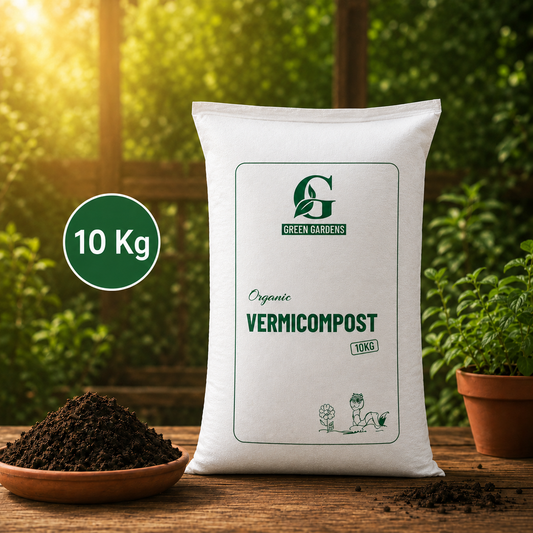
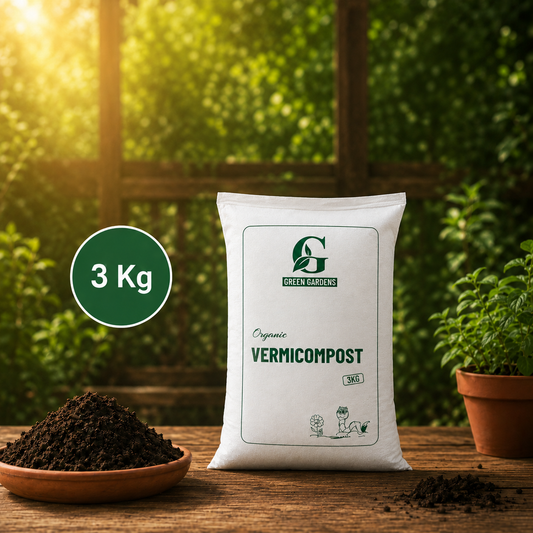
Vermicompost contributes stable organic matter, plant-available nutrients and improved soil structure. It is particularly useful in containers where soil volume is limited. GREEN GARDENS offers multiple Vermicompost pack sizes for home gardening needs.
Why Cocopeat Helps
Cocopeat holds water while helping keep the mix lighter than compact garden soil. It is especially useful in seedling media and rooftop containers, but it should generally be combined with nutrient sources because cocopeat itself is not a complete fertilizer.
Drainage Matters as Much as Nutrition
A rich mix can still fail if excess water cannot escape. Every pot or grow bag should drain freely. Felt grow bags naturally improve root-zone aeration compared with sealed containers, but the soil mix must still be open and well structured. See the GREEN GARDENS Grow Bags collection.
Common Soil-Mix Mistakes
- Using only heavy garden soil in containers.
- Adding unfinished or foul-smelling compost.
- Using too much fertilizer in seedling media.
- Ignoring drainage holes and container depth.
- Reusing diseased soil without proper treatment.
- Keeping the same watering schedule in summer, winter and monsoon.
Frequently Asked Questions
Can I grow vegetables in garden soil only?
You can, but container performance is usually better when garden soil is improved with organic matter and a material that supports aeration and drainage.
Is vermicompost enough by itself?
Vermicompost is an excellent amendment, but it is normally used as part of a balanced growing medium rather than as the only material.
Is cocopeat a fertilizer?
No. Cocopeat mainly improves physical properties such as moisture retention and texture. Plants still need nutrients from compost, vermicompost or an appropriate fertilizer programme.
How often should container soil be replaced?
It does not always need complete replacement. After a crop, remove old roots, inspect for pests or disease, restore organic matter and structure, and replace only what has degraded or become unsuitable.
GREEN GARDENS supplies practical soil-building inputs for Pakistani gardeners, supported by real-world guidance from Gardening with Javed Iqbal.

