




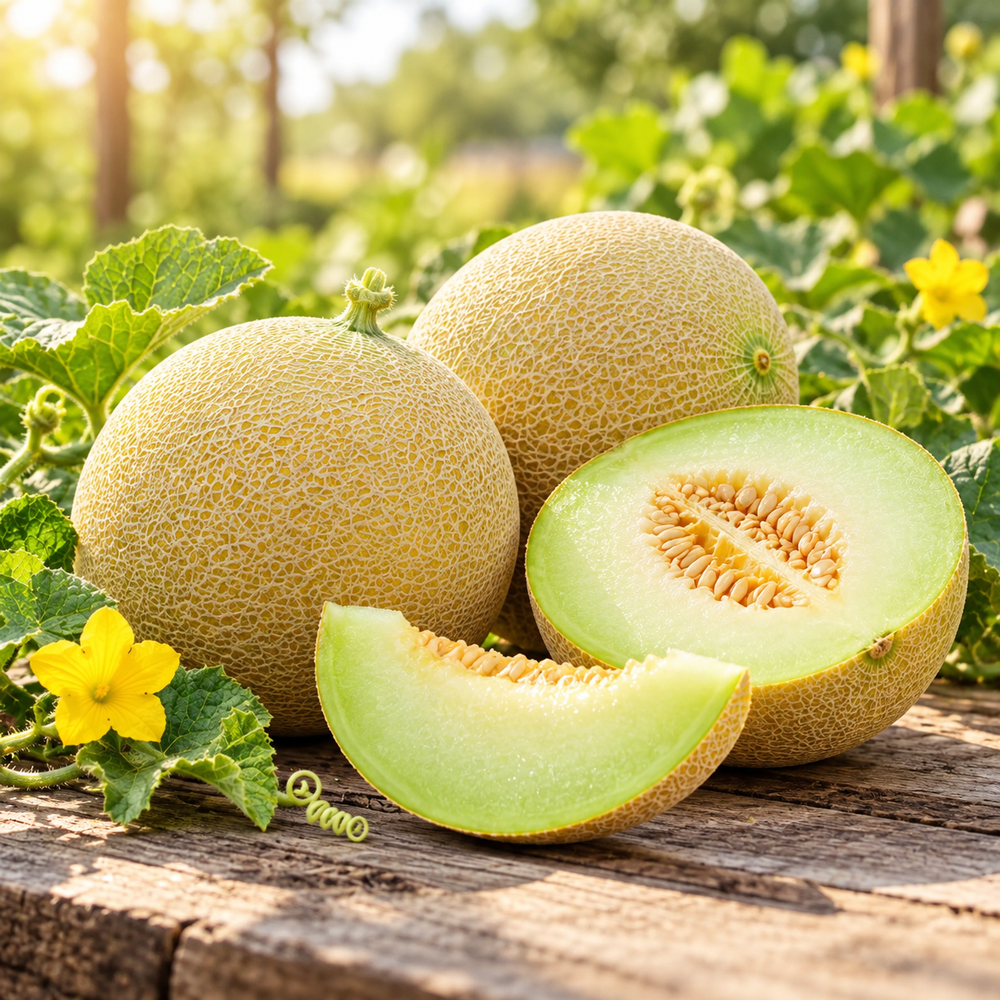
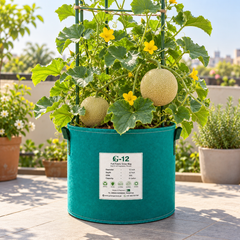
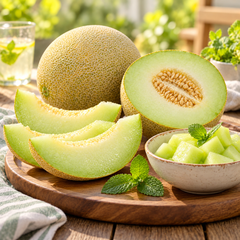
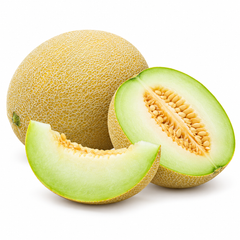


Honeydew Melon (Cucumis melo, Inodorus Group) is a popular summer fruit valued for its smooth skin, juicy flesh and refreshing sweetness.
White Honey F1 Hybrid produces attractive, creamy-white to pale-coloured melons with sweet, aromatic flesh. Its vigorous spreading vines make it suitable for sunny kitchen gardens, raised beds and spacious grow bags.
Key Features
-
Botanical Name: Cucumis melo (Inodorus Group)
-
Common Name: Honeydew Melon / White Honey Melon
-
Variety: White Honey F1 Hybrid
-
Type: Warm-season fruiting vine
-
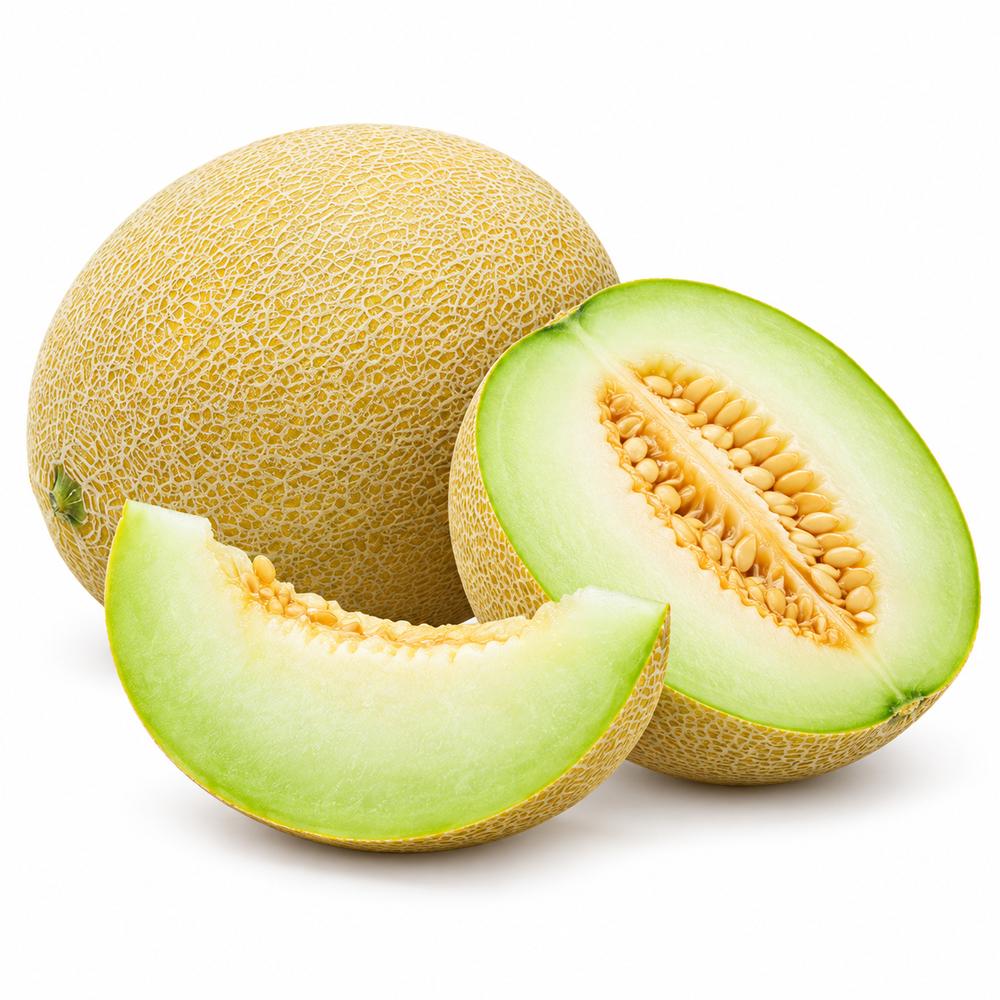
Fruits: Round to slightly oval, smooth and creamy-white
-
Flesh: Pale green to creamy white, sweet and juicy
-
Fruit Weight: Approximately 1.5–2.5 kg
-
Growth Habit: Vigorous spreading vines
-
Sunlight: Full sun
-
Special Features: F1 hybrid, attractive fruits and refreshing sweet flavour
Recommended Grow Bags
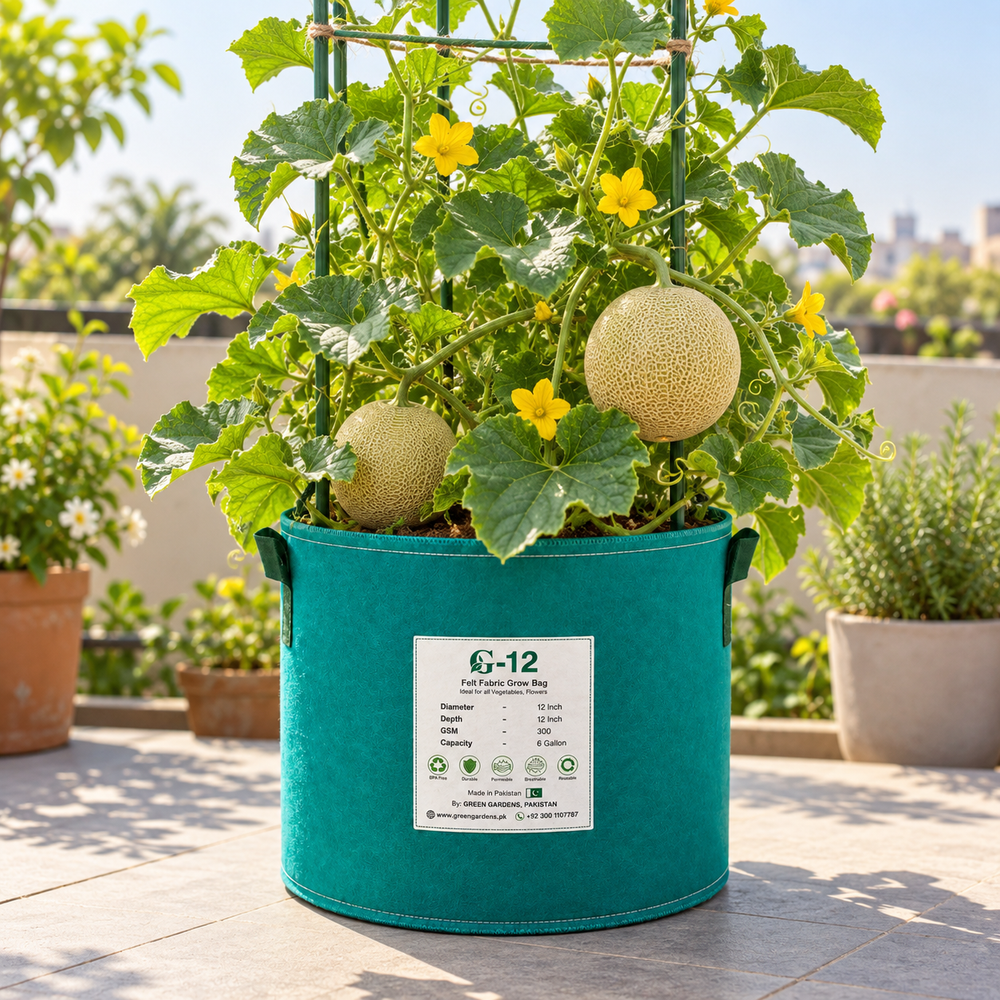
G-24 F Grow Bag – 24 × 18 inch – 1 plant.
G-28 F Grow Bag – 28 × 18 inch – 1 plant.
Allow sufficient space for vines to spread naturally.
For rooftop gardening, vines may be trained on a strong trellis. Use individual fruit slings to support developing melons and prevent damage to the vines.
Recommended Soil / Potting Mix
50% Bhalu Mitti / Garden Soil + 30% GREEN GARDENS Vermicompost + 20% Cocopeat
Use loose, fertile, organic-rich and well-draining soil.
Maintain consistent moisture and avoid waterlogging, especially during germination and fruit development.
Growing Instructions from Seeds
-
Method: Direct sowing preferred
-
Sowing Depth: Approximately 2–2.5 cm
-
Germination: 7–14 days
-
Ideal Temperature: 25–30°C
-
Plant Spacing: Approximately 90–120 cm, allowing vines to spread
-
Watering: Keep soil evenly moist until germination
Sow 1–2 seeds per planting position and retain the healthiest seedling.
For untreated seeds, optional soaking in room-temperature water for a few hours may assist seed hydration.
Provide full sunlight, adequate space and good airflow for healthy vine development.
Avoid unnecessary transplanting once the root system becomes established.
Sunlight & Watering
Sunlight: Full sun, preferably 6–8 hours daily.
Watering: Maintain consistent soil moisture during vine growth, flowering and early fruit development.
As fruits approach maturity, avoid excessive irrigation, which can negatively affect sweetness and fruit quality. Do not allow plants to suffer severe drought stress.
Growth & Harvesting
-
First Harvest: Approximately 75–90 days after sowing
-
Harvesting Season: Late spring through summer, depending on sowing time
-
Growth Habit: Vigorous spreading and branching vines
-
Fruit Type: Smooth, creamy-white, round to oval melons
-
Average Fruit Weight: Approximately 1.5–2.5 kg
Harvest when fruits develop their characteristic creamy-white colour and show signs of maturity.
Unlike many muskmelons, honeydew fruits generally do not detach easily from the vine when ripe.
Check fruit colour, maturity period and slight softening near the blossom end before harvesting.
Feeding
Mix GREEN GARDENS Vermicompost into the soil before sowing.
Apply additional vermicompost during active growth as needed.
Maintain balanced nutrition during flowering and fruit development. Adequate potassium is important for fruit quality.
Avoid excessive nitrogen fertilizer, which may encourage vigorous foliage growth at the expense of fruit production.
Pollination & Fruit Development
Honeydew Melon depends on successful pollination for proper fruit development.
Bees and other pollinating insects play an important role in transferring pollen between flowers.
Poor pollination may cause developing fruits to remain small, become misshapen or drop prematurely.
Encourage beneficial pollinators and avoid spraying insecticides during active bee activity.
Fruit Quality & Sweetness
For better fruit development and sweetness:
-
Provide at least 6–8 hours of sunlight.
-
Maintain balanced plant nutrition.
-
Ensure consistent watering during active growth.
-
Avoid excessive nitrogen application.
-
Prevent waterlogging.
-
Allow fruits to reach proper maturity before harvesting.
Fruit sweetness also depends on weather conditions, maturity and the specific hybrid's genetic characteristics.
Culinary Uses
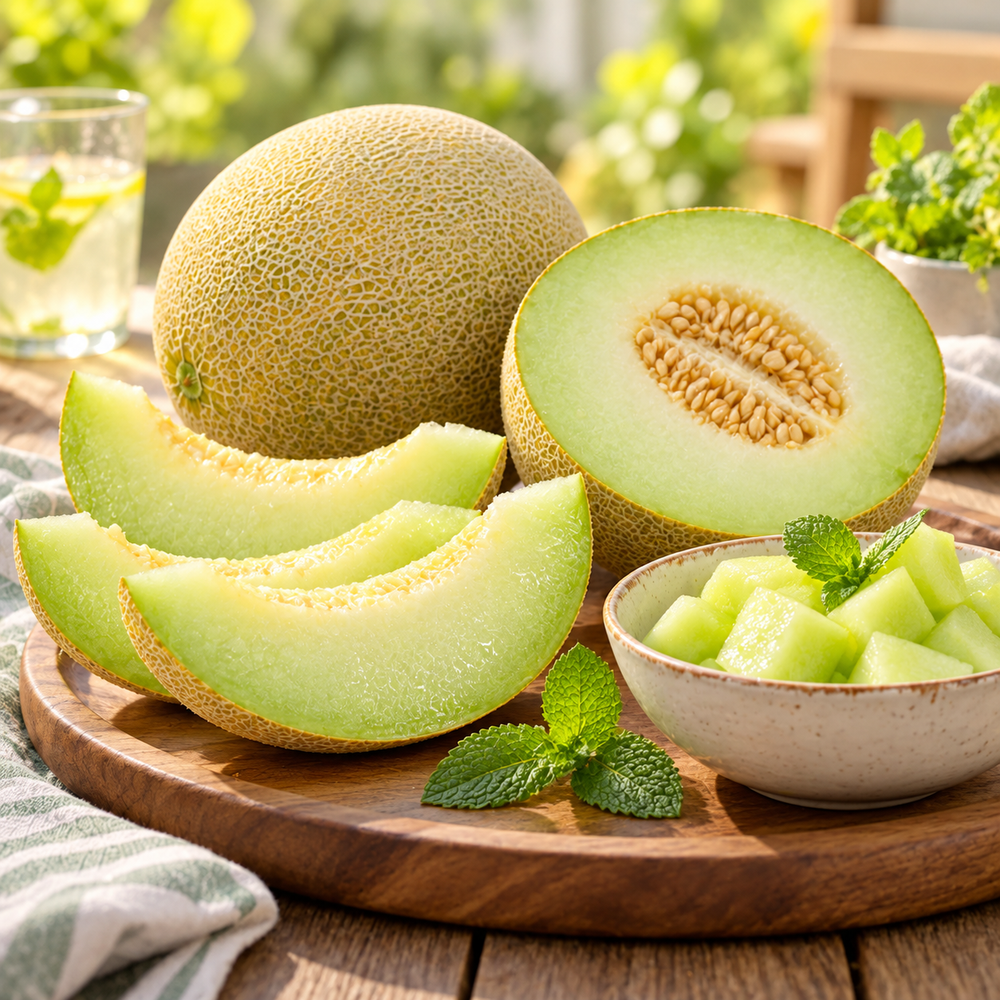
White Honey Honeydew Melon is ideal for:
-
Fresh fruit slices
-
Summer fruit salads
-
Chilled desserts
-
Fresh juices
-
Smoothies
-
Fruit platters
-
Refreshing summer snacks
Its sweet, juicy flesh is especially enjoyable when served chilled.