




-
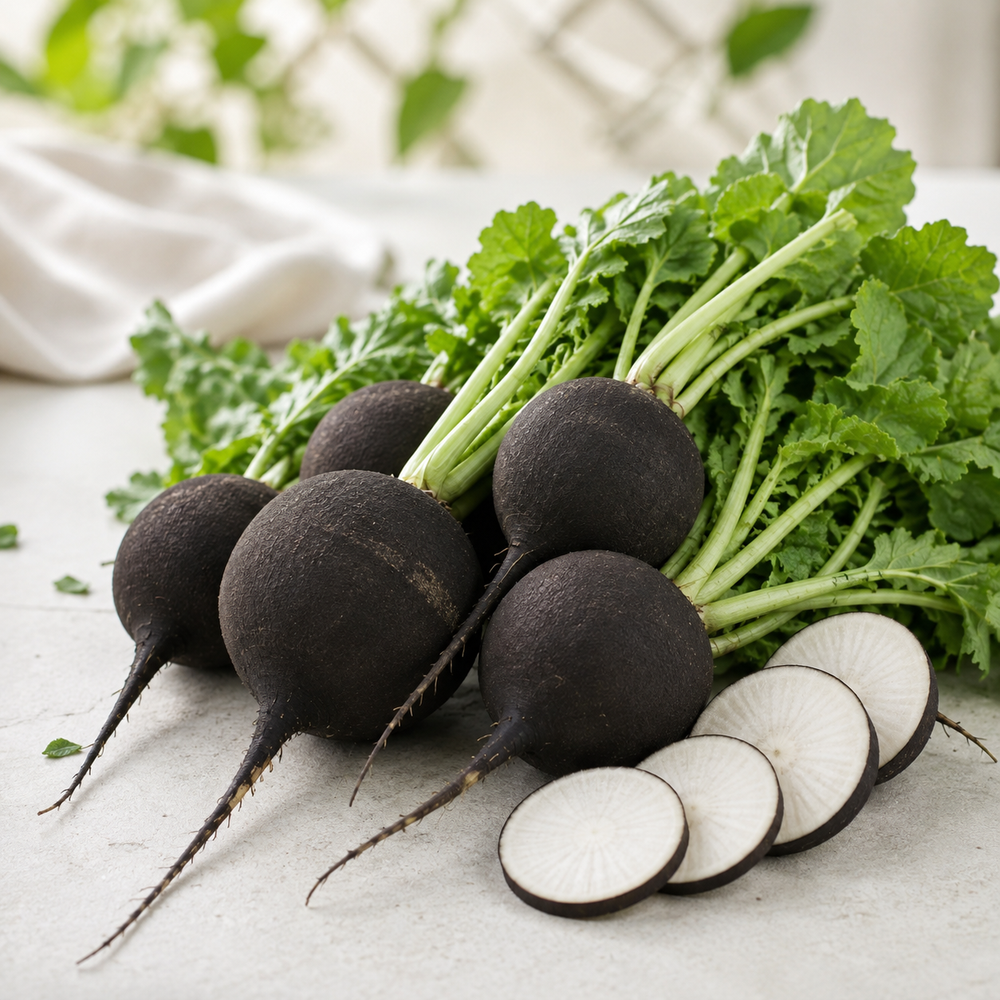
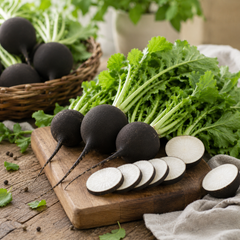
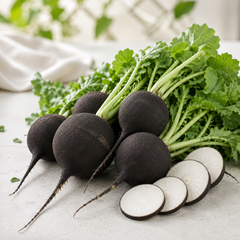
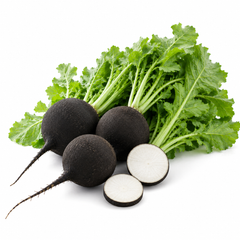
Black Round Radish is a distinctive radish type known for its rounded dark-skinned roots and crisp white interior.
The roots develop beneath the soil and are best harvested while still firm and tender. Like other radishes, prolonged over-maturity can make the roots tougher and more pungent.
Exact root size and skin darkness may vary depending on seed lot, soil conditions and growing environment.
Key Features
- Round dark-skinned radish roots
- Crisp white flesh
- Cool-season root vegetable
- Suitable for winter cultivation
- Good for kitchen gardens
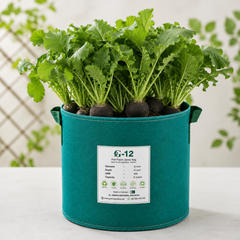
- Suitable for pots and grow bags
- Fast germination
- Distinctive colour and appearance
- Suitable for fresh and cooked use
Culinary Uses
Black Round Radish can be used in:
- Fresh salads
- Sliced vegetable platters
- Pickles
- Parathas
- Curries
- Stir-fries
- Soups
- Traditional winter dishes
Young roots are generally milder and more tender than over-mature roots.
Recommended Grow Bags
G-11 Grow Bag – 11 × 10 inch
Suitable for a small group of radish plants with proper spacing.G-12 Grow Bag – 12 × 12 inch
Provides good root depth and growing space for home cultivation.G-24 Grow Bag – 24 × 12 inch
Recommended for larger or repeated sowings with proper spacing.For round radish, loose soil and sufficient spacing are more important than excessive container depth.
Recommended Soil / Potting Mix
Use:
50% Vermicompost + 50% Bhalu Mitti (Sandy Soil)
Mix thoroughly before sowing.
The growing medium should be:
- Loose
- Fine-textured
- Fertile
- Well drained
- Free from stones and hard clods
- Moisture-retentive without becoming soggy
Avoid compacted soil, as it can interfere with normal root development.
Growing Instructions from Seeds
1. Prepare the Growing Medium
Mix 50% Vermicompost + 50% Bhalu Mitti thoroughly and break up all hard clods.2. Direct Sow the Seeds
Radish is best direct-sown where it will grow.Sow approximately:
1–1.5 cm deep
Cover lightly with fine soil.
3. Water Gently
Use a gentle shower after sowing.Keep the growing medium evenly moist during germination.
4. Germination
Seeds generally germinate within:4–10 days
under suitable conditions.
5. Light Requirements
Provide approximately 5–6+ hours of sunlight daily.6. Thin the Seedlings
Once seedlings are established, thin them to approximately:7–10 cm apart
Proper spacing allows roots to develop a better rounded shape.
7. Watering
Maintain regular and even soil moisture.Avoid long dry periods followed by heavy watering.
8. Feeding
The recommended growing mix already contains Vermicompost.Avoid excessive nitrogen, which can encourage leafy growth at the expense of root development.
9. Root Development
Keep the soil loose around developing roots and avoid disturbing them unnecessarily.10. Succession Sowing
For a longer harvesting period, small batches can be sown at intervals during the suitable winter sowing season.11. Harvesting
Harvest when roots are:- Firm
- Rounded
- Well developed
- Still tender
Do not leave mature roots in the soil for too long, as they may become tougher, more fibrous or excessively pungent.
Related Products



Best Sowing Season: September - December
- Choosing a selection results in a full page refresh.

