





- Choosing a selection results in a full page refresh.

Available 24/7 at
0300 110 7787
Couldn't load pickup availability
Free standard shipping on orders over RS 5000
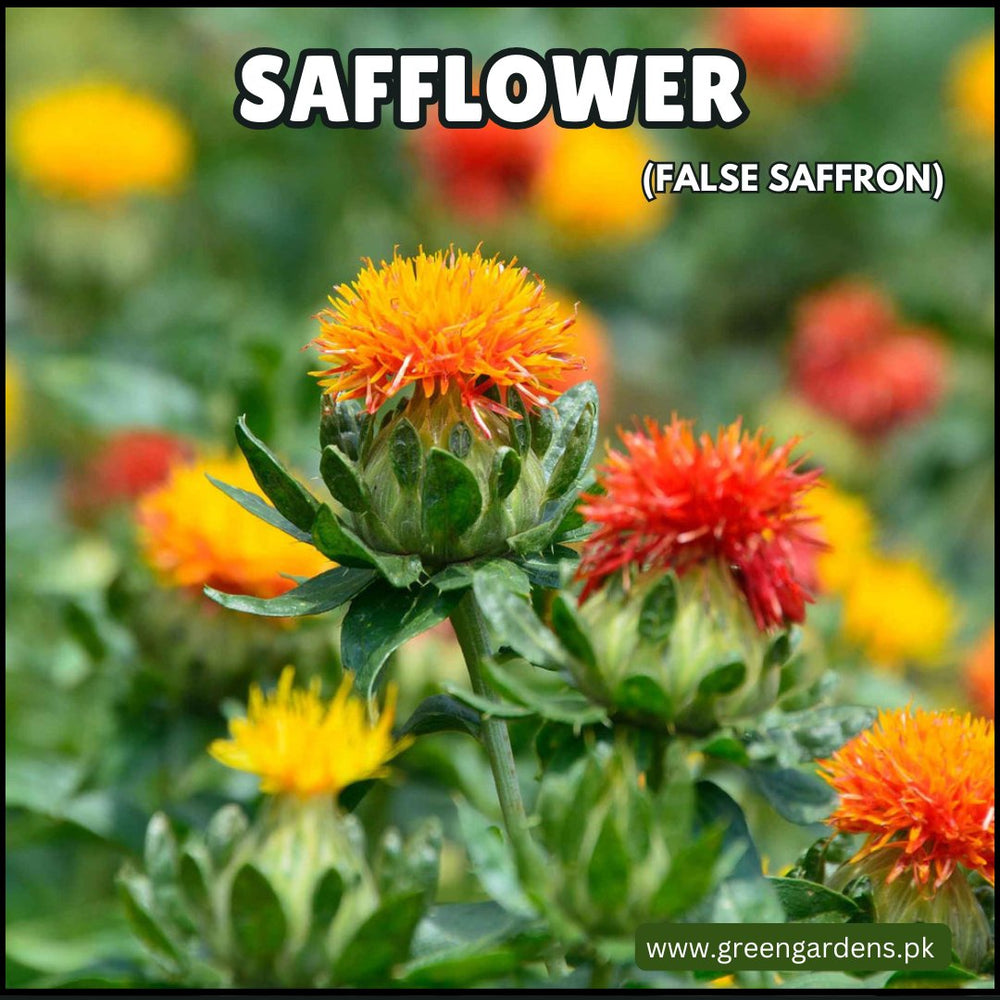
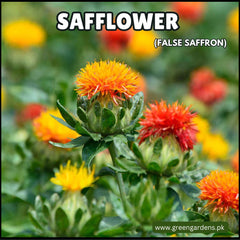
Safflower, also known as False Saffron, is an annual flowering plant valued for its bright orange-red flowers and oil-rich seeds. It is widely cultivated for its seeds used in cooking oil, bird feed, and traditional dyeing. Safflower is drought-tolerant and thrives well in warm climates, making it a suitable crop for regions with dry summers. The flowers also attract pollinators, benefiting the overall garden ecosystem.
Best Time to Sow: Late Winter to Early Spring (February to April)
Growing Season: Spring to Summer
Suitable for regions with warm, dry conditions and well-drained soil.
Soil Preparation:
Prepare well-drained, fertile soil with good organic matter. Avoid waterlogged or heavy clay soils.
Sowing Method:
Sow seeds directly into the soil about 1 to 1.5 inches deep.
Space seeds 6–8 inches apart in rows that are 18–24 inches apart.
Sunlight:
Plant in full sun for best flowering and seed production.
Watering:
Water moderately after sowing to keep soil moist but not soggy. Once established, safflower is drought tolerant.
Care:
Thin seedlings to maintain proper spacing.
Remove weeds regularly to reduce competition.
Fertilize lightly if needed; avoid excessive nitrogen for better flowering.
Harvesting:
Seeds are ready to harvest when the flower heads dry and turn brown, usually 4–5 months after sowing.
Thanks for subscribing!
This email has been registered!


We are here to assist you