



Best Sowing Season: September–November


- Choosing a selection results in a full page refresh.

Available 24/7 at
0300 110 7787
Pack Size: Single Bulb
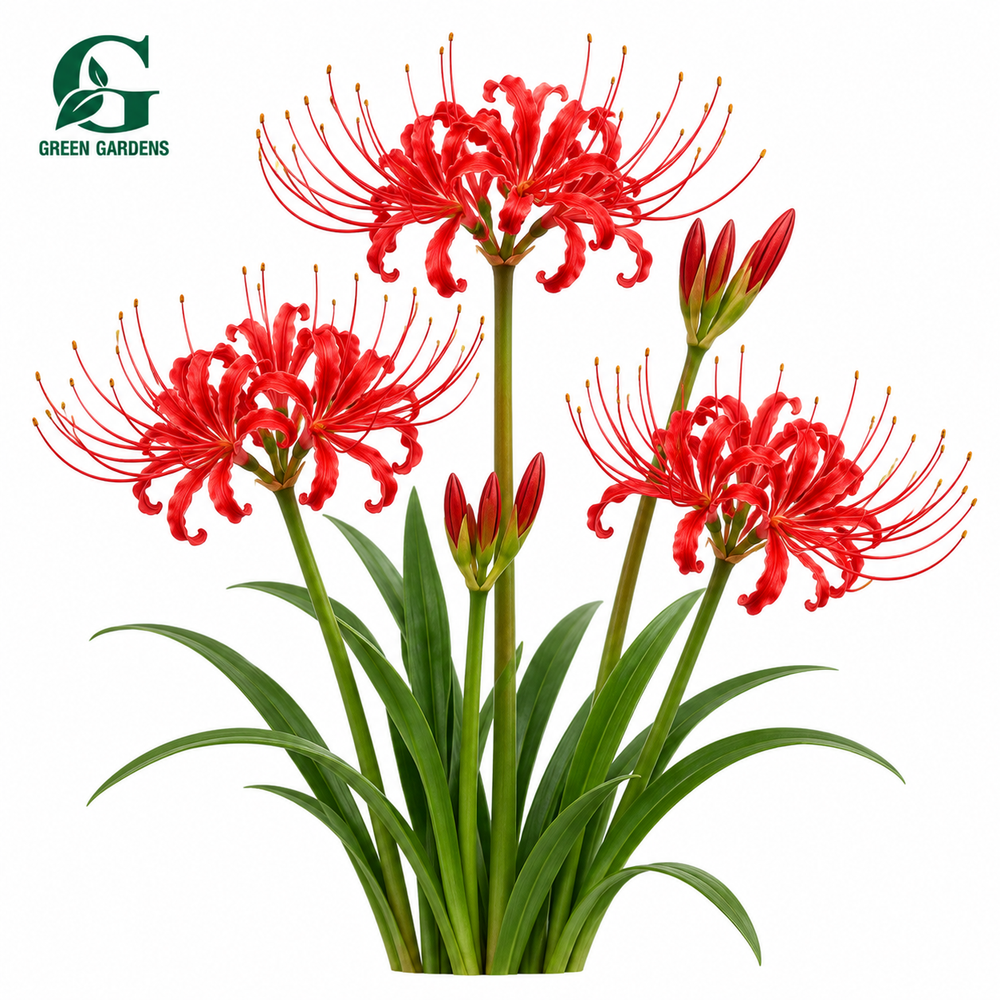
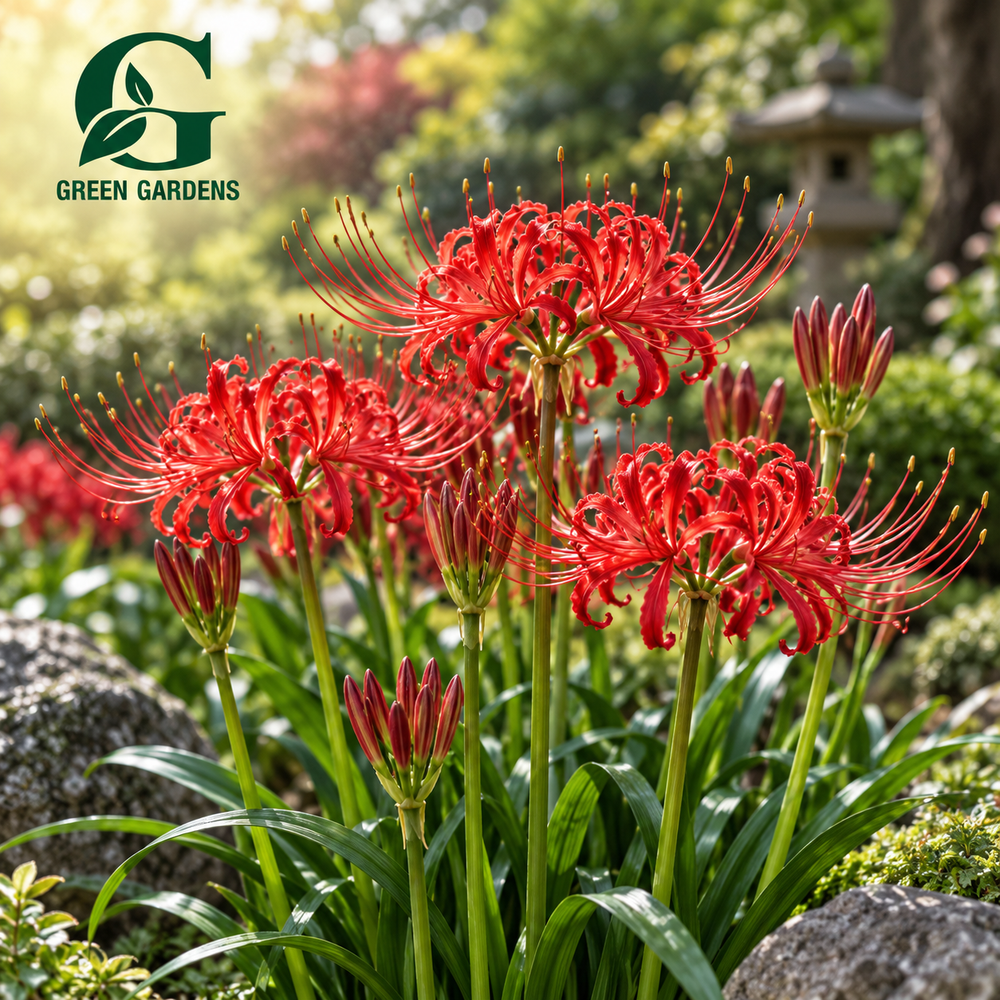
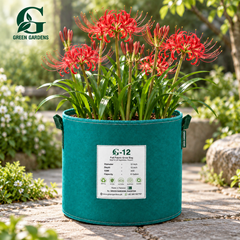
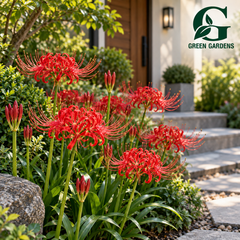
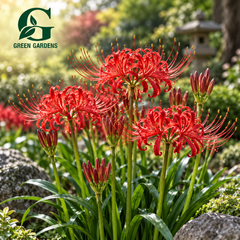
Grow the spectacular Red Spider Lily (Lycoris radiata), an exotic perennial flowering bulb known for its brilliant crimson-red blooms, dramatically curled petals and exceptionally long spider-like stamens.
Its unusual flowering habit makes it especially striking, with tall flower stalks emerging with little or no foliage and creating a dramatic display in late summer to early autumn.
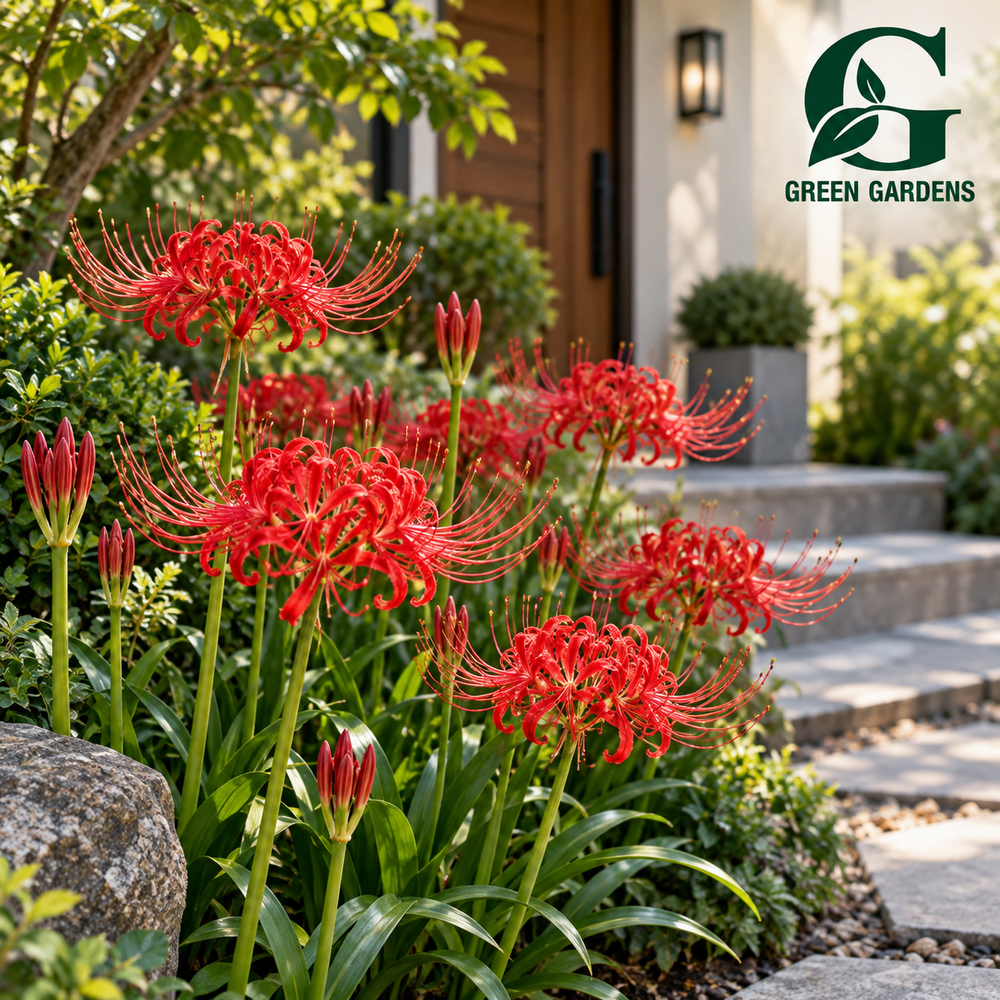
Excellent for garden beds, borders, pathways, pots and grow bags.
Best Planting Season: September–November in Lahore and the plains of Pakistan.
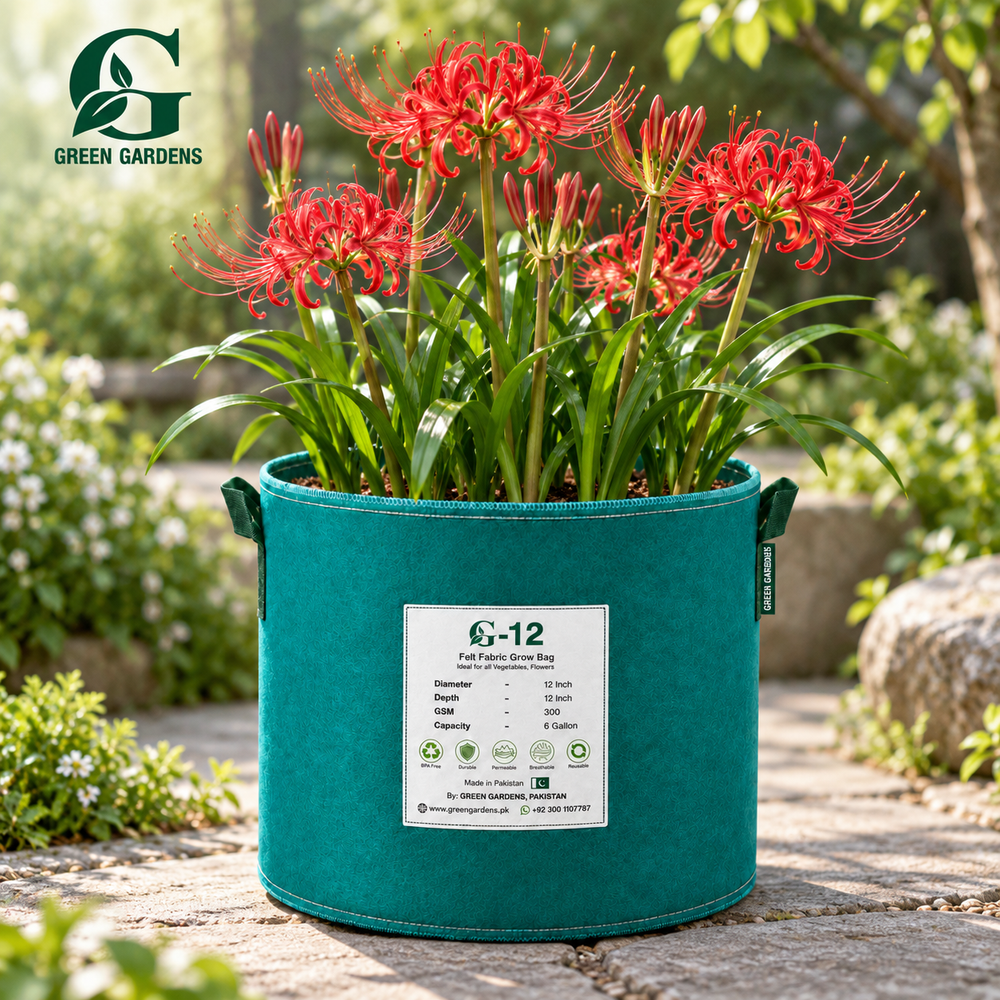
Recommended Container: GREEN GARDENS G-12 Grow Bag.
Best Sowing Season: September–November
Couldn't load pickup availability
Free standard shipping on orders over RS 5000
Lycoris radiata is a perennial bulb belonging to the Amaryllidaceae family.
It produces spectacular clusters of crimson-red flowers consisting of narrow, recurved petals surrounded by long projecting stamens. These extended stamens give the flower its characteristic spider-like appearance. (Plant Toolbox)
One of its most interesting characteristics is its unusual growth cycle.
Flower stalks can emerge almost suddenly from apparently bare ground during late summer or early autumn. The leaves generally develop after flowering, remain active through the cooler season and then die back before the next summer dormancy period. (Plant Toolbox)
Botanical Name: Lycoris radiata
Common Name: Red Spider Lily
Plant Type: Perennial flowering bulb
Flower Colour: Bright crimson red
Flower Form: Spider-like blooms with long stamens
Flowering Period: Late summer to early autumn
Growth Habit: Upright flowering stalks
Foliage: Narrow, strap-like green leaves
Suitable For: Pots, grow bags, borders and garden beds
Light Requirement: Full sun to partial shade
Maintenance: Low to moderate
Perennial: Yes
Pack Size: Single Bulb
The GREEN GARDENS G-12 Grow Bag provides good soil volume and drainage for growing Red Spider Lily as an individual container specimen.
For the best display:
Plant 1 bulb per G-12 Grow Bag.
A larger container or garden bed is preferable when growing several bulbs together.
The GREEN GARDENS G-12 is a 12 × 12 inch, 6-gallon, 300 GSM felt grow bag with two handles. (Green Gardens)
GREEN GARDENS G-12 Green Grow Bag – 12×12 Inch, 6 Gallon
Red Spider Lily performs best in fertile but very well-draining soil.
A practical GREEN GARDENS container mix is:
50% Bhalu Mitti / Sandy Soil
25% GREEN GARDENS Vermicompost
25% Cocopeat, leaf compost or another suitable aerating component
The medium should remain:
Loose
Fertile
Well aerated
Moisture-retentive without remaining wet
Free from heavy compaction
Vermicompost is best used as one component of a balanced potting medium rather than filling the entire grow bag with vermicompost. GREEN GARDENS recommends approximately 20–30% vermicompost in general pot and grow-bag mixes. (Green Gardens)
GREEN GARDENS Vermicompost 5kg – Organic Fertilizer
GREEN GARDENS Vermicompost 25kg – Organic Fertilizer & Soil Amendment
Inspect the bulb before planting.
Use bulbs that are:
Firm
Healthy
Free from excessive softness
Free from severe rot or mould
Minor dry outer scales are normal on many dormant bulbs.
Do not bury Red Spider Lily bulbs deeply.
Position the bulb upright with the roots downward and pointed neck upward.
Plant so that:
The bulb is mainly inside the soil while the upper neck remains at or slightly above the soil surface.
This is an important difference from many conventional bulbs. Horticultural guidance for Lycoris radiata specifically recommends planting with the neck exposed. (Plant Toolbox)
For garden beds, keep approximately:
6–12 inches between bulbs. (Plant Toolbox)
Planting in small groups can create a beautiful flowering display, but adequate spacing should be maintained for long-term establishment.
Grow Red Spider Lily in:
Full sun to partial shade
In Lahore and other very hot areas, a position receiving morning sun with some protection from intense afternoon summer heat can be beneficial.
Good light encourages healthy bulb development and flowering.
Water thoroughly once after planting to settle the growing medium around the bulb.
Keep the soil:
Slightly moist but never continuously wet.
Allow excess water to drain freely.
Reduce watering considerably when the foliage has naturally died back and the bulb is dormant.
Avoid leaving dormant bulbs in constantly wet soil.
Red Spider Lily bulbs should never remain in waterlogged growing media.
For containers:
Always ensure drainage is available.
Do not allow standing water beneath the container.
Avoid compact clay-heavy soil.
Do not overwater dormant bulbs.
Good drainage is one of the most important factors for maintaining healthy bulbs.
Red Spider Lily has a fascinating seasonal cycle.
Tall flower stalks may suddenly emerge from the soil.
The brilliant red flowers develop on these stalks with little or no foliage visible around them.
Narrow green leaves emerge and begin producing energy for the bulb.
The foliage may remain green and actively growing through the cooler months.
Leaves gradually yellow and naturally die back.
The bulb enters a dormant period before the next flowering cycle.
This foliage-after-flowering pattern is characteristic of Lycoris radiata. (Plant Toolbox)
Red Spider Lily does not require excessive fertilizer.
At planting time, incorporate a moderate quantity of organic matter such as GREEN GARDENS Vermicompost into the growing medium.
During active foliage growth, additional vermicompost may be applied as a light top dressing when required.
Avoid excessive nitrogen fertilizer because very lush foliage does not necessarily result in better flowering.
Once flowering finishes:
Remove spent flower stalks when they dry.
Allow the foliage to continue growing naturally.
Do not cut healthy green leaves prematurely.
Continue moderate watering during active leaf growth.
Allow foliage to yellow and die naturally.
The leaves help replenish energy reserves inside the bulb for future flowering.
A period of dormancy is a normal part of the Red Spider Lily life cycle.
If the plant disappears above the soil during the warmer period, this does not automatically mean the bulb has died.
Avoid repeatedly digging up dormant bulbs to check them.
Once established, Lycoris bulbs generally perform better when left undisturbed.
Choose the planting position carefully and allow the bulbs time to establish and multiply naturally.
For container gardening:
Fill the G-12 with well-draining potting mix.
Plant one Red Spider Lily bulb near the centre.
Keep the bulb neck near or slightly above soil level.
Water thoroughly after planting.
Place in bright sunlight or partial shade.
Maintain moderate moisture during active growth.
Reduce watering during dormancy.
Shop GREEN GARDENS G-12 Grow Bag
Red Spider Lily is excellent for:
Home gardens
Flower borders
Pathway planting
Garden beds
Courtyards
Patios
Rooftop gardens
Decorative containers
Grow bags
Naturalised bulb displays
Small ornamental garden spaces
Few flowering bulbs create such a dramatic display.
Its combination of:
Bright crimson colour + curled petals + exceptionally long stamens + leafless flowering stalks
makes Red Spider Lily instantly recognizable.
It is particularly attractive when several established plants flower together in a garden bed.
Red Spider Lily is an ornamental plant and is not edible.
Lycoris radiata bulbs contain lycorine, an alkaloid that can cause gastrointestinal symptoms if eaten. Keep bulbs away from children and pets and do not use any part of the plant for culinary purposes. (Plant Toolbox)
Usually associated with:
Excessive watering
Poor drainage
Heavy compacted soil
Permanently wet conditions
Possible reasons include:
Newly planted bulb still establishing
Insufficient sunlight
Excessive nitrogen
Bulb disturbed recently
Seasonal or temperature differences
This may simply be the plant's natural dormancy period.
Yes. Lycoris radiata is a perennial bulb and can return for many years when grown under suitable conditions. (Plant Toolbox)
Established bulbs can flower annually under suitable conditions, but newly planted or recently disturbed bulbs may require time to establish.
Yes. The GREEN GARDENS G-12 Grow Bag is suitable for growing an individual bulb as a container specimen.
No. For Lycoris radiata specifically, the bulb should be planted comparatively shallow with the neck exposed or near soil level, rather than deeply burying it. (Plant Toolbox)
In Lycoris radiata, flowers normally appear on nearly leafless stems. The foliage develops after flowering, remains through the cooler season and dies back later. (Plant Toolbox)
Yes. They look particularly attractive when grown in groups. Maintain suitable spacing in garden beds or use a larger container when planting several bulbs.
No. It is grown as an ornamental plant and should not be eaten.
Convenient pack for pots, grow bags and home gardens. (Green Gardens)
View Vermicompost 5kg
Economical bulk pack for larger gardens, beds and container-growing requirements. (Green Gardens)
View Vermicompost 25kg
12 × 12 inch, approximately 6-gallon felt fabric grow bag suitable for container gardening. (Green Gardens)
View G-12 Green Grow Bag
Product: Red Spider Lily Bulb
Botanical Name: Lycoris radiata
Common Name: Red Spider Lily
Family: Amaryllidaceae
Pack Size: Single Bulb
Flower Colour: Crimson Red
Plant Type: Perennial Bulb
Best Planting Season: September–November
Flowering Season: Late Summer–Early Autumn
Sunlight: Full Sun to Partial Shade
Water Requirement: Moderate
Recommended Grow Bag: G-12
Suitable For: Pots, Grow Bags, Borders & Garden Beds
Edible: No – Ornamental Use Only
Thanks for subscribing!
This email has been registered!


We are here to assist you