






Description
x10 seeds per pack.
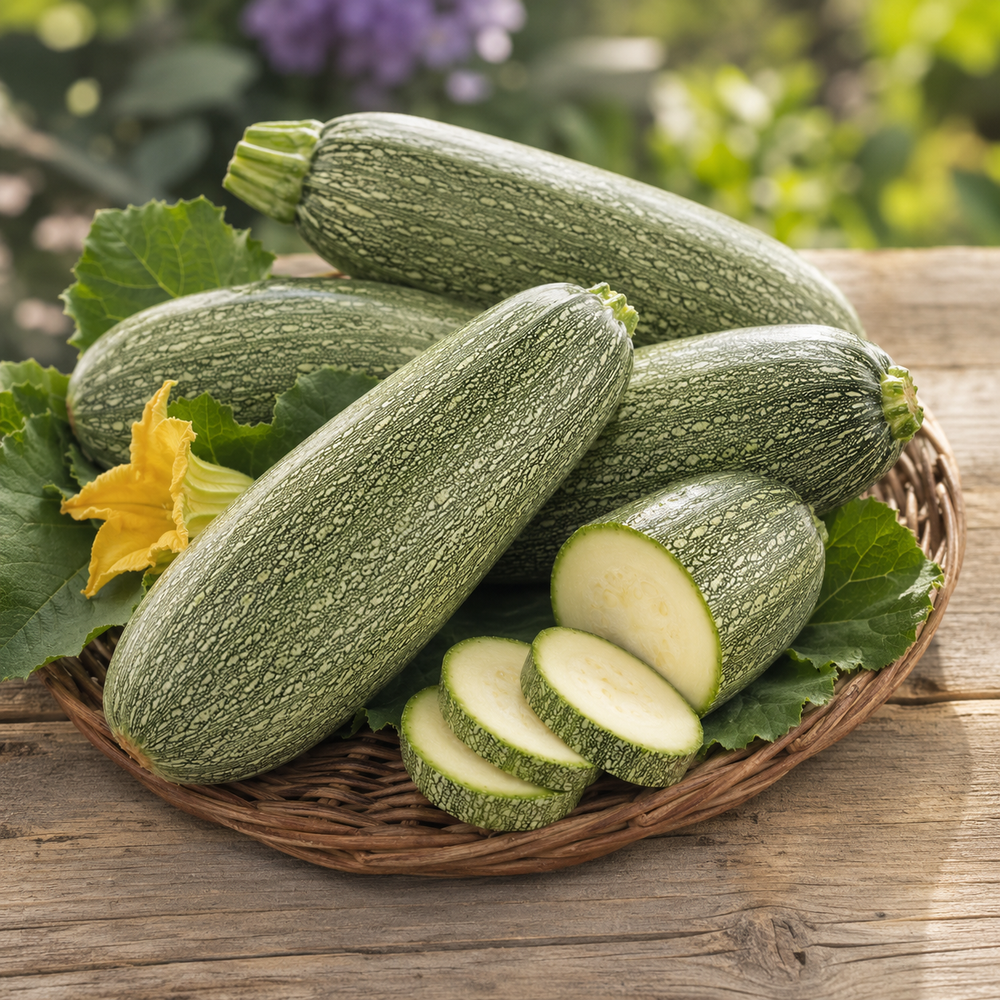
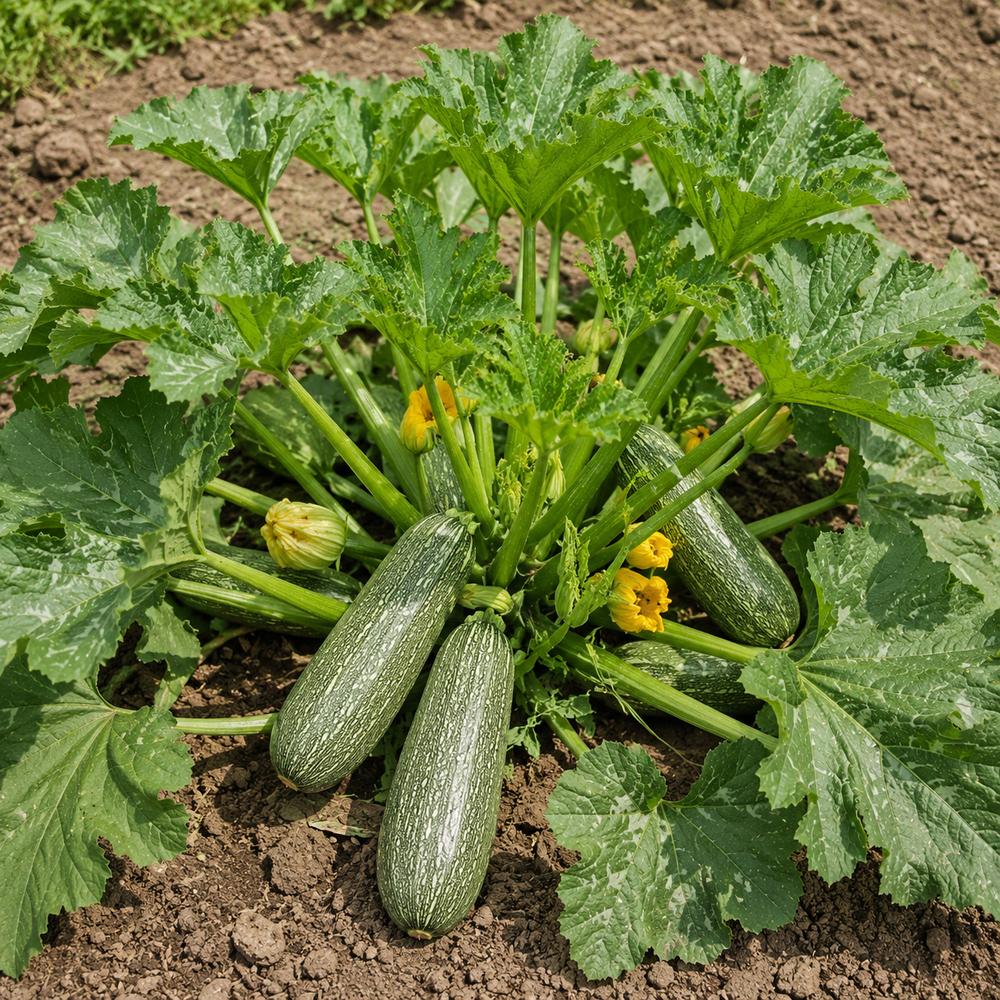
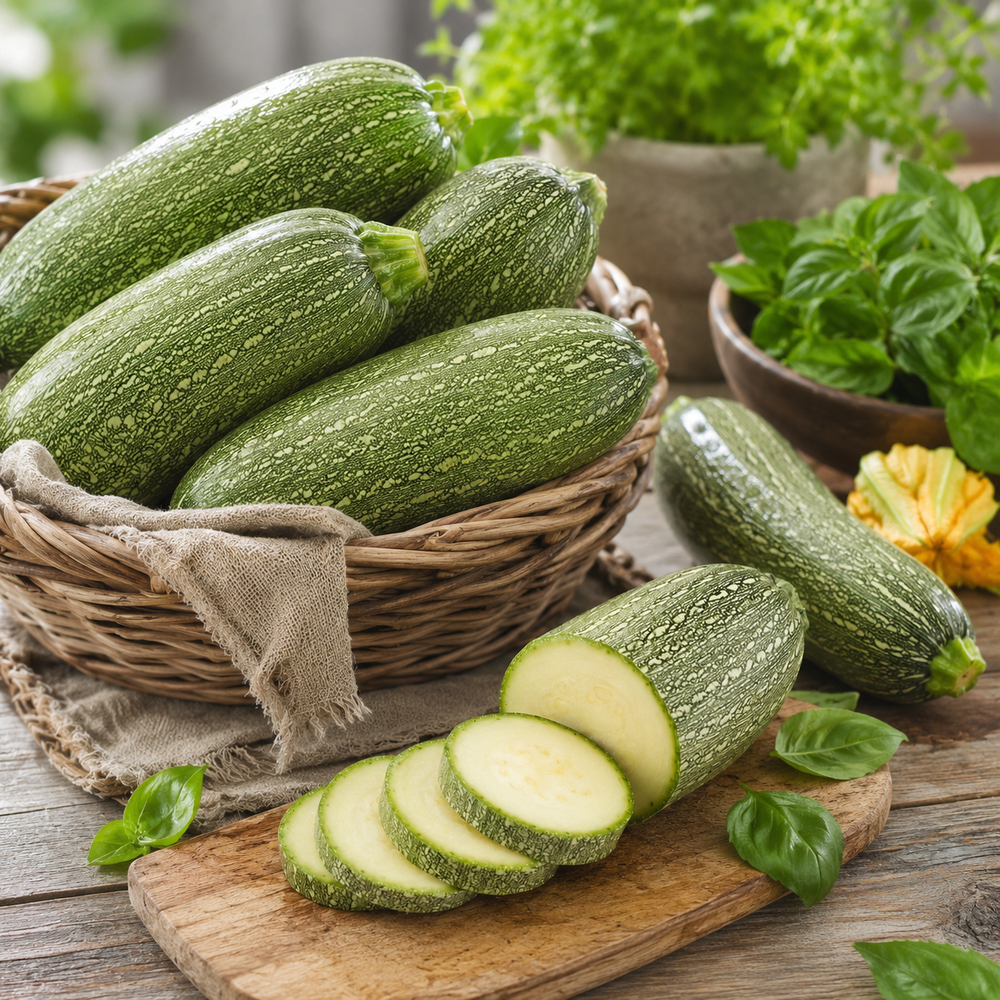
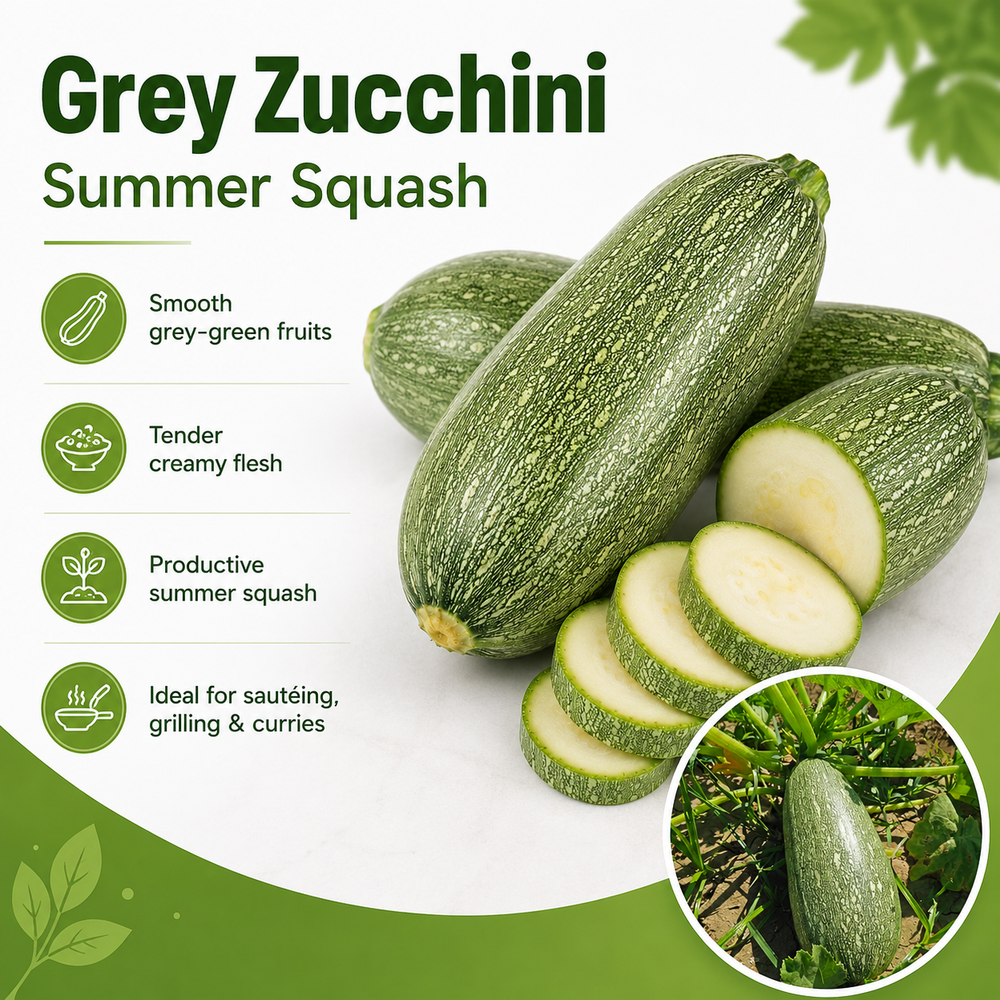
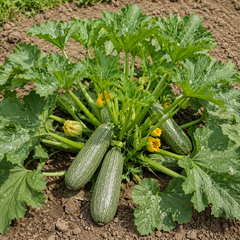
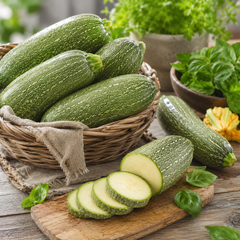
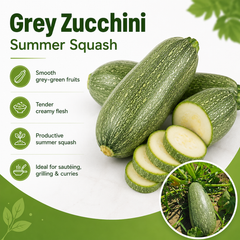
Grey Zucchini Summer Squash is a warm-season vegetable variety that produces attractive grey-green fruits with natural pale speckling. The young fruits have tender skin, light-coloured flesh, and a mild flavour suitable for a variety of cooked dishes.
The plant develops in a compact, bush-like form with broad green leaves and yellow flowers. It can be grown in kitchen gardens, raised beds, open soil, and sufficiently large containers where adequate sunlight, drainage, and regular care are available.
Product Features
-
Grey-green fruits with pale natural markings
-
Tender flesh when harvested young
-
Mild flavour suitable for everyday cooking
-
Compact, bush-type summer squash plant
-
Suitable for garden beds, raised beds, and large containers
-
Can be used in curries, mixed vegetables, soups, grilling, roasting, and sautéed dishes
Sowing Season in Pakistan
Hot and Plain Areas
February to June
Suitable for Punjab plains, Sindh, southern Khyber Pakhtunkhwa, and other warm regions.
Early sowing from February to April may help plants establish before extreme summer heat. During hotter months, maintain consistent soil moisture and provide young plants with light protection from severe afternoon heat where necessary.
Cold and High-Altitude Areas
April to July
Suitable for Quetta, Gilgit-Baltistan, Azad Jammu and Kashmir, and other cooler regions.
Sow after the danger of frost has passed and the soil has become sufficiently warm.
Sowing Instructions
-
Prepare rich, soft, and well-draining soil.
-
Sow seeds approximately 1 to 1.5 inches deep.
-
Place one seed in each sowing spot.
-
Cover gently with soil and water lightly.
-
Keep the soil moist but not waterlogged.
-
Germination time may vary depending on temperature, soil, seed condition, and moisture.
Seeds may be sown directly in their final location. They can also be started in individual nursery pots and transplanted carefully after the seedlings develop 2 to 3 true leaves.
Plant Spacing
Maintain approximately:
-
2 to 3 feet between plants
-
3 to 4 feet between rows
Adequate spacing supports airflow, sunlight exposure, and easier plant care.
Soil Requirements
Use fertile, loose, and well-draining soil enriched with well-decomposed organic matter.
A suitable growing mixture may contain:
-
50% sandy or well-draining garden soil
-
40% compost or vermicompost
-
10% cocopeat during hot weather
Avoid compact soil and areas where water remains standing around the roots.
Sunlight
Provide approximately 6 to 8 hours of direct sunlight daily.
In regions with extreme summer temperatures, some protection from the strongest afternoon sunlight may help reduce plant stress.
Watering
Water near the base of the plant whenever the upper layer of soil begins to dry.
Maintain reasonably consistent moisture during flowering and fruit development. Avoid overwatering, waterlogging, and frequent wetting of the leaves, particularly during the evening.
Feeding
Mix compost or vermicompost into the soil before sowing.
After the plant becomes established, a suitable vegetable fertilizer may be applied according to the product label. Avoid excessive use of nitrogen-rich fertilizer, as it may encourage excessive leaf growth.
Pollination
Grey Zucchini plants produce separate male and female flowers. Bees and other pollinating insects normally assist with pollination.
Where natural pollination is limited, hand pollination may be carried out in the morning by gently transferring pollen from a freshly opened male flower to a female flower.
Harvesting
Harvest fruits while they are young and tender, commonly at approximately 6 to 8 inches long, depending on the preferred cooking size.
Use a clean knife or pruning cutter and leave a short portion of the stem attached. Check the plant regularly during warm weather, as the fruits may develop quickly.
Container Growing
Grow one plant in a container or grow bag with approximately:
-
18 to 24 inches diameter
-
15 to 18 inches minimum depth
-
Several open drainage holes
Keep the container in a sunny, well-ventilated location.
Important Information
Germination, growth, fruit size, colour, maturity, and production may vary according to temperature, climate, soil, watering, nutrition, pollination, seed handling, and general growing conditions.
Product images are provided for variety identification and presentation. Naturally grown fruits may show differences in colour, shape, size, and surface markings.
- Choosing a selection results in a full page refresh.

