


- Choosing a selection results in a full page refresh.

Available 24/7 at
0300 110 7787
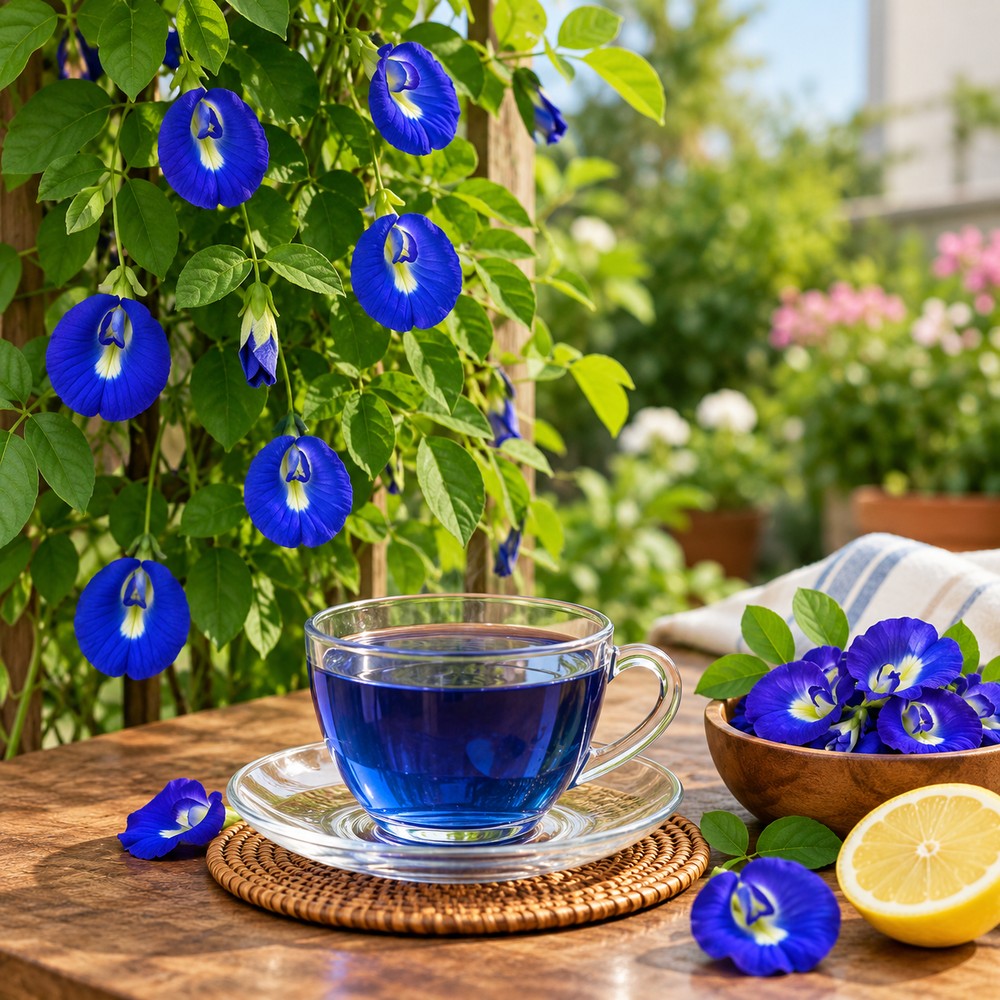
Pack Size: 10 seeds per pack.
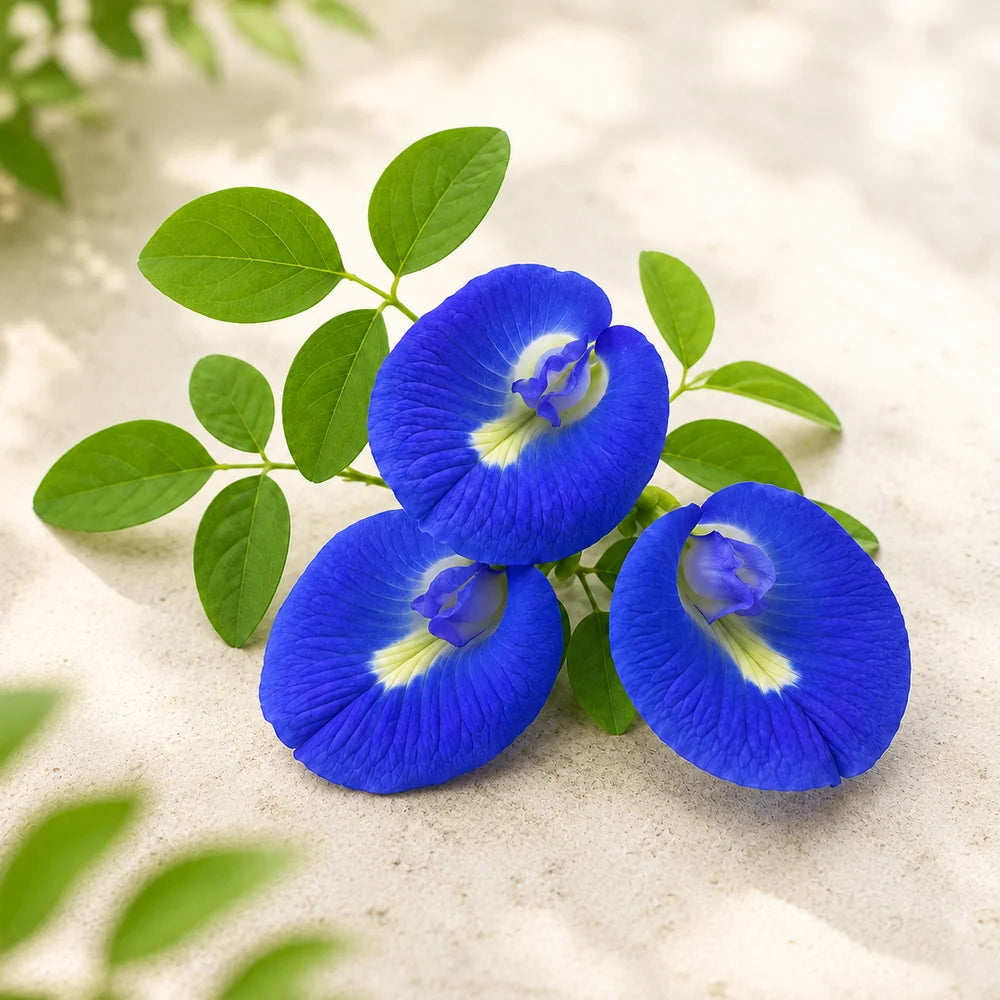
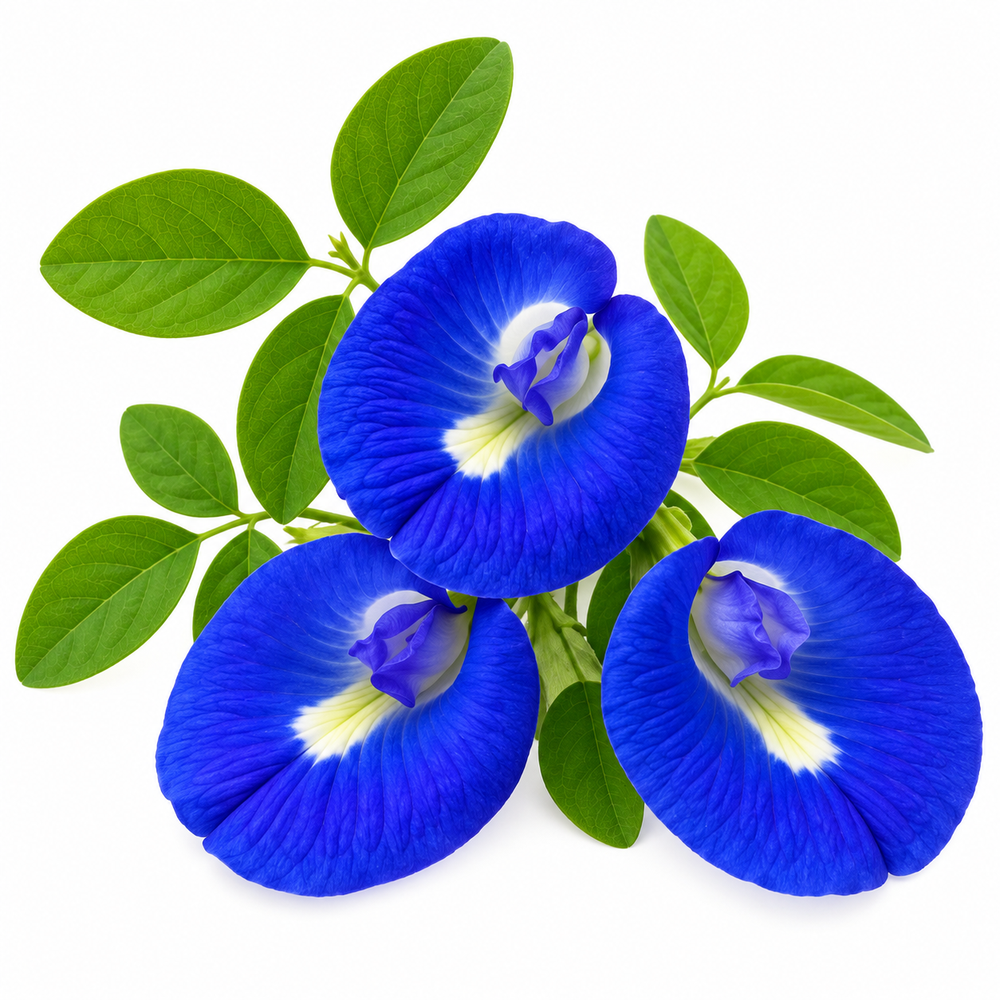
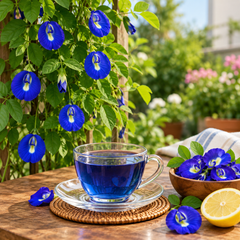
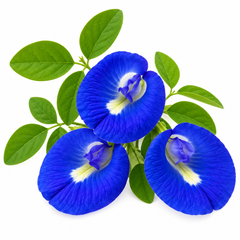
Grow the beautiful Butterfly Pea Blue (Clitoria ternatea), a vigorous flowering climber famous for its striking deep blue, butterfly-shaped flowers and attractive green foliage.
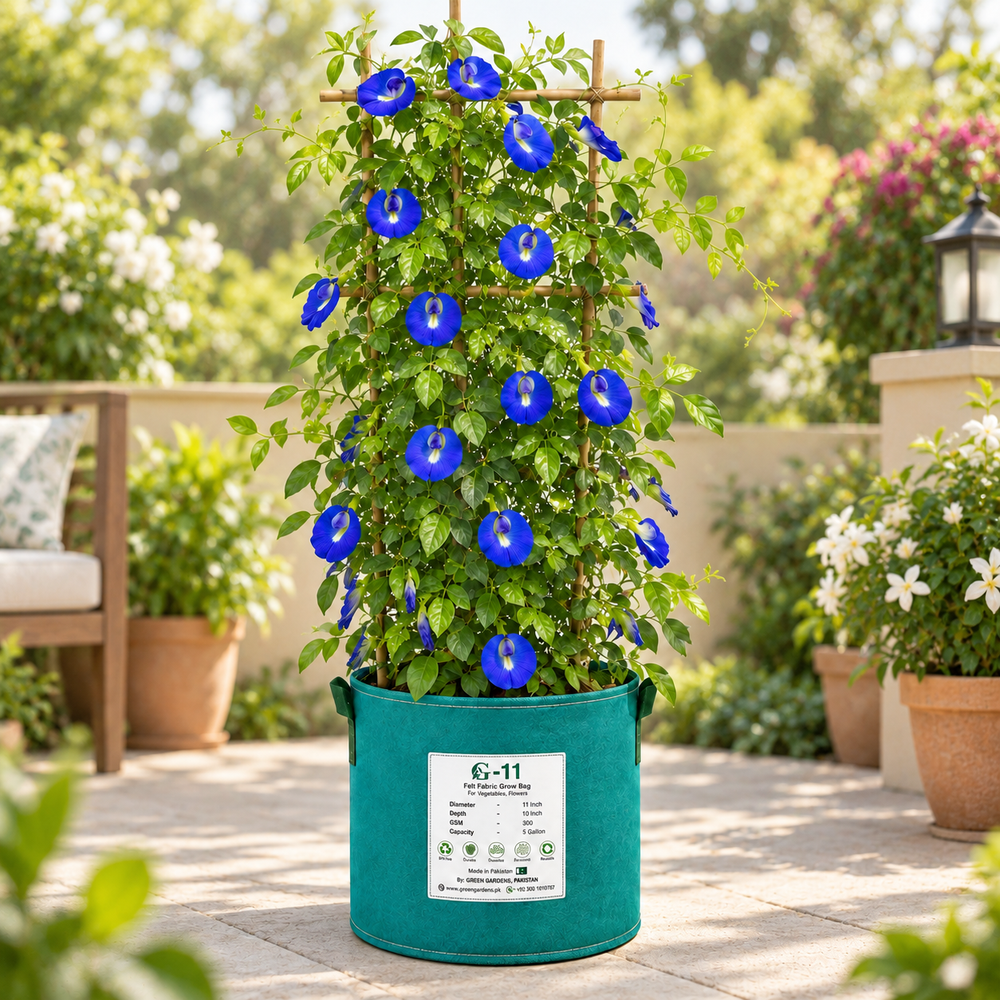
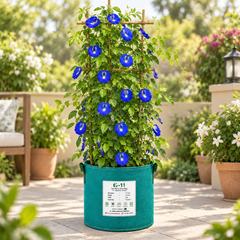
This fast-growing vine is excellent for trellises, fences, arches, balcony railings, terraces and vertical garden displays.
Once established, Butterfly Pea can develop into a lush flowering climber and provide attractive natural screening when supplied with proper support.
Its remarkable blue flowers are also traditionally used as a natural colour for teas, beverages and foods.
Best Sowing Season: February - April & September - November
Couldn't load pickup availability
Free standard shipping on orders over RS 5000
Butterfly Pea is a tropical perennial flowering vine valued for its:
The botanical name is:
Clitoria ternatea
Under favourable warm conditions, established vines may grow approximately:
10–15 ft / 3–4.5 m
when provided with suitable climbing support.
G-11 Grow Bag – 11 × 10 inch 🔗
Suitable for growing one Butterfly Pea plant with regular watering, feeding and climbing support.
For normal home gardening:
G-11 is the minimum recommended GREEN GARDENS grow bag.
G-20 F Grow Bag – 20 × 16 inch | 22 Gallon 🔗
Highly recommended for long-term growth.
Its larger soil volume provides better moisture stability and additional root space for a vigorous perennial climbing plant.
For a larger, longer-lasting vine:
G-20 F is the better choice.
Butterfly Pea is a:
Twining climbing vine.
Install climbing support early using:
Guide young shoots gently towards the support as they begin growing.
Without support, the vine may trail or sprawl along the ground.
Use fertile, loose and well-draining soil rich in organic matter.
A practical growing mix can include:
A practical seed-growing mix may be:
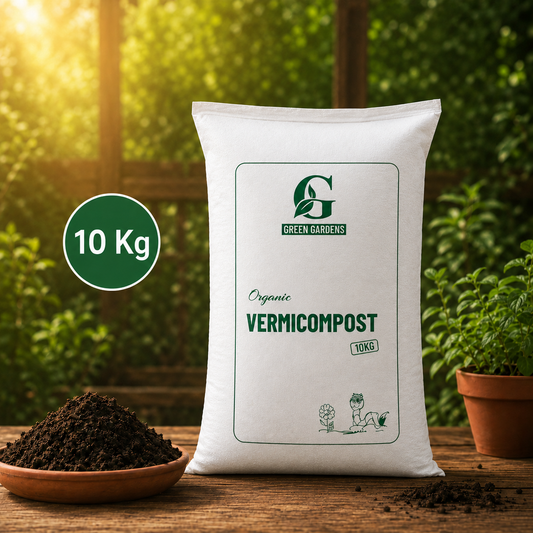
50% Garden / Sandy Soil + 40% Vermicompost + 10% Cocopeat
The growing medium should provide:
Avoid heavy, compacted or permanently waterlogged soil.
Butterfly Pea seeds have a relatively hard seed coat.
Before sowing:
Soak seeds in normal water for approximately 8–12 hours.
This helps soften the seed coat and may improve germination.
For particularly hard seeds, lightly nicking or scratching a small portion of the outer seed coat before soaking can also assist water absorption.
Avoid damaging the inner seed.
Seeds can be started in:
Sow each seed approximately:
½–1 inch deep
and cover with loose growing medium.
Place approximately:
1–2 seeds per nursery pot or section.
Water gently after sowing.
Seeds generally germinate within approximately:
7–21 days
depending on:
Keep the growing medium:
Avoid continuous waterlogging.
Once seedlings emerge:
Gradually increase sunlight as seedlings become established.
Transplant seedlings when they have approximately:
3–4 true leaves
and are strong enough to handle.
Move carefully into a final pot, grow bag or garden bed without unnecessarily disturbing the roots.
Water after transplanting.
Install the trellis or climbing support at the same time if it is not already present.
For garden beds or larger containers, maintain approximately:
12–18 inches / 30–45 cm between plants
for healthy vine development.
Adequate spacing improves:
Provide approximately:
5–7 hours of direct sunlight daily.
For maximum flowering, a bright sunny location is preferred.
Good sunlight encourages:
In Lahore’s extreme peak-summer heat, container-grown plants may benefit from some protection from the harshest late-afternoon conditions if foliage begins showing heat stress.
Water when the upper layer of soil begins to dry.
Young seedlings should remain:
Lightly and consistently moist
while establishing.
For mature plants:
Established plants can tolerate some temporary dryness, but regular moisture generally supports stronger flowering.
Before planting, enrich the soil with:
During active growth, Vermicompost may be added in moderate quantity approximately every:
3–4 weeks
where required.
A mild balanced flowering fertiliser may also be used according to label instructions.
Avoid excessive nitrogen because it can produce:
Heavy leafy growth with fewer flowers.
Once the young vine becomes established, lightly pinch the growing tip.
Pinching can encourage:
Continue guiding new shoots onto the support.
Butterfly Pea produces beautiful:
Deep Blue to Blue-Violet Flowers
Flowers are typically pea-shaped and stand out clearly against the fresh green foliage.
In warm conditions, an established healthy vine can flower over an extended season.
Flowering performance depends on:
Butterfly Pea flowers are well known for their intense natural blue pigment.
Fresh or dried flowers are traditionally used for:
The blue colour is naturally pH-sensitive.
When an acidic ingredient such as lemon or lime is added, the blue colour can shift toward:
Purple or pink tones.
Use only flowers grown without unsuitable pesticide treatments if they are intended for food or beverage use.
Butterfly Pea has a long history of traditional use, but this product is sold primarily as:
Seeds for home gardening and ornamental cultivation.
No disease-treatment or medicinal claim is made for this product.
Butterfly Pea generally performs strongly during warm weather.
During hot summer conditions:
Healthy established vines can show very vigorous summer growth.
In Lahore and similar climates, Butterfly Pea may continue growing during mild winter conditions.
As temperatures fall:
During colder weather:
Because it is a tropical perennial, winter performance depends greatly on local temperature.
Regular light pruning can help keep an established vine manageable.
Remove:
Light pruning can encourage:
Avoid severe unnecessary pruning during active flowering.
Butterfly Pea flowers can attract:
The vine can be a useful addition to pollinator-friendly gardens and mixed flowering landscapes.
Inspect plants occasionally for:
Check:
Early detection helps prevent heavy infestations.
Healthy Butterfly Pea plants benefit from:
Avoid permanently wet soil and excessive overcrowding.
Butterfly Pea Blue is particularly suitable for:
Its fast climbing habit makes it especially useful where vertical colour and greenery are desired.
G-11 Grow Bag – 11 × 10 inch 🔗
Thanks for subscribing!
This email has been registered!