




- Choosing a selection results in a full page refresh.

Available 24/7 at
0300 110 7787
Couldn't load pickup availability
Free standard shipping on orders over RS 5000
Approx 100 seeds per pack.
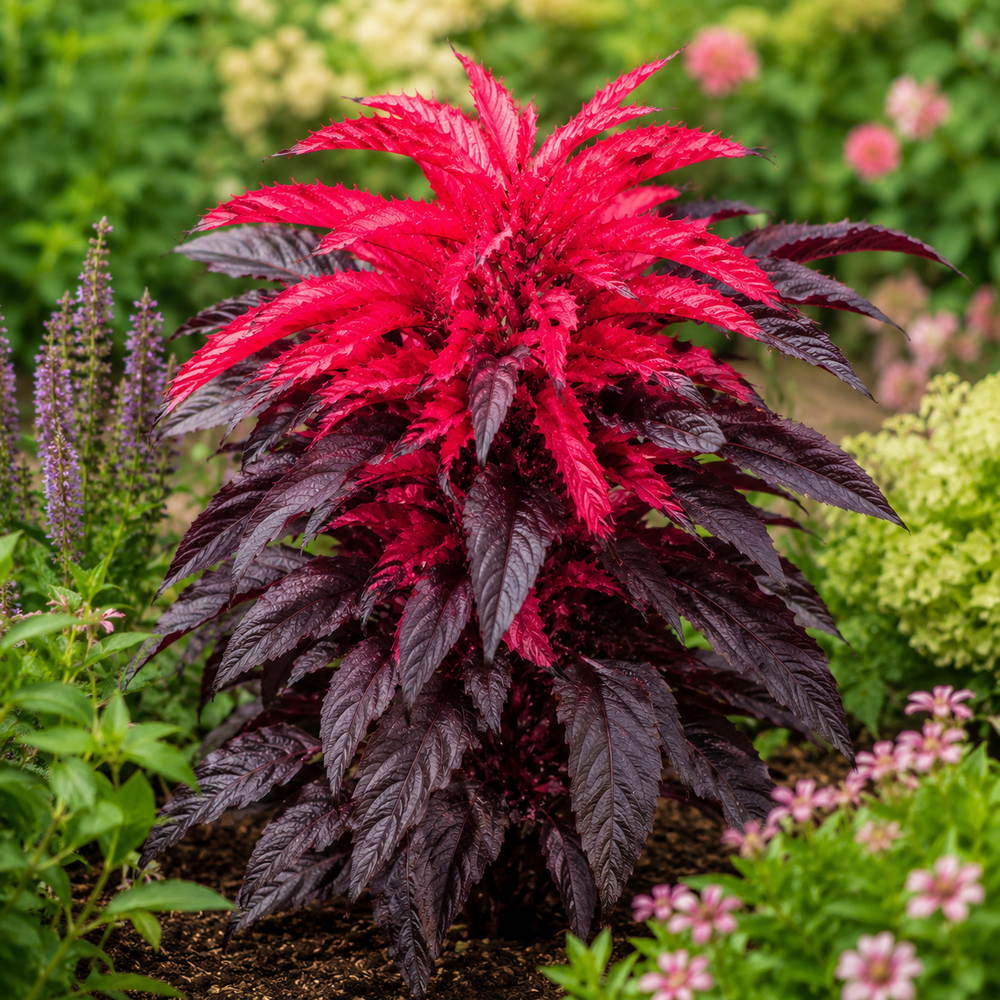
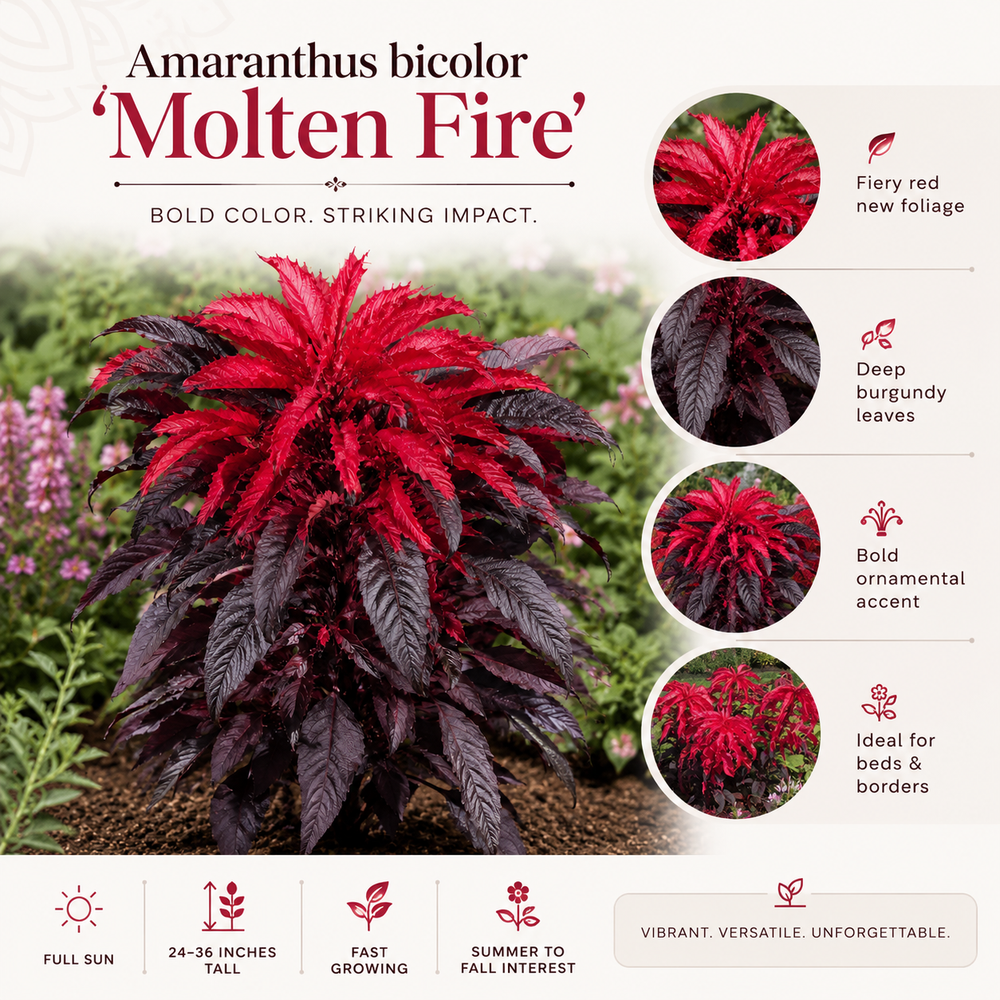
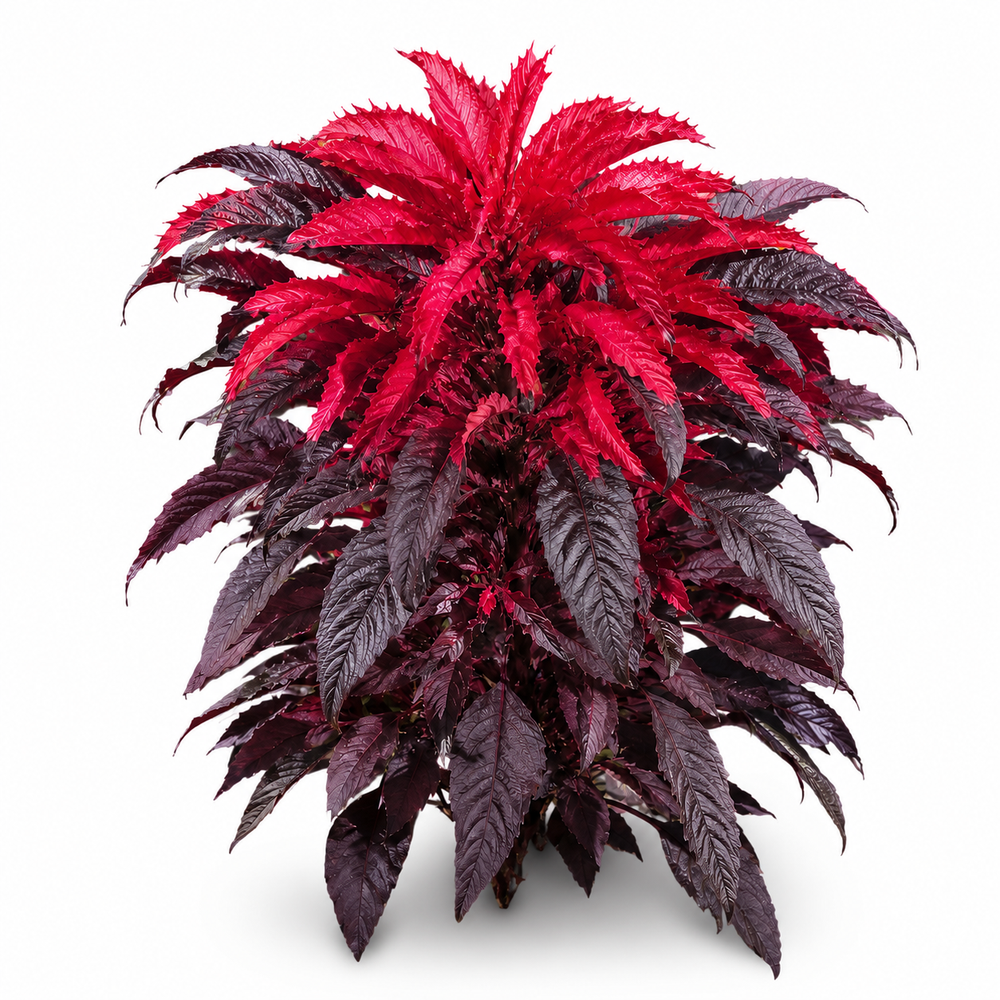
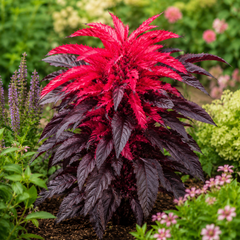
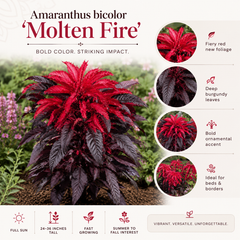
Amaranthus bicolor ‘Molten Fire’ is a striking ornamental foliage plant valued for its brilliant colour contrast. Its fresh upper leaves develop vivid crimson-red shades, while the mature lower foliage appears deep burgundy to dark purple. The bold, upright growth makes it an excellent choice for garden beds, borders, large containers and landscape displays.
This fast-growing annual performs best in warm weather and bright sunlight. Its dramatic foliage creates an attractive focal point and pairs beautifully with green, silver or light-coloured plants.
Please note: This variety is offered as an ornamental plant. It should not be consumed unless its edible suitability has been independently confirmed from a reliable source.
Sowing Season in Pakistan:
July to August and February to April.
In colder areas, sow after the danger of frost has passed.
Avoid sowing during extreme heat, severe cold or prolonged frost.
Sow the seeds in seedling trays, small pots or a prepared nursery bed. Use a soft, fertile and well-draining growing medium.
Suggested seed-starting mix:
50% fine garden soil or sandy soil
50% vermicompost or well-rotted compost
Scatter the tiny seeds thinly over the surface and cover them with only a very light layer of fine soil or cocopeat. Do not bury them deeply.
Water gently with a fine spray so the seeds are not displaced. Keep the medium evenly moist but never waterlogged. Avoid strong water pressure during germination.
Seeds generally germinate in approximately 5–14 days, depending on temperature, seed freshness and growing conditions.
Place the seed tray in bright filtered light until germination. After seedlings become established, gradually introduce them to stronger sunlight.
Mature plants perform best in:
Full sun to light partial shade
Approximately 5–7 hours of direct sunlight daily
Good sunlight helps produce stronger growth and brighter foliage colour.
Transplant seedlings when they develop around 3–4 true leaves and are strong enough to handle. Harden them gradually for a few days before moving them into direct sunlight.
Maintain approximately 12–18 inches of space between plants for healthy growth and air circulation.
Use rich, soft and well-draining soil. Avoid compact, heavy or continuously wet soil.
A suitable planting mixture is:
50% sandy or well-draining garden soil
50% organic matter, preferably vermicompost or well-rotted compost
Ensure that containers have sufficient drainage holes.
Water deeply after transplanting. Afterwards, water whenever the upper layer of soil begins to dry. Do not allow water to remain standing around the roots.
During hot weather, check container-grown plants more frequently.
Mix compost or vermicompost into the soil before planting. Once the plants are established, apply a small quantity of balanced organic fertilizer every 15–20 days if required.
Avoid excessive nitrogen, as it may encourage weak, overly soft growth.
Remove weeds regularly.
Keep reasonable airflow between plants.
Remove damaged or dry leaves.
Pinch the growing tip of young plants if a bushier shape is desired.
Protect young seedlings from snails, slugs and strong rain.
Provide afternoon protection during extreme summer heat.
The intensity of the red and burgundy foliage may vary according to sunlight, temperature, soil fertility, plant maturity and local growing conditions. The plant may not look identical in every climate or at every growth stage.
Thanks for subscribing!
This email has been registered!


We are here to assist you